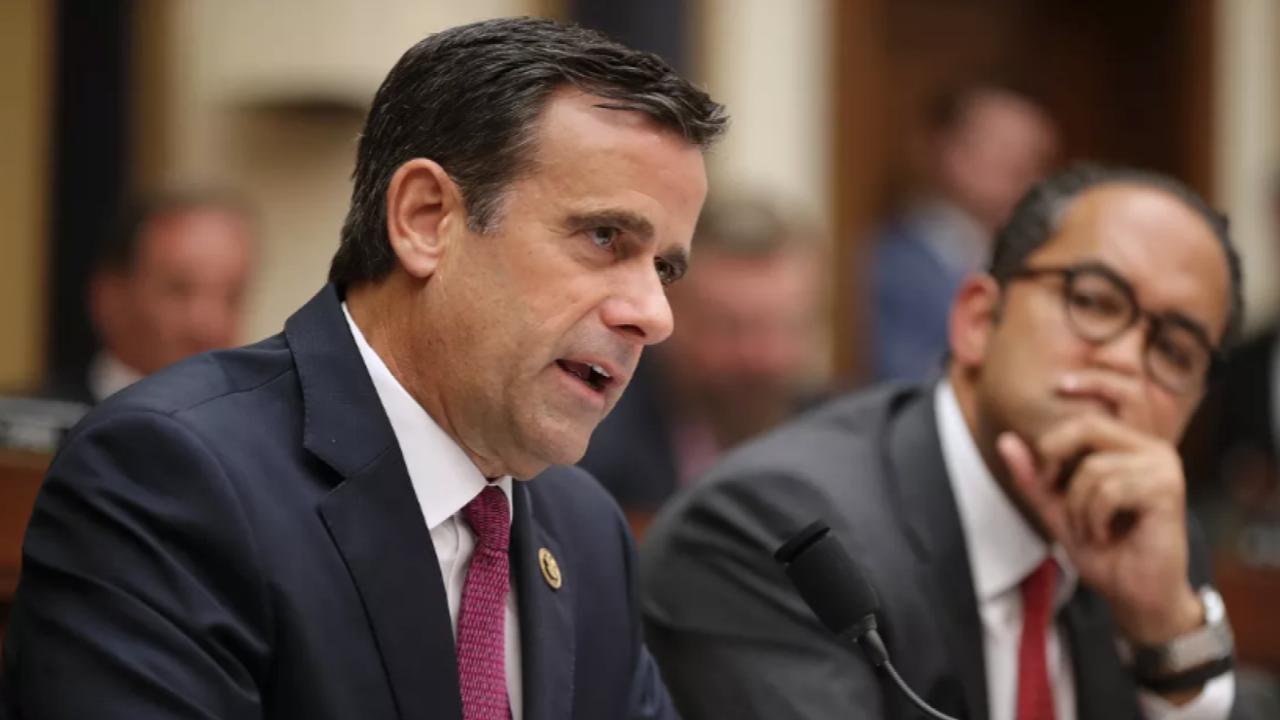
Summary
John Lee Ratcliffe (born October 20, 1965) is an American politician and attorney who served as the director of national intelligence from 2020 to 2021. He previously served as the U.S. representative for Texas’s 4th district from 2015 to 2020. During his time in Congress, Ratcliffe was regarded as one of the most conservative members. Ratcliffe also served as mayor of Heath, Texas, from 2004 to 2012 and acting United States attorney for the Eastern District of Texas from May 2007 to April 2008.
President Donald Trump announced on July 28, 2019, that he intended to nominate Ratcliffe to replace Dan Coats as director of national intelligence. Ratcliffe withdrew after Republican senators raised concerns about him, former intelligence officials said he might politicize intelligence, and media revealed Ratcliffe’s embellishments regarding his prosecutorial experience in terrorism and immigration cases.
Source: Wikipedia
OnAir Post: John Ratcliffe – CIA
News
John Ratcliffe also said the spy agency needs focus above all on China.
John Ratcliffe will pledge to ensure the U.S. stays ahead of foreign adversaries on key emerging tech issues like AI and quantum computing, if confirmed to lead the Central Intelligence Agency.
“Our adversaries…understand that the nation who wins the race in the emerging technologies of today, will dominate the world of tomorrow,” Ratcliffe will say, according to a copy of his opening statement shared with POLITICO and later posted online. He pledged to make technology innovation a “priority” while at the agency.
The former U.S. congressperson served as the director of national intelligence in Trump’s first term, and is likely to have a smooth confirmation process this time around.
About
Source: Oberheiden P.C bio page
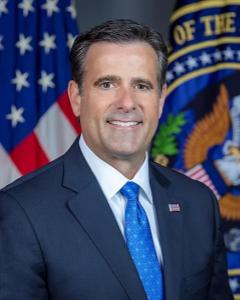 The Honorable John L. Ratcliffe most recently served as the 6th United States Director of National Intelligence (DNI). Previously, Director Ratcliffe served as a U.S. Congressman and as the U.S. Attorney for the Eastern District of Texas (EDTX).
DNI. Director Ratcliffe is a preeminent authority on high-stakes national security and government investigations that require expertise and delicate assertions or challenges of government authority. During his White House tenure as a cabinet member and the President’s intelligence advisor, DNI Ratcliffe directed all 18 U.S. intelligence agencies—among them the CIA and the FBI—to assess and eliminate domestic and foreign threats against the American people. As the former executive leader of the United States Intelligence Community, a Member of the National Security Council, and a Member of the Homeland Security Council, Director Ratcliffe maintains a realistic insight into urging developments of homeland security, cybersecurity, counterintelligence, counterproliferation, and counterterrorism.
U.S. Congress. Before his Presidential selection and U.S. Senate confirmation as the nation’s 6th DNI, Congressman Ratcliffe was elected to three terms and served six years representing Texas’ 4th Congressional District in the U.S. House of Representatives. On Capitol Hill, he was Chairman the House Subcommittee on Cybersecurity and Infrastructure Protection and served as Ranking Member on the Subcommittee on Crime, Terrorism and Homeland Security.
U.S. Attorney. In the George W. Bush administration, Mr. Ratcliffe was initially appointed as Chief of an Anti-Terrorism and National Security unit within the U.S. Department of Justice before being judicially appointed as the U.S. Attorney, the highest federal prosecutor, for the Eastern District of Texas. During his DOJ tenure, Director Ratcliffe was also elected to serve four terms as the non-partisan Mayor of Heath, Texas.
Education & Admission. An attorney since 1989, Director Ratcliffe holds a Juris Doctor from Southern Methodist University (SMU) School of Law and a B.A. degree from the University of Notre Dame. He is licensed to practice in Texas and before various federal courts including the U.S. Circuit Court of Appeals for the Fifth Circuit.
Web Links
More Information
Wikipedia
John Lee Ratcliffe (born October 20, 1965) is an American politician and attorney who has served as the director of the Central Intelligence Agency since 2025. Ratcliffe served as the director of national intelligence from 2020 to 2021. A member of the Republican Party, he served as the U.S. representative for Texas’s fourth congressional district from 2015 to 2020, as the mayor of Heath, Texas, from 2004 to 2012, and as the U.S. attorney for the Eastern District of Texas from 2007 to 2008.
Ratcliffe graduated from the University of Notre Dame with a bachelor’s degree in 1986 and from Southern Methodist University‘s School of Law with a Juris Doctor in 1989. Ratcliffe worked as a lawyer in private practice for fifteen years. In 2004, he was elected to serve as the mayor of Heath, Texas, a position he served in for eight years. That year, he joined the U.S. Attorney’s Office for the Eastern District of Texas as the director of anti-terrorism and national security. Ratcliffe worked as an assistant U.S. attorney in the Eastern District. He briefly served as its acting U.S. attorney after Matthew D. Orwig resigned in 2007. In 2009, he established the Ashcroft Law Firm alongside former attorney general John Ashcroft and former U.S. attorney for the Western District of Texas Johnny Sutton.
In 2013, Ratcliffe announced his candidacy in the 2014 United States House of Representatives election for Texas’s fourth congressional district. He defeated Ralph Hall, who had served as the district’s representative for nearly thirty years, in a runoff election. Ratcliffe was elected without opposition in 2014; he was reelected in 2016 and 2018. Ratcliffe’s performance in challenging legal opponents of president Donald Trump, including the special counsel Robert Mueller, led to Trump nominating Ratcliffe as his director of national intelligence in July 2019. Ratcliffe withdrew his nomination the next month, believing his confirmation to be in question.
In February 2020, Trump nominated Ratcliffe for a second time as the director of national intelligence. His nomination received less criticism amid questions into the origin of SARS-CoV-2 and the recent temporary appointment of Richard Grenell. Ratcliffe was confirmed by the Senate in May. As the director of national intelligence, Ratcliffe selectively declassified intelligence that favored Trump, halted election briefings for Congress, and contradicted public assessments. He released unverified intelligence that suggested Hillary Clinton had devised a scheme to accuse the Russian government of interfering in the 2016 presidential election without basis.
In November 2024, Trump named Ratcliffe as his nominee for director of the Central Intelligence Agency. Ratcliffe appeared before the Senate Select Committee on Intelligence prior to Trump’s second inauguration and was confirmed by the Senate that month. As the director of the Central Intelligence Agency, Ratcliffe pursued mass firings at the agency and engaged in foreign interventions, including expanding the agency’s drone incursions into Mexico; providing tactical information that preceded U.S. strikes on Iranian nuclear sites; initiating covert operations in Venezuela; and preparing for U.S. strikes that began the Iran war.
Early life and education (1965–1989)
John Lee Ratcliffe[1] was born in Mount Prospect, Illinois,[2] on October 20,[3] 1965.[4] Ratcliffe had five older siblings.[2] Ratcliffe’s parents were school teachers. His father sold cars and educational books to supplement his income.[5] Ratcliffe was raised in Palatine.[2] The Ratcliffes moved to Carbondale after Ratcliffe’s father was named the dean of continuing education at Southern Illinois University[2] in 1977.[6] Ratcliffe graduated from Carbondale Community High School in 1983.[7] He graduated from the University of Notre Dame with a bachelor’s degree in 1986[8] and from Southern Methodist University‘s School of Law with a Juris Doctor[2] in 1989.[5] He met his wife, Michele, at Southern Methodist University; they have two children.[6] Ratcliffe is Catholic.[9]
Career
Early work and mayor of Heath (1989–2012)
After graduating from Southern Methodist University, Ratcliffe worked as a lawyer, a mediator, and a law professor.[10] In May 2004, Ratcliffe was elected to serve as the mayor of Heath, Texas, winning seventy percent of the vote in a three-way race.[11] He was sworn in the following month.[12] Ratcliffe was re-elected in May 2006 without opposition,[13] as well as in 2008 and 2010.[11] According to the Rockwall County Herald-Banner, Ratcliffe ensured that Heath’s tax rate remained constant, and its financial ratings improved. In February 2012, he announced that he would not run for re-election, citing his legal and political engagements.[11] Ratcliffe swore in his successor on May 14.[14]
Bush administration positions (2004–2008)
In December 2004,[15] Ratcliffe joined the U.S. Attorney’s Office for the Eastern District of Texas[5] as the director of anti-terrorism and national security in the Bush administration.[16] He additionally served on the Advisory Subcommittee on National Security within the United States Department of Justice.[16] In January 2005, Ratcliffe was appointed as an assistant U.S. attorney for anti-terrorism.[10] According to The New York Times, Ratcliffe embellished his role in prosecuting terrorism cases. In one case, he claimed that he had tried suspects who allegedly funneled money to Hamas; Ratcliffe had only investigated aspects of the case after a mistrial and did not prosecute either the first or second trials.[17]
In April 2007, Matthew D. Orwig, the U.S. attorney for the Eastern District of Texas, announced that he would leave his position for private practice. The following month, Ratcliffe was sworn in as his acting successor as Orwig’s first assistant. He was additionally a candidate to be nominated for the position.[18] Ratcliffe led the prosecution of hundreds of Pilgrim’s Pride workers suspected of being illegal immigrants who were arrested in April 2008.[19] He presided over the prosecution of the personal trainer David Jacobs.[20] Ratcliffe resigned the following month after Rebecca Gregory was confirmed to the position.[21] By October 2008, he had become a consultant to the United States government on counterterrorism.[22]
Legal and political activities (2009–2014)
In April 2009, Ratcliffe established a law firm alongside former attorney general John Ashcroft and former U.S. attorney for the Western District of Texas Johnny Sutton.[23] The firm, operating as the Ashcroft Law Firm in Washington and Ashcroft Sutton and Ratcliffe in Texas,[24] was affiliated with The Ashcroft Group.[25] Prior to the 2012 presidential election, Ratcliffe advised former Massachusetts governor Mitt Romney‘s transition team on government nominees and appointees.[26]
U.S. House of Representatives (2015–2020)
Initial campaign
On December 9, 2013, hours before the deadline, Ratcliffe filed as a candidate in the United States House of Representatives election for Texas’s fourth congressional district. The Dallas Morning News described Ratcliffe’s unexpected candidacy as the “most serious political challenge” to the district’s officeholder, Ralph Hall, the oldest person to have ever served in the House of Representatives;[27] According to The Atlantic, John Ashcroft encouraged Ratcliffe to run.[8] Ratcliffe told the News that he would not hold Hall’s age as a significant issue in his campaign,[27] a strategy The New York Times attributed to appealing to older voters.[4] He additionally described himself as Hall’s successor to the News. Within a week of declaring his candidacy, Ratcliffe garnered US$50,000 in individual donations.[28]
By January 2014, he had become the most prominent opponent to Hall.[29] That month, Ratcliffe committed over US$400,000 of his personal funds into his campaign.[30] His donor network included former U.S. attorneys for president George W. Bush,[31] and his campaign strategy focused on online marketing and analytics.[32] In the primary election on March 4, Hall and Ratcliffe were forced into a runoff election after neither candidate garnered an outright majority of the vote.[33] Ratcliffe defeated Hall in the runoff election on May 27.[34] In his victory speech, Ratcliffe stated that he would leave office after eight years.[35] He ran unopposed in the general election on November 4.[36]
Tenure
.jpg)
Ratcliffe was sworn in on January 3, 2015.[37] In his tenure, Ratcliffe was involved in various congressional hearings into individuals who conflicted with Trump. He questioned the integrity of Peter Strzok, who led the Federal Bureau of Investigation‘s counterintelligence investigation into links between associates of president Donald Trump and Russian officials, before the bureau’s director, Christopher A. Wray.[38] Ratcliffe later alleged that Strzok and Lisa Page, a bureau official with whom he had an extramarrital affair, had a “manifest bias” against Trump.[39] He offered concerns about Strzok and the special counsel Robert Mueller‘s response to his apparent impropriety before deputy attorney general Rod Rosenstein.[40]
In the impeachment inquiry into Trump, Ratcliffe emerged as a defender of Trump. As the impeachment trial neared in January 2020, advisors to Trump considered appointing Ratcliffe to formally defend Trump.[41] Ratcliffe had been expected to join Trump’s defense team alongside Ohio representative Jim Jordan and Georgia representative Doug Collins until Senate majority leader Mitch McConnell intervened.[42]
Committee assignments
Ratcliffe was assigned to the House Committees on the Judiciary and on Homeland Security in January 2015. In the latter, he chaired the Subcommittee on Cybersecurity and Infrastructure Protection.[37] Ratcliffe served on the Task Force on Combating Terrorist and Foreign Fighter Travel, a consortium assembled to discuss Americans leaving the United States to fight in the Iraqi and Syrian civil wars.[43] Ratcliffe was named to the House Permanent Select Committee on Intelligence in January 2019.[44]
Director of National Intelligence (2020–2021)
First nomination
In December 2018, The Washington Post reported that Ratcliffe was among several candidates being considered to succeed Jeff Sessions as attorney general,[45] an indication that he had been supported by allies of president Donald Trump.[46] In July 2019, tensions between Trump and director of national intelligence Dan Coats—who frequently contradicted him on matters of foreign adversaries—mounted after Coats criticized Trump’s relationship with Russian president Vladimir Putin.[47] In July 2019, Axios reported that Trump had expressed eagerness in removing Coats.[48] That month, Trump met with Ratcliffe about succeeding Coats. According to The New York Times, Trump was later impressed by Ratcliffe’s performance in the special counsel Robert Mueller‘s testimony to Congress, in which Ratcliffe strictly chastised Mueller over the Mueller report—including allegations that the report had been written by allies of Hillary Clinton—and ardently defended Trump. On July 28, Trump publicly named Ratcliffe as his nominee for director of national intelligence.[49] Trump later stated that the intelligence community had “run amok” and that Ratcliffe would “rein it in”.[50]
Ratcliffe’s close association with Trump elicited concerns from several Republicans in the Senate, particularly North Carolina senator Richard Burr, the chair of the Senate Select Committee on Intelligence. Democrats on the committee suggested that he would not sufficiently scrutinize the Durham special counsel investigation and would not affirm the assessments of intelligence analysts against Trump’s beliefs.[51] Ratcliffe’s nomination was further complicated by his lack of prominence; several Republicans, including some in leadership positions, told Politico that they had either never heard of him or had only seen him on television.[52] He faced additional questions over allegations that he had exaggerated his tenure as a federal prosecutor, and he was rebuked for his relative inexperience for the position. On August 2, Trump announced that he would not nominate Ratcliffe as the director of national intelligence, citing press coverage. Ratcliffe stated on social media that he had chosen to withdraw his nomination,[53] believing that confirmation was not guaranteed.[46]
Second nomination and confirmation
On February 28, 2020, Trump nominated Ratcliffe to serve as the director of national intelligence.[54] Richard Burr indicated that he would seek to have Ratcliffe appear before the Senate Select Committee on Intelligence, expressing discontent with having an acting director lead the Office of the Director of National Intelligence; Trump had appointed Richard Grenell as the acting director earlier that month.[54] Ratcliffe’s nomination allowed Grenell to remain in the position indefinitely, a maneuver that ensured the director of national intelligence would be a Trump loyalist for possibly several months.[6] According to The New York Times, Ratcliffe was given the assurance that he would be able to appoint his own officials. The agreement conflicted with Trump’s intention to install the businessman Steve Feinberg in a high-level position within the Office of the Director of National Intelligence.[55] Despite remaining concerns regarding Ratcliffe’s partisanship and qualifications, his second nomination was considered to be easier than his first; Grenell’s aggressive tenure and the COVID-19 pandemic—particularly claims from Trump allies that COVID-19 began in a lab—gave urgency to a permanent director.[56]
Ratcliffe appeared before the Senate Select Committee on Intelligence on May 5.[57] His confirmation hearing was the first in-person convention of senators in over a month[56] and the first to employ social distancing measures imposed after the COVID-19 began.[57] Ratcliffe largely refused to affirm his stance on several contentious issues, including Trump’s dismissals of inspectors general that began weeks prior and whether the Russian government had colluded with Trump’s 2016 campaign. Many of the committee’s Democrats remained opposed to Ratcliffe; Virginia senator Mark Warner, the ranking member of the Senate Select Committee on Intelligence, stated that it was insufficient that his primary qualification appeared to be that he was not Grenell.[57] On May 19, the committee voted to approve Ratcliffe’s nomination in an 8–7 vote along party lines.[58] The Senate voted to confirm Ratcliffe in a 49–44 along party lines on May 21. Ratcliffe was the first director of national intelligence to receive no support from the opposition party since the position was established in 2004.[59]
Tenure
Ratcliffe was sworn in as the director of national intelligence on May 26, 2020.[60] His tenure was marked by a political shift in the Office of the Director of National Intelligence; Marc E. Polymeropoulos, a former intelligence officer, told The New York Times that the presence of a high-ranking “politicized” intelligence official was unprecedented.[61] In one of his initial acts, Ratcliffe declassified transcripts of an intercepted call between Michael Flynn, the former national security advisor, and a Russian diplomat.[62] In August, he moved to end briefings to Congress on foreign threats to the 2020 presidential election.[63]The decision limited the public’s knowledge of threats to the election.[64] That month, he told Fox News that China, not Russia presented a greater threat to the 2020 election.[65] In the weeks preceding the 2020 presidential election, Ratcliffe warned of Iranian interference in the election.[66]
In June 2020, Ratcliffe sought a declassification review and an unredacted copy of the House Permanent Select Committee on Intelligence‘s report on Russian interference from 2018. The report—owing to the presence of sensitive information—was kept in a lockbox at the George Bush Center for Intelligence, the Central Intelligence Agency‘s headquarters. Ratcliffe visited the facility in August to read the documents.[61] The following month, he declassified U.S. intelligence that deceptively suggested Hillary Clinton had approved a plan to damage Trump’s 2016 campaign by associating him with Russian hackers responsible for the 2016 Democratic National Committee email leak.[67] According to The New York Times, Gina Haspel, the director of the Central Intelligence Agency, opposed the move, believing it could endanger sources and expose the agency’s methods of gathering intelligence; Ratcliffe and Mark Meadows, the White House chief of staff, overrided her objections. The documents served as the basis for a conspiracy theory disparaging Clinton. Trump referenced the theory in his first debate against Joe Biden.[61] South Carolina senator Lindsey Graham additionally used the theory to question James Comey, the former director of the Federal Bureau of Investigation.[68]
In the Trump administration, Ratcliffe served as a supportive figure whom Trump trusted, particularly relative to Haspel and Christopher A. Wray, the director of the Federal Bureau of Investigation. Beginning in September, Trump ceased receiving briefings from his designated briefer, Beth Sanner, instead favoring meetings with Ratcliffe multiple times per week; the shift towards Ratcliffe occurred as Trump campaigned in the 2020 election and as a COVID-19 outbreak within the White House spread to his allies.[69] In October, Politico reported that Ratcliffe had gone off-script when he had detailed that Iranian interference in the election was intended to “damage President Trump”.[70] He privately promoted an assessment that China was a greater threat to election security than Russia, a claim that was later in conflict with other intelligence reports.[71] Ratcliffe’s insertion of text warning about China in a classified document was deemed an “outrageous misrepresentation” of information compiled by analysts, according to Barry A. Zulauf, the analytic ombudsman in the Office of the Director of National Intelligence.[72]
In January 2021, Phil Waldron, a retired United States Army colonel, alleged on a podcast that Trump would be able to declare a national emergency and seize voting machines using Ratcliffe’s accusations towards China. The document was delayed amid a dispute concerning China’s role in the election.[73] The plan was supported by Flynn. Ratcliffe and his aides were unaware of Waldron and Flynn’s intentions until the House Select Committee to Investigate the January 6th Attack on the United States Capitol began investigating the claim.[74] Meadows blocked Flynn’s attempt to reach Ratcliffe.[75] According to testimony from the political aide Cassidy Hutchinson, Ratcliffe told her that Trump knew he lost but that he did not want to concede the election to Biden.[76] Ratcliffe was compelled to testify in Trump’s election obstruction case.[77]
Post-government work (2021–2024)
In June 2023, Ratcliffe joined The Heritage Foundation as a visiting fellow for national security, cybersecurity, and intelligence.[78] He was involved in national security personnel and policy planning for the second presidential transition of Donald Trump.[79] Ratcliffe proposed revoking the security clearances of former intelligence officials who signed a letter alleging that the Hunter Biden laptop controversy was a Russian operation; Trump signed an executive order pursuant to Ratcliffe’s suggestion in January 2025.[80]
Director of the Central Intelligence Agency (2025–present)
Nomination and confirmation
In July 2024, Axios reported that Ratcliffe had been considered as Donald Trump‘s director of the Central Intelligence Agency in his second term.[81] Punchbowl News reported previously that Trump had been heavily considering nominating Ratcliffe for the position.[82] On November 12, Trump named Ratcliffe as his nominee for director of the Central Intelligence Agency.[83] He appeared before the Senate Select Committee on Intelligence on January 15. In his opening statement, Ratcliffe stated that he would lead the Central Intelligence Agency to be non-partisan, aggressive, and less risk-averse.[84] Democrats objected to Ratcliffe’s nomination and sought to delay it.[85] The Senate voted to confirm Ratcliffe in a 74–25 vote; twenty Democrats joined Republicans in confirming him.[86]
Intelligence disclosures and mass firings
After being confirmed as the director of the Central Intelligence Agency, Ratcliffe told Breitbart News that he favored the COVID-19 lab leak theory. Hours later, the agency released an assessment affirming the theory.[87] Ratcliffe was involved in negotiating the prisoner exchange between the Russian entrepreneur Alexander Vinnik and the American schoolteacher Marc Fogel,[88] as well as Russo-Ukrainian peace negotiations.[89] After Trump ordered the declassification of files relating to the assassination of president John F. Kennedy, Ratcliffe informed officials in the Trump administration that some documents were unrelated to Kennedy.[90]
In February 2025, Ratcliffe extended the federal deferred resignation program to the Central Intelligence Agency, encouraging older employees who joined following the September 11 attacks to retire in favor of younger workers.[91] The program conflicted with Ratcliffe’s intent for the agency to shift its efforts towards countering China.[92] Ratcliffe’s efforts to fire officers intensified in March after a federal judge ruled that he had the authority to dismiss employees at will.[93] That month, Elon Musk met with Ratcliffe to discuss “government efficiency” efforts at the Central Intelligence Agency.[94] In May, The Washington Post reported that the agency intended to cut over one thousand positions within Trump’s term.[95] The firings affected diversity efforts at the Central Intelligence Agency that had been established in an attempt to reach more robust conclusions and improve covert operations.[96]
In March 2025, Ratcliffe testified before the Senate Select Committee on Intelligence on a Signal group chat for discussing imminent strikes in Yemen that month. The chat’s contents were leaked by The Atlantic's editor-in-chief Jeffrey Goldberg, who was accidentally added as a member. Ratcliffe, who participated in the group chat, told the committee that his use of Signal was “lawful”.[97] He appeared before the House Permanent Select Committee on Intelligence the following day, continuing to state that he had not committed wrongdoing.[98] In response to a lawsuit filed by the watchdog organization American Oversight seeking to preserve the contents of the group chat, the Central Intelligence Agency said in a court filing that Ratcliffe’s messages could not be retrieved because they had been deleted from his phone; although the group chat’s settings had been changed to automatically remove messages, prior chats from Ratcliffe would have needed to be manually deleted.[99]
Foreign operations and election counterinvestigation

After taking office, Ratcliffe ordered a review of the Central Intelligence Agency’s assessment of Russian interference in the 2016 elections. In July 2025, the agency determined that John O. Brennan had hastened the investigation, but did not dispute its conclusion. After the Central Intelligence Agency’s review, Ratcliffe posted on social media that Brennan and James Comey, the former director of the Federal Bureau of Investigation, had negatively affected the quality of the assessment.[100] According to The New York Times, Ratcliffe referred Brennan to the Federal Bureau of Investigation for criminal prosecution over statements he made to the Senate Select Committee on Intelligence; Brennan’s testimony, then over seven years old, appeared to exceed the statute of limitations for possible charges.[101] In August, the bureau raided the home of John Bolton, the former national security advisor, using limited intelligence that Ratcliffe provided to its director, Kash Patel.[102]
As early as February 2025, Ratcliffe was involved in discussions over Iran‘s nuclear program. Following Israeli prime minister Benjamin Netanyahu‘s visit to the United States that month, Trump directed Ratcliffe to meet with Netanyahu and Mossad director David Barnea in Israel.[103] Ratcliffe discussed possible covert actions against Iran with Netanyahu and Israeli intelligence officials in May.[104] At Camp David, Ratcliffe briefed Trump that an Israeli attack on Iran was imminent in June.[105] That month, he told Trump in a White House classified meeting that Iran was close to obtaining a nuclear weapon.[106] After the United States struck Iranian nuclear sites, Ratcliffe said that the strikes had “severely damaged” Iran’s nuclear program.[107]
After Trump ordered the freeze of U.S. military aid to Ukraine in March 2025, Ratcliffe convinced Trump to allow the agency to continue sharing intelligence, due to the potential threats to CIA officers in the country. Ratcliffe maintained the number of CIA personnel in Ukraine and doubled the funding for the agency’s programs there. In June 2025 the CIA and the military began working to increase the effectiveness of Ukrainian drone strikes inside Russia, assisting them in identifying and targeting bottlenecks in Russia’s defense industry. Ratcliffe frequently spoke to Trump about the drone campaign and the U.S. role in it. The CIA was also authorized to assist with the Ukrainian drone strikes on Russian “shadow fleet” vessels.[108]
In September 2025, The New York Times reported that Ratcliffe had supported secretary of state Marco Rubio‘s campaign to oust Venezuelan president Nicolás Maduro.[109] Ratcliffe was involved in authorizing covert action in Venezuela.[110] After U.S. forces raided the country and seized Maduro, Ratcliffe met with acting president Delcy Rodríguez in Caracas, a move believed to bolster Venezuela’s government rather than its opposition.[111] Ratcliffe was involved in military planning in preparation for a war with Iran,[112] particularly presenting tactics alongside Dan Caine, the chairman of the Joint Chiefs of Staff.[113] In testimony before the Senate Select Committee on Intelligence, Ratcliffe did not say whether Iran would be capable of launching long-range missiles within six months[114] but said that Iran had been a “constant threat” and posed an “immediate threat”.[115]
Political positions
Domestic affairs

In his initial campaign in the 2014 United States House of Representatives election for Texas’s fourth congressional district, Ratcliffe ran as a libertarian conservative in opposition to broad government spending, including the Affordable Care Act.[29] His campaign advertisements included a promotion in which Ratcliffe vowed to “stand up” to president Barack Obama‘s policies.[116] In August 2015, Ratcliffe criticized the expansion of the national debt and attributed it to the enlargement of the federal government. He proposed bills to eliminate the Open World program and repeal the establishment of the Consumer Financial Protection Bureau.[117] Ratcliffe voted against disaster relief in the aftermath of Hurricane Harvey.[118]
Ratcliffe endorsed Texas senator Ted Cruz for the 2016 presidential election in 2015.[119] He later supported Donald Trump after Cruz’s loss in the Republican Party presidential primaries. Ratcliffe called for an investigation into the Hillary Clinton email controversy and the Clinton Foundation–State Department controversy.[120] Ratcliffe is considered to be a Trump ally.[121] Although Ratcliffe opposed the American Health Care Act, he switched his support after Trump said he would support the bill.[122] He supported Trump’s decision to fire the director of the Federal Bureau of Investigation, James Comey.[123]
In March 2014, Ratcliffe expressed his support for jailing—as opposed to deporting—illegal immigrants.[124] He co-sponsored Kate’s Law, a bill that would cease funding for sanctuary cities.[125] In July 2017, Ratcliffe signed a letter urging Republican leadership to hold a vote on Trump’s additions to the Mexico–United States border wall.[126]
National security issues
As chair of the House Homeland Security Subcommittee on Cybersecurity and Infrastructure Protection, Ratcliffe advocated for partnerships with state and local governments on cybersecurity.[127] After the Twitter account of the United States Central Command was compromised by sympathizers of the Islamic State, he called for a national cyber strategy.[128] Alongside Texas representative Michael McCaul, the chair of the House Committee on Homeland Security, Ratcliffe proposed the National Cybersecurity Protection Act, a bill that would increase liability protections for companies that interface with the government. The bill was supported by the Obama administration.[129]
Foreign policy
In August 2015, Ratcliffe criticized the foreign policy of the United States, citing the proliferation of Islamic State militants and the apparent dominance of Russia against the United States.[117] He supported the 2017 Nangarhar airstrike.[130]
In November 2024, Ratcliffe advocated for assisting Israel in the Gaza war and its conflict with Hezbollah.[131]
Electoral history
2014
| Party | Candidate | Votes | % | |
|---|---|---|---|---|
| Republican | Ralph Hall | 29,815 | 45.4 | |
| Republican | John Ratcliffe | 18,891 | 28.8 | |
| Republican | Lou Gigliotti | 10,592 | 16.1 | |
| Republican | John Stacy | 2,807 | 4.3 | |
| Republican | Brent Lawson | 2,287 | 3.5 | |
| Republican | Tony Arterburn | 1,250 | 1.9 | |
| Total votes | 65,642 | 100.0 | ||
| Party | Candidate | Votes | % | |
|---|---|---|---|---|
| Republican | John Ratcliffe | 22,257 | 52.8 | |
| Republican | Ralph Hall | 19,882 | 47.2 | |
| Total votes | 42,139 | 100.0 | ||
| Party | Candidate | Votes | % | |
|---|---|---|---|---|
| Republican | John Ratcliffe | 0 | 100.0 | |
| Total votes | 0 | 100.0 | ||
2016
| Party | Candidate | Votes | % | |
|---|---|---|---|---|
| Republican | John Ratcliffe | 76,973 | 68.2 | |
| Republican | Lou Gigliotti | 23,877 | 21.1 | |
| Republican | Ray Hall | 12,303 | 10.9 | |
| Total votes | 113,153 | 100.0 | ||
| Party | Candidate | Votes | % | |
|---|---|---|---|---|
| Republican | John Ratcliffe | 216,643 | 88.0 | |
| Libertarian | Cody Wommack | 29,577 | 12.0 | |
| Total votes | 246,220 | 100.0 | ||
2018
| Party | Candidate | Votes | % | |
|---|---|---|---|---|
| Republican | John Ratcliffe | 63,105 | 85.5 | |
| Republican | John Cooper | 10,699 | 14.5 | |
| Total votes | 73,804 | 100.0 | ||
| Party | Candidate | Votes | % | |
|---|---|---|---|---|
| Republican | John Ratcliffe | 188,667 | 75.7 | |
| Democratic | Catherine Krantz | 57,400 | 23.0 | |
| Libertarian | Ken Ashby | 3,178 | 1.3 | |
| Total votes | 249,245 | 100.0 | ||
References
- ^ Fins, Antonio (January 4, 2026). “Trump’s holiday: A presidential visit like nothing Florida has ever seen”. The Palm Beach Post. Retrieved March 26, 2026.
- ^ a b c d e Keeshan, Charles (July 30, 2019). “Trump’s intelligence director pick Ratcliffe was born in Mount Prospect, grew up in Palatine”. Daily Herald. Retrieved March 26, 2026.
- ^ Allen, Mike (October 20, 2014). “15 days to midterms”. Politico. Retrieved March 26, 2026.
- ^ a b Walters, Edgar (April 4, 2014). “To Candidate With More Years, Age Isn’t Off Limits”. The New York Times. Retrieved March 26, 2026.
- ^ a b c Curriden, Mark (2015). “A Legacy of Public Service”. The Quad. Dallas: Dedman School of Law. Retrieved March 26, 2026.
- ^ a b c Williamson, Elizabeth; Barnes, Julian (March 19, 2020). “With Intelligence Nominee, Trump Ensures an Ally Will Have the Post”. The New York Times. Retrieved March 27, 2026.
- ^ Duncan, Dustin (May 31, 2014). “Carbondale grad may be heading to congress”. The Southern Illinoisan. Retrieved March 26, 2026.
- ^ a b Harris, Shane (January 3, 2025). “The Rise of John Ratcliffe”. The Atlantic. Retrieved March 28, 2026.
- ^ Messerly, Megan (December 15, 2024). “The Catholics in Trump’s administration could take GOP in whole new direction”. Politico. Retrieved March 28, 2026.
- ^ a b “Assistant attorney to handle terrorism”. The Daily News. January 27, 2005. Retrieved March 26, 2026.
- ^ a b c “Ratcliffe will not look to continue being mayor of Heath”. Rockwall County Herald-Banner. February 1, 2012. Retrieved March 26, 2026.
- ^ “Former state rep for Rockwall County approved as HUD secretary”. Rockwall County Herald-Banner. February 5, 2025. Retrieved March 26, 2026.
- ^ Wilfong, David (May 22, 2006). “Zurek wins Heath re-election”. Rockwall County Herald-Banner. Retrieved March 26, 2026.
- ^ Cheatham, Justin (May 19, 2012). “New officials take command of Heath council”. Rockwall County Herald-Banner. Retrieved March 26, 2026.
- ^ Moore, Amy (April 30, 2008). “Senate confirms new U.S. Attorney for East Texas”. The Orange Leader. Retrieved March 26, 2026.
- ^ a b “Rest Haven’s 37th annual Memorial Day Celebration set”. Rockwall County Herald-Banner. May 18, 2011. Retrieved March 26, 2026.
- ^ Barnes, Julian; Fandos, Nicholas (July 30, 2019). “Trump’s Pick for Top Intelligence Post Overstated Parts of His Biography”. The New York Times. Retrieved March 27, 2026.
- ^ “Ratcliffe take charge of U.S. Attorney’s office”. The Beaumont Enterprise. May 22, 2007. Retrieved March 26, 2026.
- ^ Preston, Julia (April 17, 2008). “Immigration Sweep Ends in 280 Arrests at 5 Plants”. The New York Times. Retrieved March 26, 2026.
- ^ “Former Plano top prosecutor teaming up with Ashcroft, other DOJ alums”. The Dallas Morning News. April 28, 2009. Retrieved March 26, 2026.
- ^ “Rebecca Gregory is confirmed as U.S. attorney for Eastern District”. The Monitor. Associated Press. April 30, 2008. Retrieved March 26, 2026.
- ^ Gibson, Leslie (October 25, 2008). “Republicans applaud incumbents for reelection; Democrats rally outside”. Rockwall County Herald-Banner. Retrieved March 26, 2026.
- ^ Michaels, Dave (April 21, 2009). “John Ashcroft to lawyer up in Texas with Johnny Sutton”. The Dallas Morning News. Retrieved March 26, 2026.
- ^ Kreytak, Steven (April 25, 2009). “Former U.S. attorney to lead Austin arm of Ashcroft Group”. Austin American-Statesman. Retrieved March 26, 2026.
- ^ Kreytak, Steven (April 25, 2009). “Former U.S. attorney to lead Austin arm of Ashcroft Group”. Austin American-Statesman. Retrieved March 26, 2026.
- ^ O’Keefe, Ed (May 27, 2014). “Rep. Ralph Hall defeated by John Ratcliffe”. The Washington Post. Retrieved March 26, 2026.
- ^ a b Gillman, Todd (December 9, 2013). “Ex-US Attorney John Ratcliffe files against Ralph Hall”. The Dallas Morning News. Retrieved March 26, 2026.
- ^ “Ex-prosecutor mounts serious challenge to Rep. Ralph Hall”. The Dallas Morning News. December 22, 2013. Retrieved March 26, 2026.
- ^ a b “Ralph Hall’s challengers for Congress duel over outsider status”. The Dallas Morning News. January 25, 2014. Retrieved March 26, 2026.
- ^ Gillman, Todd (January 13, 2014). “Ralph Hall rival pumps $400k into bid to oust oldest-ever congressman”. The Dallas Morning News. Retrieved March 26, 2026.
- ^ “Ralph Hall challenger gets help from former U.S. attorneys”. The Dallas Morning News. February 23, 2014. Retrieved March 26, 2026.
- ^ Phillips, Lauren (April 28, 2014). “Rockwall’s Ralph Hall, the oldest-ever congressman, faces biggest challenge”. The Dallas Morning News. Retrieved March 26, 2026.
- ^ “U.S. Rep. Ralph Hall forced into runoff with John Ratcliffe”. The Dallas Morning News. March 5, 2014. Retrieved March 26, 2026.
- ^ Gillman, Todd (May 27, 2014). “Oldest congressman, Ralph Hall, 91, ousted by John Ratcliffe”. The Dallas Morning News. Retrieved March 26, 2026.
- ^ “Voters choose ‘fresh energy’ over veteran legislator Ralph Hall”. The Dallas Morning News. May 27, 2014. Retrieved March 26, 2026.
- ^ Diaz, Kevin (November 5, 2014). “23rd District race sees narrow GOP upset”. The Houston Chronicle. Retrieved March 26, 2026.
- ^ a b “Ratcliffe sworn in Tuesday to 114th Congress”. Rockwall County Herald-Banner. January 6, 2015. Retrieved March 27, 2026.
- ^ Goldman, Adam (December 7, 2017). “F.B.I. Director Denies Political Bias Is Tainting Investigations”. The New York Times. Retrieved March 28, 2026.
- ^ Savage, Charlie; Fandos, Nicholas; Goldman, Adam (January 24, 2018). “F.B.I. Texts and Dueling Memos Escalate Fight Over Russia Inquiry Investigations”. The New York Times. Retrieved March 28, 2026.
- ^ Fandos, Nicholas (June 28, 2018). “House G.O.P. Breaks Into Open Warfare With Rosenstein, Demanding Files”. The New York Times. Retrieved March 28, 2026.
- ^ Fandos, Nicholas (January 8, 2020). “McConnell, Rebuffing Pelosi, Declines to Budge on Impeachment Trial Terms”. The New York Times. Retrieved March 26, 2026.
- ^ Haberman, Maggie (January 12, 2020). “Trump’s Impeachment Team Takes Shape as Trial Looms”. The New York Times. Retrieved March 27, 2026.
- ^ Lambrecht, Bill (May 11, 2015). “Keeping track of foreign fighters”. The Houston Chronicle. Retrieved March 27, 2026.
- ^ Basu, Zachary (January 30, 2019). “Republicans name members of House Intelligence Committee”. Axios. Retrieved March 27, 2026.
- ^ Barrett, Devlin; Zapotosky, Matt; Dawsey, Josh (December 6, 2018). “William Barr is leading attorney general candidate in Trump discussions”. The Washington Post. Retrieved March 26, 2026.
- ^ a b Swan, Jonathan (July 21, 2019). “How the Trump White House works”. Axios. Retrieved March 27, 2026.
- ^ Swan, Jonathan (July 28, 2019). “Trump to nominate Rep. John Ratcliffe to replace Dan Coats as DNI”. Axios. Retrieved March 26, 2026.
- ^ Swan, Jonathan (July 12, 2019). “Trump tells confidants he’s eager to remove Dan Coats”. Axios. Retrieved March 26, 2026.
- ^ Haberman, Maggie; Barnes, Julian; Baker, Peter (July 28, 2019). “Dan Coats to Step Down as Intelligence Chief; Trump Picks Loyalist for Job”. The New York Times. Retrieved March 26, 2026.
- ^ Rummler, Orion (July 30, 2019). “Trump says DNI nominee Ratcliffe will “rein in” intelligence agencies”. Axios. Retrieved March 27, 2026.
- ^ Barnes, Julian; Fandos, Nicholas; Goldman, Adam (July 29, 2019). “Republican Senators Are Cool to Trump’s Choice for Top Intelligence Post”. The New York Times. Retrieved March 26, 2026.
- ^ Matishak, Martin; Levine, Marianne (July 29, 2019). “Trump’s spy chief pick an unknown commodity among Senate GOP”. Politico. Retrieved March 27, 2026.
- ^ Savage, Charlie; Barnes, Julian; Karni, Annie (August 2, 2019). “Trump Drops Plans to Nominate John Ratcliffe as Director of National Intelligence”. The New York Times. Retrieved March 27, 2026.
- ^ a b Crowley, Michael; Barnes, Julian; Fandos, Nicholas; Haberman, Maggie (February 28, 2020). “Trump Taps John Ratcliffe for Director of National Intelligence”. The New York Times. Retrieved March 26, 2026.
- ^ Barnes, Julian; Haberman, Maggie (April 16, 2020). “Trump Considers Billionaire Investor for Intelligence Job”. The New York Times. Retrieved March 28, 2026.
- ^ a b Fandos, Nicholas; Barnes, Julian (May 4, 2020). “Trump Ally Sees Easier Path to Intelligence Post in Second Attempt”. The New York Times. Retrieved March 28, 2026.
- ^ a b c Barnes, Julian; Fandos, Nicholas (May 5, 2020). “Republican Senate Panel Signals Support for John Ratcliffe as Intelligence Chief”. The New York Times. Retrieved March 28, 2026.
- ^ Matishak, Martin (May 19, 2020). “Senate Intelligence panel approves Ratcliffe as spy chief”. Politico. Retrieved March 28, 2026.
- ^ Barnes, Julian; Fandos, Nicholas (May 21, 2020). “Senate Approves John Ratcliffe for Top Intelligence Job in Sharply Split Vote”. The New York Times. Retrieved March 28, 2026.
- ^ Palmer, Anna; Sherman, Jake (May 26, 2020). “When powerful people think the rules aren’t for them”. Politico. Retrieved March 28, 2026.
- ^ a b c Barnes, Julian; Goldman, Adam (October 9, 2020). “John Ratcliffe Pledged to Stay Apolitical. Then He Began Serving Trump’s Political Agenda”. The New York Times. Retrieved March 28, 2026.
- ^ Barnes, Julian; Goldman, Adam; Fandos, Nicholas (May 29, 2020). “Flynn Discussed Sanctions at Length With Russian Diplomat, Transcripts Show”. The New York Times. Retrieved March 28, 2026.
- ^ Fandos, Nicholas; Barnes, Julian (August 29, 2020). “No More In-Person Election Briefings for Congress, Intelligence Chief Says”. The New York Times. Retrieved March 28, 2026.
- ^ Sanger, David; Barnes, Julian (August 30, 2020). “Shift on Election Briefings Could Create an Information Gap for Voters”. The New York Times. Retrieved March 28, 2026.
- ^ Frenkel, Sheera; Barnes, Julian (September 1, 2020). “Russians Again Targeting Americans With Disinformation, Facebook and Twitter Say”. The New York Times. Retrieved March 28, 2026.
- ^ Barnes, Julian; Sanger, David (October 21, 2020). “Iran and Russia Seek to Influence Election in Final Days, U.S. Officials Warn”. The New York Times. Retrieved March 28, 2026.
- ^ Barnes, Julian; Goldman, Adam; Fandos, Nicholas (September 29, 2020). “Top Intelligence Official Releases Unverified, Previously Rejected Russia Information”. The New York Times. Retrieved March 28, 2026.
- ^ Fandos, Nicholas; Schmidt, Michael (September 30, 2020). “Comey Defends Russia Inquiry in Senate Testimony”. The New York Times. Retrieved March 28, 2026.
- ^ Barnes, Julian; Goldman, Adam (October 30, 2020). “Trump Is Said to Set Aside Career Intelligence Briefer to Hear From Advisers Instead”. The New York Times. Retrieved March 28, 2026.
- ^ Bertrand, Natasha; Lippman, Daniel (October 28, 2020). “Ratcliffe went off script with Iran remarks, officials say”. Politico. Retrieved March 28, 2026.
- ^ Barnes, Julian (March 16, 2021). “Russian Interference in 2020 Included Influencing Trump Associates, Report Says”. The New York Times. Retrieved March 28, 2026.
- ^ Barnes, Julian; Savage, Charlie; Goldman, Adam (January 8, 2021). “Trump Administration Politicized Some Intelligence on Foreign Election Influence, Report Finds”. The New York Times. Retrieved March 28, 2026.
- ^ Feuer, Alan (December 21, 2021). “A Retired Colonel’s Unlikely Role in Pushing Baseless Election Claims”. The New York Times. Retrieved March 28, 2026.
- ^ Broadwater, Luke; Haberman, Maggie; Feuer, Alan; Schmidt, Michael (February 1, 2022). “Jan. 6 Panel Examining Trump’s Role in Proposals to Seize Voting Machines”. The New York Times. Retrieved March 28, 2026.
- ^ Draper, Robert (February 4, 2022). “Michael Flynn Is Still at War”. The New York Times Magazine. Retrieved March 28, 2026.
- ^ Broadwater, Luke; Feuer, Alan (December 22, 2022). “Jan. 6 Witness Told Panel That Lawyer Tried to Influence Her Testimony”. The New York Times. Retrieved March 28, 2026.
- ^ Haberman, Maggie; Feuer, Alan (March 24, 2023). “Former Trump Officials Must Testify in 2020 Election Inquiry, Judge Says”. The New York Times. Retrieved June 30, 2025.
- ^ Bade, Rachael; Daniels, Eugene; Lizza, Ryan (June 28, 2023). “Inside Trump world’s fury at McCarthy”. Politico. Retrieved January 28, 2026.
- ^ Bade, Gavin; Fuchs, Hailey; McGraw, Meridith; Woodruff Swan, Betsy; Bravender, Robin (November 2, 2024). “Meet the Trump loyalists prepping for aggressive policy action on Day 1”. Politico. Retrieved March 28, 2026.
- ^ Allen, Mike (January 20, 2025). “Day 1: Trump to revoke security clearances of 51 former intelligence officials”. Axios. Retrieved March 28, 2026.
- ^ Allen, Mike; VandeHei, Jim (July 30, 2024). “The battle for Trump power”. Axios. Retrieved March 28, 2026.
- ^ “Trump eyes Ratcliffe for CIA director”. Punchbowl News. November 6, 2024. Retrieved March 27, 2026.
- ^ Shear, Michael; Barnes, Julian (November 12, 2024). “Trump Picks John Ratcliffe, His Former Intelligence Director, for C.I.A. Chief”. The New York Times. Retrieved March 26, 2026.
- ^ Barnes, Julian (January 15, 2025). “John Ratcliffe Lays Out a Vision for a More Aggressive C.I.A.” The New York Times. Retrieved March 28, 2026.
- ^ Hulse, Carl (January 22, 2025). “Democrats Slow G.O.P. Rush to Confirm Trump Nominees”. The New York Times. Retrieved March 28, 2026.
- ^ Barnes, Julian (January 23, 2025). “John Ratcliffe Confirmed as C.I.A. Director”. The New York Times. Retrieved March 28, 2026.
- ^ Barnes, Julian (January 25, 2025). “C.I.A. Now Favors Lab Leak Theory to Explain Covid’s Origins”. The New York Times. Retrieved March 27, 2026.
- ^ Troianovski, Anton; Haberman, Maggie; Barnes, Julian; Swan, Jonathan (February 12, 2025). “U.S. Is Releasing Russian Cybercriminal to Moscow, Officials Say”. The New York Times. Retrieved June 18, 2025.
- ^ Haberman, Maggie; Kanno-Youngs, Zolan; Troianovski, Anton (February 12, 2025). “Trump Says Call With Putin Is Beginning of Ukraine Peace Negotiations”. The New York Times. Retrieved March 27, 2026.
- ^ Pager, Tyler; Haberman, Maggie (March 18, 2025). “Inside the 24-Hour Scramble Among Top National Security Officials Over the J.F.K. Documents”. The New York Times. Retrieved March 27, 2026.
- ^ Schectman, Joel; Volz, Dustin (February 4, 2025). “CIA Offers Buyout to Entire Workforce as Part of Trump Makeover”. The Wall Street Journal. Retrieved March 27, 2026.
- ^ Sanger, David; Barnes, Julian (February 5, 2025). “C.I.A. Sent an Unclassified Email With Names of Some Employees to Trump Administration”. The New York Times. Retrieved March 27, 2026.
- ^ Barnes, Julian; Mazzetti, Mark (March 6, 2025). “C.I.A. Begins Firing Recently Hired Officers”. The New York Times. Retrieved March 27, 2026.
- ^ Barnes, Julian (March 31, 2025). “Musk Visits C.I.A. to Discuss Downsizing Efforts”. The New York Times. Retrieved March 27, 2026.
- ^ Strobel, Warren (May 2, 2025). “Trump administration plans major downsizing at U.S. spy agencies”. The Washington Post. Retrieved March 27, 2026.
- ^ Barnes, Julian (May 13, 2025). “C.I.A. Rejects Diversity Efforts Once Deemed as Essential to Its Mission”. The New York Times. Retrieved March 27, 2026.
- ^ Barnes, Julian (March 25, 2025). “Intelligence officials acknowledge the sensitivity of the military strike information”. The New York Times. Retrieved March 27, 2026.
- ^ Barnes, Julian; Jimison, Robert (March 26, 2025). “Intelligence Officials Face a Fresh Round of Questions About Signal Leak”. The New York Times. Retrieved March 27, 2026.
- ^ Barnes, Julian (April 15, 2025). “C.I.A. Director’s Messages in Leaked Chat Were Deleted, Agency Says”. The New York Times. Retrieved March 27, 2026.
- ^ Barnes, Julian (July 2, 2025). “C.I.A. Says Its Leaders Rushed Report on Russia Interference in 2016 Vote”. The New York Times. Retrieved July 9, 2025.
- ^ Thrush, Glenn; Barnes, Julian (July 9, 2025). “Administration Takes Steps to Target 2 Officials Who Investigated Trump”. The New York Times. Retrieved July 9, 2025.
- ^ Barrett, Devlin; Thrush, Glenn (August 22, 2025). “F.B.I. Searches Home and Office of John Bolton, Ex-Trump Adviser”. The New York Times. Retrieved March 28, 2026.
- ^ Barnes, Julian; Schmitt, Eric; Haberman, Maggie; Bergman, Ronen (April 16, 2025). “Trump Waved Off Israeli Strike After Divisions Emerged in His Administration”. The New York Times. Retrieved March 27, 2026.
- ^ Barnes, Julian; Sanger, David; Haberman, Maggie; Bergman, Ronen (May 28, 2025). “As Trump Seeks Iran Deal, Israel Again Raises Possible Strikes on Nuclear Sites”. The New York Times. Retrieved March 27, 2026.
- ^ Swan, Jonathan; Haberman, Maggie; Mazzetti, Mark; Bergman, Ronen (June 17, 2025). “How Trump Shifted on Iran Under Pressure From Israel”. The New York Times. Retrieved June 27, 2025.
- ^ Barnes, Julian (June 19, 2025). “U.S. Spy Agencies Assess Iran Remains Undecided on Building a Bomb”. The New York Times. Retrieved March 27, 2026.
- ^ Barnes, Julian; Mazzetti, Mark; Haberman, Maggie (June 25, 2025). “In New Assessment, C.I.A. Chief Says U.S. Strikes ‘Severely Damaged’ Iranian Program”. The New York Times. Retrieved March 27, 2026.
- ^ Entous, Adam (December 30, 2025). “The Separation: Inside the Unraveling U.S.-Ukraine Partnership”. The New York Times. Retrieved April 22, 2026.
- ^ Barnes, Julian; Wong, Edward; Turkewitz, Julie; Savage, Charlie (September 29, 2025). “Top Trump Aides Push for Ousting Maduro From Power in Venezuela”. The New York Times. Retrieved March 27, 2026.
- ^ Barnes, Julian; Pager, Tyler (October 15, 2025). “Trump Administration Authorizes Covert C.I.A. Action in Venezuela”. The New York Times. Retrieved March 28, 2026.
- ^ Barnes, Julian (January 16, 2026). “C.I.A. Director Meets With Venezuela’s Interim President in Caracas”. The New York Times. Retrieved March 27, 2026.
- ^ Mazzetti, Mark; Barnes, Julian; Pager, Tyler; Wong, Edward; Schmitt, Eric; Bergman, Ronen (March 2, 2026). “How Trump Decided to Go to War”. The New York Times. Retrieved March 27, 2026.
- ^ Barnes, Julian; Cooper, Helene (February 26, 2026). “For Trump, Military Strike in Iran Could Serve Symbolic Purpose”. The New York Times. Retrieved March 27, 2026.
- ^ Jimison, Robert (March 18, 2025). “U.S. Intelligence Saw No Change in Iran’s Missile Capabilities Before War”. The New York Times. Retrieved March 27, 2026.
- ^ Sanger, David; Barnes, Julian (March 18, 2026). “On Iran, Gabbard Turned Intelligence Duties Over to Trump”. The New York Times. Retrieved March 27, 2026.
- ^ Parker, Ashley (March 2, 2014). “Giving Early Taste of G.O.P. Tactics, Texans Make a Stand Against Obama”. The New York Times. Retrieved March 26, 2026.
- ^ a b Fox, Anne (August 25, 2015). “Ratcliffe provides three priorities to regain global power and respect”. Rockwall County Herald-Banner. Retrieved March 27, 2026.
- ^ Leslie, Katie; Benning, Tom (October 12, 2017). “House passes $36.5B disaster relief bill that Greg Abbott blasted for lack of Harvey aid”. The Dallas Morning News. Retrieved March 28, 2026.
- ^ Lane, Sylvan (July 2, 2015). “Brian Babin becomes fifth Texas congressman to endorse Ted Cruz”. The Dallas Morning News. Retrieved March 28, 2026.
- ^ Leslie, Katie (August 25, 2016). “Rep. Ratcliffe echoes Trump call for Clinton Foundation inquiry”. The Dallas Morning News. Retrieved March 28, 2026.
- ^ Fortin, Jacey (July 28, 2019). “John Ratcliffe, Nominee for Intelligence Chief, Is Seen as Staunch Trump Ally”. The New York Times. Retrieved March 26, 2026.
- ^ Gillman, Todd (March 17, 2017). “How Trump got two Texans to get behind GOP health care plan”. The Dallas Morning News. Retrieved March 28, 2026.
- ^ Leslie, Katie; Lovegrove, Jamie (May 10, 2017). “Cruz sides with White House on Comey firing while Cornyn slams Dems for hypocrisy”. The Dallas Morning News. Retrieved March 28, 2026.
- ^ “Ratcliffe backs jail terms for unauthorized immigrants”. The Dallas Morning News. March 20, 2014. Retrieved March 26, 2026.
- ^ Kelly, Caroline; Leslie, Katie (June 29, 2017). “House clears Kate’s Law, moves to strip federal funds for sanctuary cities”. The Dallas Morning News. Retrieved March 28, 2026.
- ^ Gillman, Todd (July 27, 2017). “House moves ahead with $1.6B start on Trump’s border wall”. The Dallas Morning News. Retrieved March 28, 2026.
- ^ Loten, Angus (May 25, 2016). “State CIOs Urge Feds to Finalize Cyberattack Response Plan”. The Wall Street Journal. Retrieved March 28, 2026.
- ^ Marks, Michael (January 12, 2015). “McCaul and Ratcliffe call for cyber strategy after CENTCOM hack”. The Dallas Morning News. Retrieved March 28, 2026.
- ^ Marks, Michael (April 21, 2015). “Obama administration supports McCaul and Ratcliffe cybersecurity bill”. The Dallas Morning News. Retrieved March 28, 2026.
- ^ Lovegrove, Jamie (April 7, 2017). “Texans in Congress back Trump’s military action in Syria — for now”. The Dallas Morning News. Retrieved March 28, 2026.
- ^ Weisman, Jonathan (November 14, 2024). “Israeli Right, Pushing to Annex West Bank, Sees Allies in Trump’s Picks”. The New York Times. Retrieved March 26, 2026.
- ^ “Texas Primary Election Results”. The New York Times. March 6, 2014. Retrieved March 27, 2026.
- ^ “Texas Runoff Results”. The New York Times. May 27, 2014. Retrieved March 27, 2026.
- ^ “Texas Election Results”. The New York Times. November 4, 2014. Retrieved March 27, 2026.
- ^ “Texas Primary Results”. The New York Times. March 1, 2016. Retrieved March 27, 2026.
- ^ “Texas U.S. House 4th District Results: John Ratcliffe Wins”. The New York Times. November 8, 2016. Retrieved March 27, 2026.
- ^ Murphy, Ryan (March 6, 2018). “Texas Primary Election Results”. The Texas Tribune. Retrieved March 27, 2026.
- ^ “Texas Election Results: Fourth House District”. The New York Times. November 6, 2018. Retrieved March 27, 2026.
External links
- Central Intelligence Agency biography
- Biography at the Biographical Directory of the United States Congress
- Financial information (federal office) at the Federal Election Commission
- Legislation sponsored at the Library of Congress
- Profile at Vote Smart
- Appearances on C-SPAN
- Money-in-Politics profile from OpenSecrets.org
Members of the Cabinet of the United States | ||
|---|---|---|
| Cabinet members |  | |
| Cabinet-level members | ||
*acting Cabinet of Donald Trump | ||

 | ||
.jpg)
| |||||||||||||||||||||||||||||||||||||
| |||||||||||||||||||||||||||||||||||||
| International | |
|---|---|
| National | |
| People | |