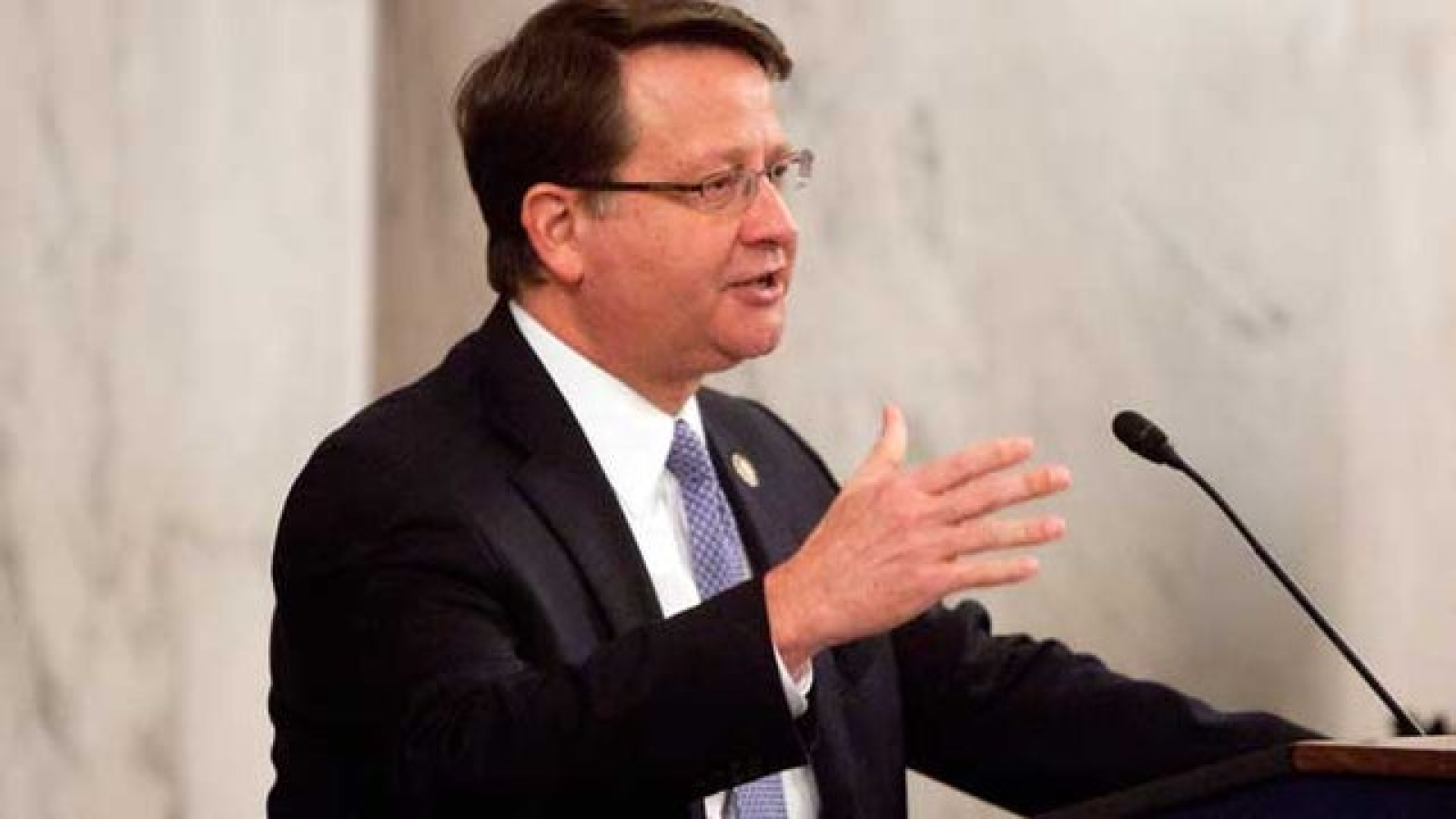
Summary
Current Position: US Senator since 2015
Affiliation: Democrat
Former Positions: US Representative from 2009 – 2015; Commissioner of the Michigan Lottery from 2003 – 2007; State Senator from 1995 – 2002
Other Positions: Chair, Homeland Security & Governmental Affairs Committee;
Chair, Subcommittee on Surface Transportation, Maritime, Freight and Ports
Before his election to Congress, Peters served in the United States Navy Reserve, spent 22 years as an investment advisor, and worked briefly in academia. He was appointed commissioner of the Michigan Lottery by Governor Jennifer Granholm, serving from 2003 to 2008, when he resigned to successfully run for Congress.
On January 28, 2021, Peters was selected as chair of the Democratic Senatorial Campaign Committee for the 2022 election cycle. He was later selected again for the 2024 cycle.
Featured Quote:
We must keep working together to pass infrastructure legislation. This is about spurring job creation, strengthening our economy, supporting Michigan businesses and investing to upgrade our roads, bridges and broadband access.
Gary Peters says Americans have suffered due to USPS service changes
OnAir Post: Gary Peters – MI
News
About
Source: Government page
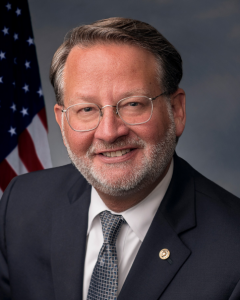 Senator Gary Peters has been honored to represent the State of Michigan in the U.S. Senate since 2015. He has focused on uniting our communities by fighting for the things we all agree on — a stronger economy, good-paying jobs, affordable health care, a secure retirement and an opportunity for everyone to succeed. In the 117th Congress, Gary is the Chairman of the Senate Homeland Security and Governmental Affairs Committee, which oversees the Department of Homeland Security and is the Senate’s top oversight committee. He also serves on the Senate Armed Services Committee and the Senate Commerce, Science, and Transportation Committee.
In the U.S. Senate, Gary is recognized as one of the most effective and bipartisan Senators, according to the non-partisan Center for Effective Lawmaking (University of Virginia and Vanderbilt University) and the Lugar Center (Georgetown University). During the last Congress (2019-2020), Gary was recognized as the #1 most effective Senator in the U.S. Senate, despite serving as a member of the minority party – an achievement that hadn’t been accomplished since the non-partisan Center for Effective Lawmaking began collecting data over 50 years ago. The Center for Effective Lawmaking cited a key to Gary’s success was his effectiveness in coalition-building. In those two years, Gary was the principal sponsor and author of more standalone bills signed into law than any Democratic or Republican member serving in either the Senate or House. Some of his bills signed into law include: increasing protections for the Great Lakes and securing historic funding for restoration efforts, increasing our nation’s security at our borders, addressing rising water levels and shoreline erosion in Great Lakes communities, expanding apprenticeships for veterans, improving the VA Caregivers Program and saving taxpayer dollars.
Gary was first elected to the U.S. House of Representatives in 2008, where he served on the Financial Services Committee. While in his first term and one of the most junior members of the House, the Speaker appointed Gary to serve on the conference committee that wrote and finalized the sweeping Dodd-Frank Wall Street and Consumer Protection Act.
Gary began his public service as a Rochester Hills City Councilman in 1991. In 1994, Gary was elected to the Michigan State Senate and served two terms. During his eight years of service, he authored and passed more bills signed into law than any other member of his party.
Gary volunteered for the U.S. Navy Reserve at age 34, where he earned a Seabee Combat Warfare Specialist designation and rose to the rank of Lieutenant Commander. After the September 11th terrorist attacks on our country, he volunteered again for drilling status and served overseas as part of his Reserve duty.
Gary worked in the private sector for over 20 years as both a financial advisor and in a variety of management positions with two major financial service firms. He was an assistant vice president at Merrill Lynch before working at UBS/PaineWebber as a vice president.
His combination of business and policy experience prompted then-Governor Granholm to appoint Gary to run the Michigan Lottery. As State Lottery Commissioner, he managed a multi-billion dollar business and consistently raised record amounts of money for the state School Aid Fund.
Gary is a product of Michigan schools. After graduating from Rochester High School, he attended Alma College, where he earned a B.A. in Political Science. While working a full-time job, he went on to earn an M.B.A. in Finance from the University of Detroit Mercy, an M.A. in political science from Wayne State University, an M.A. in Philosophy from Michigan State University with a focus on the ethics of development and a law degree (J.D.) from Wayne State University Law School. He also earned a diploma from the College of Naval Command and Staff, U.S. Naval War College.Gary was born in Pontiac, Michigan. His father, a World War II veteran, worked as a public school teacher and NEA union member for more than 30 years. His mother – who survived Nazi occupation of France and met Gary’s father while he served in Europe during the war – worked as a nurse’s aide at a local nursing home. She helped organize her workplace and became an SEIU union steward. Growing up, Gary learned the importance of hard work and fairness from his parents. He started his own small business delivering newspapers at age 11. In junior high, he bused tables at a Big Boy restaurant, and in high school and college, he worked at a local retailer and on a grounds crew. Gary is an Eagle Scout and in 2019, he was humbled to receive the Distinguished Eagle Scout Award from the Boy Scouts of America.
Gary and his wife, Colleen, live in Oakland County and have three children: Gary Jr., Madeleine and Alana.
Personal
Full Name: Gary C. Peters
Gender: Male
Family: Wife: Colleen; 3 Children: Gary Jr., Madeleine, Alana
Birth Date: 12/01/1958
Birth Place: Pontiac, MI
Home City: Bloomfield Township, MI
Religion: Episcopalian
Source: Detroit Office Lansing Office Grand Rapids Office Marquette Office Rochester Office Saginaw Office Traverse City Office Washington, DC Office Email: Government Source: Government page Michigan’s 14th congressional district, which included the eastern half of Detroit, the Grosse Pointes, Hamtramck, Southfield, and Pontiac, from 2009 to 2015 (the district was Michigan’s 9th congressional district until 2013). Before his election to Congress, Peters served in the United States Navy Reserve, spent 22 years as an investment advisor, and worked briefly in academia. He was elected to the Rochester Hills City Council in 1991 and represented the 14th district in the Michigan Senate from 1995 to 2002. He was the Democratic nominee for Michigan attorney general in 2002, narrowly losing to Republican Mike Cox. He was then appointed commissioner of the Michigan Lottery by Governor Jennifer Granholm, serving from 2003 to 2008, when he resigned to run for Congress. In 2014, Peters was elected to the United States Senate, the only non-incumbent Democrat to win a Senate election that year.[1][2] He was reelected in 2020, defeating Republican nominee John E. James in a close race.[3] Peters chaired the Democratic Senatorial Campaign Committee in the 2022 and 2024 election cycles. He is the ranking member of the Homeland Security and Governmental Affairs Committee in the 119th Congress. On January 28, 2025, he announced that he will not seek reelection in 2026. Gary Charles Peters was born on December 1, 1958, in Pontiac, Michigan.[4] His father, Herbert Garrett Peters, was a public school teacher who served in the U.S. Army during World War II.[5] His mother, Madeleine Vignier, who met his father in France during the war,[5] was a nurse’s aide and helped unionize her workplace.[6] Peters’ family has lived in Michigan since the 1840s.[7] He grew up in Oakland County and graduated from Rochester High School.[6] After high school, Peters attended Alma College, where he graduated magna cum laude in 1980 with a bachelor of arts in political science and was inducted into Phi Beta Kappa.[4] He later earned a master of business administration from the University of Detroit Mercy in 1984.[8] Peters also holds a juris doctor and a master of arts in political science from Wayne State University and a master of arts in philosophy from Michigan State University.[9] Peters joined the United States Navy Reserve in 1993 at age 34.[10] He served more than 10 years in units at Selfridge Air National Guard Base, including Naval Mobile Construction Battalion 26.[10] During his Navy service, Peters earned the Seabee combat warfare specialist insignia and carried out assignments as an assistant supply officer.[10] Peters’s reserve duty included time in the Persian Gulf supporting Operation Southern Watch; he served overseas again during increased military activity following the September 11 attacks.[10] Peters attained the rank of lieutenant commander before leaving the Reserve in 2008; his awards include the Navy and Marine Corps Achievement Medal and the Military Outstanding Volunteer Service Medal.[10][11] In 2018, he received a diploma from the College of Naval Command and Staff, part of the U.S. Naval War College.[12] Peters worked for 22 years as a financial advisor, serving as an assistant vice president at Merrill Lynch from 1980 until 1989, when he joined Paine Webber as a vice president.[13][14][15] From 2007 to 2008, Peters served as the third Griffin Endowed Chair in American Government at Central Michigan University. In that part-time position, he taught one class a semester, plus preparing additional student activities including two policy forums, and developing a journal of Michigan politics and policy, for $65,000 a year.[16] Peters announced his candidacy to run for Congress two months after being hired.[17] Some student and faculty members protested Peters’s hiring, saying he could not be objective in the classroom while running for office and that the university job was subsidizing his campaign.[17][18] Peters also has taught finance at Wayne State and strategic management and business policy courses at Oakland University.[14] Peters was a senior policy and financial analyst for the Michigan Department of Treasury[19] and served on arbitration panels for the New York Stock Exchange and the Financial Industry Regulatory Authority. Before serving in the Michigan Senate, Peters served on the Rochester Hills City Council from 1991 to 1993.[20][21] After a failed attempt in 1990, Peters was elected to the Michigan Senate to represent the Oakland County-based 14th district in November 1994. The district is one of the most diverse state Senate districts – containing nearly every racial, ethnic, and religious group in Michigan. It includes the cities of Pontiac, Bloomfield Hills, Southfield, and Oak Park in southeastern Oakland County. Peters was reelected in 1998 and served until 2002, stepping down then due to the state’s term limits. He was succeeded by Gilda Jacobs. Peters was chosen by his Democratic colleagues to chair his party’s caucus. He was also a member of the Michigan Law Revision Commission and served on the Michigan Sentencing Commission.[22] Both the Michigan State House of Representatives and the Senate passed a bill sponsored by Peters which banned any new wells under the state waters of the Great Lakes except in case of a state energy emergency. The bill passed into law without the signature of Governor John Engler.[23] Peters served as the vice chairman of the Senate Finance, Education, Judiciary and Economic Development Committees. He was also a member of the Natural Resources and the Mental Health and Human Services Committee.[22] In 2002, Peters was a candidate for governor and later for Attorney General.[24][25] As the Democratic nominee for attorney general, he lost the 2002 election to Republican nominee Mike Cox by about 5,200 votes, a 0.17% margin.[24][25] Peters decided not to contest the result despite reported irregularities. Several mistakes were reportedly found during analysis, including a precinct in Dearborn that recorded Peters with 96 votes when he actually had 396. The race was Michigan’s closest statewide contest since the 1950 gubernatorial race.[26] In 2003, Michigan governor Jennifer Granholm appointed Peters as the Michigan Lottery commissioner.[27][28][29] On August 7, 2007, Peters ended months of speculation by formally announcing he would run against eight-term Republican congressman Joe Knollenberg in the 9th district, which included almost all of Oakland County. Peters resigned as state lottery commissioner to devote his full energy to the campaign. Knollenberg was considered vulnerable due to an increasing Democratic trend in what was once a classic bastion of suburban conservatism. His opponents in 2002 and 2004 had performed significantly below the Democratic base in the district, but he was nearly defeated in 2006 by Nancy Skinner, a former radio talk-show host who spent virtually no money—the closest a Republican had come to losing the district in almost half a century. This led the Democratic Congressional Campaign Committee to target Knollenberg for defeat. In the 2002 state attorney general race, Peters performed at or above the Democratic base in 72% of the 9th district precincts. In his 1998 state Senate campaign, he performed at or above base in 99% of the precincts.[30] Peters won the November 4 election by 33,524 votes, taking 52% of the vote to Knollenberg’s 43%. Barack Obama carried Oakland County by 15 points; roughly two-thirds of Oakland County was in the 9th. Peters was the fourth person and first Democrat to represent the district since its creation in 1933[31] (it was the 17th district from 1933 to 1953, the 18th from 1953 to 1973, the 19th from 1973 to 1983, the 18th from 1983 to 1993, and the 11th from 1993 to 2003, becoming the 9th in 2003). In November 2010, Peters defeated challenges by Republican Andrew “Rocky” Raczkowski, Libertarian Adam Goodman, Independent Bob Gray, Independent Matthew Kuofie, and Green Douglas Campbell.[32] Due to the state’s population decline, as reflected by the 2010 census, Michigan lost one congressional district. As a result of the subsequent redistricting of House seats, much of Peters’s 9th district, including his home in Bloomfield Hills, was merged with the 12th district, represented by fellow Democrat Sander Levin. The new district retained Peters’s district number (the 9th) but geographically was more Levin’s district.[citation needed] In September 2011, Peters opted to run in the newly redrawn 14th district. The district had previously been the 13th district, represented by freshman Democrat Hansen Clarke. The redrawn district is based in Detroit, but contains a large chunk of Peters’s old State Senate district and portions of his old congressional district. Indeed, Peters had represented most of the Oakland County portion of the district at one time or another. Due to Detroit’s dwindling population, it was no longer possible to keep the district exclusively within Wayne County.[citation needed] In the August 2012 Democratic primary, Peters defeated Clarke, who had opted to follow most of his constituents into the reconfigured 14th even though his home had been drawn into the reconfigured 13th (the old 14th), and Southfield Mayor Brenda Lawrence.[33] The 14th was a heavily Democratic, 58% Black district, and Peters was overwhelmingly favored in November. As expected, he bested Republican John Hauler in the general election with 82% of the vote.[34] He was the first white congressman to represent a significant portion of Detroit since 1993.[citation needed] Peters was sworn into his first term in January 2009. During his time in office, he voted for the Recovery Act, also known as the stimulus,[35] the Patient Protection and Affordable Care Act,[36] the American Clean Energy and Security Act, which would have established a national emissions trading plan, but was not passed by the full Congress,[37] the Paycheck Fairness Act, also not passed into law,[38] the Lilly Ledbetter Fair Pay Act,[39] and the DREAM Act to provide conditional permanent residency to certain immigrants.[40] Peters worked with the Obama administration to obtain debt forgiveness for Chrysler.[41] House Financial Services Committee Chairman Barney Frank said Peters was the “single most effective person” in fighting the forces that wanted to let Detroit go bankrupt.[42] In Congress, Peters opposed a plan to provide disaster relief aid, the funds for which would have come from the Advanced Technology Vehicles Manufacturing (ATVM) loan program.[43] The Michigan Messenger wrote in 2010 that Peters was “criticizing the leadership of his own party. Peters and three other Democratic legislators … this week formed the Spending Cuts and Deficit Reduction Working Group and proposed a series of bills to cut spending. Peters’ bill makes cuts in the federal energy budget.”[44] “We have been growing increasingly frustrated with the lack of action and talking about specifics and putting those on the table”, Peters said. “We’ve been frustrated with both Democratic leadership and Republicans.”[45] Peters allied himself with the Occupy Wall Street movement, making an appearance at Occupy Detroit in November 2011. He told reporters: “It’s speculation on Wall Street that we’re still paying the price for here, particularly in Detroit, that almost brought the auto industry to a collapse because of what we saw on Wall Street. So we put in restrictions, or put in regulations necessary to rein that in, and right now in Washington I’m facing a Republican majority that wants to undo that.”[46] Peters was one of 118 House Democrats who signed a letter to President Obama in 2011 urging him to support the United Nations Population Fund (UNFPA), a multinational organization that provides health services to women, children, and families in more than 150 countries.[47] In 2014, he opposed a Michigan law that prohibits insurers from offering abortion coverage as a standard feature in health plans.[48] Peters was named senior whip for the Democratic caucus in 2013.[49] In 2014, Peters ran for the Senate seat being vacated by retiring Senator Carl Levin.[50] Levin and Senator Debbie Stabenow endorsed Peters, and his entrance largely cleared the field of potential Democratic challengers.[51] Peters’s largest independent supporter was the Senate Majority PAC, which spent almost $3.2 million for ads attacking the Republican nominee, Terri Lynn Land.[52][53][54][55] In July 2014, Senator Elizabeth Warren supported Peters at a campaign fundraising event.[56] While the race was considered competitive early on, various missteps by Land’s campaign and her reluctance to appear in public benefited Peters; he had consistent leads in polls late in the campaign.[57][58][59] Peters faced Republican nominee John James in the November 2020 general election.[60] James previously ran unsuccessfully for Senate in 2018 against Stabenow. Less than a month before the election, Peters became the first sitting U.S. senator ever to publicly reveal a personal family experience with abortion.[61] He was reelected by a smaller margin (1.7%) than expected.[62] Peters was participating in the certification of the 2021 United States Electoral College vote count on January 6, 2021, when Trump supporters stormed the United States Capitol. Along with other senators and staff, Peters was evacuated from the Senate floor when rioters breached the Capitol.[63] From a secured location, he tweeted that the attacks were “dangerous, unacceptable and an attack on our democracy—and must stop.”[64] Peters blamed Trump, calling him “a clear and present danger” and calling for his immediate removal from office through the 25th amendment of the U.S. Constitution or impeachment.[65][66] Peters also called for investigations into the security and intelligence failure that resulted in the breaching of the Capitol and the five deaths.[63] He led the investigation as chair of the Senate Homeland Security and Governmental Affairs Committee.[67] In the Bipartisan Index created by The Lugar Center and the McCourt School of Public Policy, Peters was ranked the 17th-most bipartisan U.S. senator (and the fourth-most bipartisan Democrat) during the 115th U.S. Congress (2017–2019).[72] The nonpartisan Center for Effective Lawmaking ranked Peters the most effective senator in the 116th Congress (2019–2021), despite his being in the minority party.[73] In 2023, the Lugar Center ranked Peters second among senators for bipartisanship.[74] Peters supported the Paycheck Fairness Act. In 2015, he voted for the International Violence Against Women Act.[75] He supports abortion rights. In the late 1980s, his first wife had a wanted pregnancy that failed at four months, but her miscarriage did not proceed naturally, causing a health emergency. Their hospital did not perform abortions, but Peters’s wife was able to get an emergency abortion at another hospital in part because she and Peters were friends with the hospital’s administrator.[61] In 2017, in response to China‘s efforts to purchase tech companies based in the U.S., Peters was one of nine senators to cosponsor a bill that would broaden the federal government’s ability to prevent foreign purchases of U.S. firms by strengthening the Committee on Foreign Investment in the United States (CFIUS). The CFIUS’s scope would be expanded to allow it to review and decline smaller investments and consider additional national security factors, including whether information about Americans would be exposed as part of transactions and whether a deal would facilitate fraud.[76] In 2017, Peters cosponsored the Israel Anti-Boycott Act, which would make it a federal crime for government contractors to encourage or participate in boycotts against Israel and Israeli settlements in the occupied Palestinian territories if protesting actions by the Israeli government.[77][78] Peters continued to strongly support Israel during the Gaza war, sponsoring legislation in 2024 to provide $30 million to support Israeli anti-tunneling operations and for the technology to be shared with the United States for use at its borders.[79] He also voted to defund U.S. support for UNRWA through 2025 after an Israeli campaign to discredit the agency, at the time the main organization responsible for coordinating humanitarian assistance in Gaza.[80][81] In 2025, Peters was in the minority of Senate Democrats that voted not to block the sale of arms to Israel despite rising death tolls from its war on Gaza and restrictions on humanitarian aid resulting in widespread famine.[82] In April 2026, Peters joined most Senate Democrats in supporting a resolution to block a sale of bulldozers to Israel, but was one of 11 to oppose another resolution voted on the same day to block another sale to Israel of 1,000-pound bombs.[83] Peters is a gun owner.[84] After the 2016 Orlando nightclub shooting, he supported the Chris Murphy gun control filibuster.[85] In 2019, he was one of 40 senators to introduce the Background Check Expansion Act, a bill that would require background checks for the sale or transfer of all firearms. Exceptions to the bill’s background check requirement included transfers between members of law enforcement, loaning firearms for hunting or sporting events on a temporary basis, providing them as gifts to members of one’s immediate family, transferring them as part of an inheritance, or giving one to another person temporarily for immediate self-defense.[86][87] Peters voted for the Patient Protection and Affordable Care Act (Obamacare) in 2009.[88] He has opposed attempts to repeal the law, and supported a Medicare public option to expand health care access.[75] Peters voted against providing COVID-19 pandemic financial support to undocumented immigrants in 2021.[89] In 2025, Peters was one of 12 Senate Democrats who joined all Republicans to vote for the Laken Riley Act.[90] On March 5, 2025, Peters introduced S. 874, the Expanding Whistleblower Protections for Contractors Act of 2025, which aims to strengthen protections for federal contractors who report waste, fraud, or abuse by ensuring they are shielded from retaliation by government officials.[91][92][93] Peters is married to Colleen Ochoa, who is from Waterford Township, Michigan. They have three children and live in Bloomfield Township, Michigan.[94] He is an Episcopalian and has said his religion is important to him and “gives me comfort in rough times”.[95] Peters is an avid motorcyclist and has made a tradition of annual motorcycle tours of Michigan.[96] He is a member of the Sons of the American Revolution.[97] His ancestor William Garrett served in the Virginia Militia in the Revolutionary War alongside George Washington at Valley Forge during the harsh winter of 1777 to 1778.[98][11] He had a net worth between $1.7 million and $6.3 million at the end of 2014, which ranked him 37th in the Senate in terms of wealth.[99][100] ▌ Tuberville (R) ▌ Britt (R) ▌ Sullivan (R) ▌ Gallego (D) ▌ Cotton (R) ▌ Schiff (D) ▌ Hickenlooper (D) ▌ Blumenthal (D) ▌ Murphy (D) ▌ Blunt Rochester (D) ▌ Moody (R) ▌ Warnock (D) ▌ Hirono (D) ▌ Risch (R) ▌ Duckworth (D) ▌ Banks (R) ▌ Ernst (R) ▌ Marshall (R) ▌ Paul (R) ▌ Kennedy (R) ▌ King (I) ▌ Van Hollen (D) ▌ Alsobrooks (D) ▌ Markey (D) ▌ Slotkin (D) ▌ Smith (D) ▌ Hyde-Smith (R) ▌ Schmitt (R) ▌ Sheehy (R) ▌ Ricketts (R) ▌ Cortez Masto (D) ▌ Rosen (D) ▌ Hassan (D) ▌ Kim (D) ▌ Luján (D) ▌ Gillibrand (D) ▌ Budd (R) ▌ Cramer (R) ▌ Husted (R) ▌ Armstrong (R) ▌ Merkley (D) ▌ McCormick (R) ▌ Whitehouse (D) ▌ Graham (R) ▌ Rounds (R) ▌ Hagerty (R) ▌ Cruz (R) ▌ Curtis (R) ▌ Welch (D) ▌ Kaine (D) ▌ Cantwell (D) ▌ Justice (R) ▌ Baldwin (D) ▌ Lummis (R)Education
Political Experience
Professional Experience
Offices
Patrick V. McNamara Federal Building
477 Michigan Avenue
Suite 1837
Detroit, MI 48226
(313) 226-6020
Toll Free: (844) 506-7420
124 West Allegan Street
Suite 1400
Lansing, MI 48933
(517) 377-1508
Gerald R. Ford Federal Building
110 Michigan Street NW
Suite 720
Grand Rapids, MI 49503
(616) 233-9150
857 W Washington St
Suite 308
Marquette, MI 49855
(906) 226-4554
407 6th Street
Suite C
Rochester, MI 48307
(248) 608-8040
515 North Washington Avenue
Suite 401
Saginaw, MI 48607
(989) 754-0112
818 Red Drive
Suite 40
Traverse City, MI 49684
(231) 947-7773
Hart Senate Office Building
Suite 724
Washington, DC 20510
(202) 224-6221Contact
Web Links
More Information
Services
Wikipedia
Early life and education
Military career
Business and academic career
Michigan Senate (1995–2002)
Elections
Tenure
Statewide elections
U.S. House of Representatives (2009–2015)
Elections
2008

2010

2012

Tenure
_(cropped).jpg)
U.S. Senate (2015–present)
Elections
2014

2020
Tenure
Committee assignments

Caucus memberships
Political positions

Women’s rights and abortion
Foreign policy
China

Israel-Palestine
Guns
Health care
Immigration
Whistleblower protections
Personal life
Electoral history
References
“Sen. Peters delivers reading of farewell address”. WSYM. February 26, 2018.
“Sen. Peters delivers reading of George Washington’s farewell address”. WILX. February 26, 2018.
“Peters Delivers President George Washington’s Farewell Address on Senate Floor”. peters.senate.gov. February 26, 2018. Retrieved April 17, 2020.External links

Expenditures in Executive Departments
(1921–1952)Government Operations
(1952–1977)Governmental Affairs
(1977–2005)Homeland Security and Governmental Affairs
(2005–)Class 1 Class 2 International National People Other