• Issues
    • Democracy
    • Economy & Jobs
    • Education
    • Energy & Environment
    • —-
    • Federal Government
    • Food and Housing
    • Global Affairs
    • Healthcare
    • ————–
    • Human Rights
    • Immigration
    • Infrastructure
    • National Security
    • ————
    • Public Safety
    • Science & Technology
    • Seniors
    • Veterans
  • |
  • Representatives
    • Office of the President
    • ———————
    • All US Senators
    • Democratic Senate Leaders
    • Democratic Senators
    • Republican Senate Leaders
    • Republican Senators
    • _______________
    • Democratic House Leaders
    • Democratic House Members
    • Republican House Leaders
    • Republican House Members
  • Government
    • US Executive Branch
    • Trump Cabinet
    • Key Trump Appointments
    • US Government Departments
    • Key US Agencies
    • ——————
    • US Senate Committees
    • US House Committees
    • Joint Committees
    • ———–
    • US Judicial Branch
  • Elections
    • Voting Info by State
    • ———-
    • 2020 Races
      • 2020 Presidential Race
      • 2020 US Senate Races
      • 2020 Governor Races
    • 2022 Races
      • 2022 All Governor Races
      • 2022 Competitive Governor Races
      • 2022 All Senate Races
      • 2022 Competitive US Senate Races
      • 2022 Competitive US House Races
    • 2024 Races
      • 2024 US Presidential Race
      • 2024 Competitive US Senate Races
      • 2024 Competitive US House Races
  • |
  • States
    • onAir State Hubs
    • US & the States
    • ————–
    • Governors
      • Democratic Governors
      • Republican Governors
    • State Executive Branches
    • State Judicial Branches
    • State Legislatures
  • |
  • About
    • US onAir Network
    • Becoming a Member
    • Tips for Using onAir
    • ———
    • The People’s Internet
      • Project Liberty
      • DSNP Apps
      • DSNPs
      • DSNP Advocates
      • DSNP Organizations
    • Free Info Sources
    • Champions of Democracy
    • —————–
    • Universities
      • DC area Universities
      • John Hopkins University
    • Political Organizations
      • Parties
      • Political Action Committees
      • Think Tanks
    • ——–
    • People
      • Academics
      • Civic Billionaires
      • Journalists and Authors
      • Network Hosts
      • Nonprofits
      • Podcasters
  • Log In
  • About
    • Champions of Democracy
    • Universities
      • John Hopkins University
      • DC area Universities
    • People
      • Academics
      • Network Hosts
      • Journalists and Authors
      • Podcasters
      • Nonprofit Executives
      • Civic Billionaires
    • US onAir Network
    • Free Info Sources
    • The People's Internet
      • DSNPs
      • Project Liberty
      • DSNP Apps
      • DSNP Organizations
      • DSNP Advocates
    • Becoming a Member
    • Political Organizations
      • Parties
      • Political Action Committees
      • Think Tanks
    • Tips for Using onAir
  • Elections
    • Voting Info by State
    • 2024 Races
      • 2024 Competitive US House Races
      • 2024 US Presidential Race
      • 2024 Competitive US Senate Races
    • 2022 Races
      • 2022 All Senate Races
        • 2022 Competitive US Senate Races
      • 2022 All Governor Races
      • 2022 Competitive US House Races
      • 2022 Competitive Governor Races
    • 2020 Races
      • 2020 US Senate Races
        • Lean Democrat 2020 Senate Races
        • Lean Republican 2020 Senate Races
        • Competitive 2020 Senate Races
      • 2020 Governor Races
      • 2020 Presidential Race
  • Government
    • US Senate Committees
      • Agriculture, Nutrition, and Forestry
      • Appropriations (Senate)
      • Armed Services (Senate)
      • Banking, Housing, and Urban Affairs
      • Budget (Senate)
      • Commerce, Science, and Transportation
      • Energy and Natural Resources
      • Environment and Public Works
      • Finance
      • Foreign Relations
      • Health, Education, Labor, and Pensions
      • Homeland Security and Governmental Affairs
      • Judiciary (Senate)
      • Rules and Administration
      • Select Committee on Ethics
      • Small Business and Entrepreneurship
      • Special Committee on Aging
      • Select Committee on Intelligence
      • Veteran Affairs (Senate)
      • Select Committee on Indian Affairs
    • US House Committees
      • Appropriations (House)
      • Agriculture
      • Armed Services (House)
      • Budget (House)
      • Education and the Workforce
      • Energy and Commerce
      • Ethics
      • Financial Services
      • Foreign Affairs
      • Homeland Security
      • House Administration
      • Judiciary (House)
      • Natural Resources
      • Oversight and Reform
      • Rules (House)
      • Science, Space, and Technology
      • Small Business
      • Transportation and Infrastructure
      • Veterans’ Affairs (House)
      • Ways and Means
      • Permanent Select Committee on Intelligence
      • Previous House Committees
        • Select Committee on the Climate Crisis
        • Select Committee on Economic Disparity and Fairness in Growth
        • Select Committee on the Modernization of Congress
        • Select Committee on the Jan 6th Attack
      • Select Committee on the Chinese Party
    • US Judicial Branch
    • Joint Committees
      • Joint Committee on Printing
      • Joint Committee on Taxation
      • Joint Committee on the Library
      • Joint Economic Committee
    • US Executive Branch
      • Biden Cabinet & Staff
      • Key US Agencies
      • US Government Departments
      • Trump Cabinet
      • Trump Staff
      • Key Trump Appointments
  • Home
    • United States News
      • 2022 News
        • 2022 Winter US News
        • 2022 Spring US News
        • 2022 Summer US News
        • 2022 Fall US News
        • 2023 Spring 2023 US News
      • 2024 News
        • August 2024 News
        • 2024 Featured News
        • July 2024 News
        • September 2024 News
        • October 2024 News
        • November 2024 News
        • December 2024 News
      • 2025 News
        • 2025 Featured News
        • Janurary 2025 News
        • February 2025 News
        • March 2025 News
        • April 2025 News
        • May 2025 News
  • Issues
    • Democracy
      • Partisan Polarization
      • Money in Politics
      • Voting Rights
    • Healthcare
      • Addiction
      • Infectious Diseases
      • Health Promotion
    • Global Affairs
      • Russia & Ukraine
      • China & Taiwan
      • Middle East
    • Economy & Jobs
      • Inflation
      • Income Inequality
      • High Tech Manufacturing
    • Human Rights
      • Women's Rights
      • Discrimination
      • Gun Rights
      • Abortion
    • Energy & Environment
      • Climate Change
      • Pollution
      • Carbon-based Fuel
    • Public Safety
      • Gun Safety
      • Disinformation
      • Prison Reform
    • Science & Technology
      • US AI policy
      • Nanotechnology
      • Space Exploration
    • Education
      • Apprenticeships
      • STEM Learning
      • AI in Education
    • Veterans
      • Mental Health
      • Job Opportunities
      • Homelessness
    • Immigration
      • Border Security
      • Work Visas
      • Dreamers
    • Seniors
      • Social Security
      • Medicare
      • Longevity
    • Federal Government
      • Deficit & Debt
      • Regulations
      • Citizen Engagement
    • Food and Housing
      • Food Insecurity
      • Sustainable Agriculture
      • Housing Availability
    • Infrastructure
      • Transportation
      • Electric Grid
      • Broadband
    • National Security
      • Cybersecurity
      • NATO
      • Robotic Warfare
  • Representatives
    • Office of the President
      • Former Presidents & VPs
      • Donald Trump
      • JD Vance
    • US House Members
      • Democratic House Members
      • Republican House Members
      • Northeastern House Members
        • Connecticut US House
        • Maine US House
        • Massachusetts US House
        • New Hampshire US House
        • New Jersey US House
        • Pennsylvania US House
        • New York US House
        • Rhode Island US House
        • Vermont US House
      • Midwestern House Members
        • Ohio US House
        • Illinois US House
        • Indiana US House
        • Iowa US House
        • Kansas US House
        • Minnesota US House
        • Missouri US House
        • Nebraska US House
        • North Dakota US House
        • South Dakota US House
        • Wisconsin US House
        • Michigan US House
      • Southern House Members
        • Virginia US House
        • North Carolina US House
        • South Carolina US House
        • Oklahoma US House
        • Tennessee US House
        • Texas US House
        • West Virginia US House
        • Maryland US House
        • Louisiana US House
        • Kentucky US House
        • Georgia US House
        • Florida US House
        • Delaware US House
        • Arkansas US House
        • Alabama US House
        • Mississippi US House
      • Western House Members
        • Wyoming US House
        • Washington US House
        • Utah US House
        • Oregon US House
        • New Mexico US House
        • Nevada US House
        • Montana US House
        • Idaho US House
        • Hawaii US House
        • Colorado US House
        • California US House
        • Arizona US House
        • Alaska US House
      • Republican House Leaders
      • Democratic House Leaders
    • US Senators
      • Democratic Senators
      • Republican Senators
      • Democratic Senate Leaders
      • Republican Senate Leaders
  • States
    • State Executive Branches
    • State Legislatures
      • Split Legislatures
      • Republican controlled legislatures
      • Democratic controlled legislatures
    • Governors
      • Republican Governors
      • Democratic Governors
    • State Judicial Branches
    • onAir State Hubs
      • US & the States
  • US onAir
    • onAir Networks (Logo)
      • Links to State Hubs
        • Northeastern State Hubs
        • Southern State Hubs
        • Western State Hubs
        • Midwestern State Hubs
      • Revenue Sources
    • Future Expo
      • Post Sponsoring organizations
        • Colleges & Universities
        • Nonprofits Promoting Democracy
        • Nonprofits
        • Nonpartisan information sources
        • Foundations
        • Government Agencies
      • Advertising Organization
        • Law firms
        • Associations
        • PACS & SuperPACS
        • Corporations
        • Media
        • Party Organizations (Expo)
        • Products & Services
    • onAircasts
      • Upcoming In Person Events
      • Upcoming Aircasts
    • More Posts
      • Maps
      • Democracy onAir
        • US onAir Curators & Moderators
        • US onAir Aircasters
        • US onAir Hub Managers
        • US onAir State Hub Managers
      • onAir in person events
      • My onAir Example
      • About Videos
    Government
    • Government
    • Joint Committees
    • US Executive Branch
    • US House Committees
    • US Judicial Branch
    • US Senate Committees
    > US Executive Branch
    • US Executive Branch
    • Biden Cabinet & Staff
    • Key Trump Appointments
    • Key US Agencies
    • Trump Cabinet
    • Trump Staff
    • US Government Departments
    > Key US Agencies
x

Table of Contents

Discuss
Share

SEC: Securities and Exchange Commission

SEC: Securities and Exchange Commission

Summary

The U.S. Securities and Exchange Commission (SEC) is an independent agency of the United States federal government, created in the aftermath of the Wall Street Crash of 1929. The primary purpose of the SEC is to enforce the law against market manipulation.

In addition to the Securities Exchange Act of 1934, which created it, the SEC enforces the Securities Act of 1933, the Trust Indenture Act of 1939, the Investment Company Act of 1940, the Investment Advisers Act of 1940, the Sarbanes–Oxley Act of 2002, and other statutes. The SEC was created by Section 4 of the Securities Exchange Act of 1934 (now codified as 15 U.S.C. § 78d and commonly referred to as the Exchange Act or the 1934 Act).

Source: Wikipedia

OnAir Post: SEC: Securities and Exchange Commission

About

Overview

The federal securities laws empower the Securities and Exchange Commission (SEC) with broad authority over all aspects of the securities industry. The SEC’s mission is to protect investors; maintain fair, orderly, and efficient markets; and facilitate capital formation.

The SEC has up to five Commissioners appointed by the President on the advice and consent of the Senate. No more than three Commissioners can be members of the same political party.

Divisions & Offices

The SEC’s tasks and responsibilities are allocated among divisions and offices with expertise in specific areas.

Regional Offices

The SEC has 11 regional offices spread throughout the country to help with enforcement and examination functions.

Advisory Committees

The SEC’s advisory committees provide perspectives, advice, and recommendations to Commissioners and staff.

Additional Resources

  • Budget/Operations
  • Careers/Jobs
  • Diversity & Inclusion
  • Procurement/Contracts 
  • Reports/Publications
  • Votes by Commissioners

Contact the SEC

  • Chairman and Commissioners
  • SEC Headquarters
  • SEC Regional Offices

Source:

Web Links

  • Government Site
  • Google Search
  • Wikipedia

More Information

Wikipedia


Wikipedia
The Free Encyclopedia

Search


        • Donate
        • Create account
        • Log in

        Contents


        • (Top)


        • 1
          Overview: how the SEC carries out its mandate


          • 1.1
            Legal authority and statutory framework


            • 1.2
              Core toolkit: disclosure, oversight, and enforcement


              • 1.2.1
                Disclosure filings


                • 1.2.2
                  Market oversight


                  • 1.2.3
                    Investigations and enforcement


                    • 1.2.4
                      Whistleblower program


                    • 1.3
                      Market guidance and compliance positions


                      • 1.3.1
                        Comment letters


                        • 1.3.2
                          No-action letters


                      • 2
                        History


                        • 2.1
                          Origins


                          • 2.1.1
                            The era of blue sky laws and early state regulation


                          • 2.2
                            Founding and early development


                            • 2.2.1
                              New Deal securities reforms and enabling statutes


                              • 2.2.2
                                Early leadership and institutional direction


                                • 2.2.3
                                  Early years and New Deal era (1934–1941)


                                • 2.3
                                  21st century developments


                                • 3
                                  Organizational structure


                                  • 3.1
                                    Commission leadership and governance


                                    • 3.1.1
                                      Commission members


                                      • 3.1.2
                                        Current commissioners


                                        • 3.1.3
                                          The chair and historical list of chairs


                                        • 3.2
                                          Divisions


                                          • 3.3
                                            Field offices


                                            • 3.4
                                              Offices and support functions


                                            • 4
                                              Budget and funding


                                              • 5
                                                Major enforcement actions and market events


                                                • 5.1
                                                  Early legitimacy shocks and audit reforms (1934–1940)


                                                  • 5.2
                                                    Defining the perimeter of federal securities law (1946–1953): “investment contracts” and the limits of “private” offerings


                                                    • 5.3
                                                      Insider trading and market integrity (1963–2014): materiality, duties, and the “expert network” era


                                                      • 5.4
                                                        Corporate fraud, conflicts, and market structure (1969–2024): disclosure failures, gatekeepers, and market plumbing under stress


                                                        • 5.5
                                                          Wall Street power plays and takeover-era policing (1986–1991): Drexel, Milken, and the boundaries of aggressive finance


                                                          • 5.6
                                                            Mega-frauds and examination failures (1992–2009): Madoff and the credibility gap


                                                            • 5.7
                                                              Financial crisis era interventions (2008–2010): emergency tools, disclosure stress tests, and enforcement credibility


                                                              • 5.8
                                                                Cross-border bribery, shadow finance, and illicit finance (1971–1991): fugitives, offshore structures, and limits of reach


                                                                • 5.9
                                                                  National security and crisis-time market integrity (2001–2004): 9/11 trading scrutiny and inter-agency dynamics


                                                                  • 5.10
                                                                    Administrative-law constraints on SEC forums and remedies (2013–2024): constitutional limits on in-house adjudication


                                                                    • 5.11
                                                                      High-profile SEC enforcement against major cryptocurrency firms (2019–2025): registration, disclosure, custody, and platform theories


                                                                    • 6
                                                                      Regulatory flashpoints and emerging areas


                                                                      • 6.1
                                                                        Digital assets, tokenization, and market structure


                                                                        • 6.2
                                                                          Tokenization-related staff guidance and no-action activity


                                                                          • 6.3
                                                                            Risk disclosures


                                                                          • 7
                                                                            Law enforcement partnerships and regulatory coordination


                                                                            • 8
                                                                              Data and Transparency


                                                                              • 8.1
                                                                                Public datasets


                                                                                • 8.2
                                                                                  Non-public sensitive data


                                                                                  • 8.3
                                                                                    Freedom of Information Act processing performance


                                                                                  • 9
                                                                                    Oversight scrutiny and accountability concerns


                                                                                    • 9.1
                                                                                      Accountability critiques and major investigations


                                                                                      • 9.2
                                                                                        Madoff-related scrutiny


                                                                                        • 9.3
                                                                                          Other high-profile inquiries and criticisms


                                                                                          • 9.4
                                                                                            Inspector general scrutiny and internal governance concerns


                                                                                            • 9.5
                                                                                              Records retention and early-stage inquiry files


                                                                                            • 10
                                                                                              Related legislation


                                                                                              • 11
                                                                                                See also


                                                                                                • 12
                                                                                                  References


                                                                                                  • 13
                                                                                                    External links


                                                                                                    • Article
                                                                                                    • Talk

                                                                                                      • Read
                                                                                                      • View history

                                                                                                      Tools


                                                                                                      Actions
                                                                                                      • Read
                                                                                                      • View history
                                                                                                      General
                                                                                                      • What links here
                                                                                                      • Related changes
                                                                                                      • Upload file
                                                                                                      • Permanent link
                                                                                                      • Page information
                                                                                                      • Cite this page
                                                                                                      • Get shortened URL
                                                                                                      • Download QR code
                                                                                                      Print/export
                                                                                                      • Download as PDF
                                                                                                      • Printable version
                                                                                                      In other projects
                                                                                                      • Wikimedia Commons
                                                                                                      • Wikinews
                                                                                                      • Wikisource
                                                                                                      • Wikidata item

                                                                                                      Appearance


                                                                                                      “Securities and Exchange Commission” redirects here. For other uses, see Securities and Exchange Commission (disambiguation).

                                                                                                      The United States Securities and Exchange Commission (SEC) is an independent agency of the U.S. federal government that enforces federal securities laws and regulates U.S. securities markets. Its stated mission is to protect investors, maintain fair, orderly, and efficient markets, and facilitate capital formation.

                                                                                                      Congress created the SEC in 1934 after the Wall Street Crash of 1929 as part of New Deal securities reforms. Established through Section 4 of the Securities Exchange Act of 1934 (15 U.S.C. § 78d), the agency administers major federal securities statutes and oversees key parts of the securities markets, including public-company disclosure, market intermediaries, investment products, and trading venues. The SEC investigates and pursues misconduct such as financial fraud, insider trading, and market manipulation.[2][3][4][5][6]

                                                                                                      The SEC carries out its work through rulemaking, examinations, and enforcement actions. The agency enforces the securities laws primarily through civil actions in federal court or administrative proceedings and refers potential criminal violations to the Federal Bureau of Investigation or the Department of Justice when appropriate.[7] The agency is headquartered in Washington, D.C., and is often metonymously called “the commission” or “the agency.”

                                                                                                      Public scrutiny of the SEC’s enforcement approach has remained high, shaped in part by its handling of major frauds such as the Bernard Madoff scheme and by market turmoil in digital assets in the early 2020s. The agency has also brought high-profile crypto-related cases, including a civil action against Samuel Bankman-Fried over his role in the collapse of FTX Trading Ltd.[7] and a case against Terraform Labs and Do Kwon that resulted in a jury verdict and a settlement exceeding $4.5 billion after the collapse of the TerraUSD and Luna ecosystem.[8]The agency has outlined an initiative called “Project Crypto,” which proposes a taxonomy for crypto assets and related guidance.[9][10]

                                                                                                      In the 2020s, major U.S. Supreme Court decisions and legislative proposals reshaped the SEC’s enforcement toolkit and its role in fast-evolving digital-asset markets. The Supreme Court’s 2024 decision in SEC v. Jarkesy held that defendants are entitled to a jury trial under the Seventh Amendment when the SEC seeks civil penalties for securities fraud, shifting those penalty claims from administrative proceedings to federal court.[11] Congress has also considered—and in some cases enacted—legislation addressing payment stablecoins and broader digital-asset market structure.

                                                                                                      Overview: how the SEC carries out its mandate

                                                                                                      Legal authority and statutory framework

                                                                                                      Established by Congress, the SEC’s authority is rooted in Section 4 of the Securities Exchange Act of 1934 (15 U.S.C. § 78d). The agency administers and enforces statutes that govern securities offerings on U.S. capital markets, including the Securities Act of 1933, the Trust Indenture Act of 1939, the Investment Company Act of 1940, the Investment Advisers Act of 1940, and the Sarbanes–Oxley Act of 2002, and related securities laws.

                                                                                                      Core toolkit: disclosure, oversight, and enforcement

                                                                                                      Street lamps and glass façade at the U.S. Securities and Exchange Commission headquarters, Washington, D.C.

                                                                                                      To advance its three-part mission, the SEC carries out its mandate through three primary functions that operate throughout the regulatory lifecycle: disclosure-based regulation (to prevent misinformation), oversight of market structure (to detect irregularities), and civil enforcement (to punish misconduct). Disclosure rules require standardized reporting intended to help investors compare issuers and evaluate risk. Market oversight focuses on supervised entities such as broker-dealers, investment advisers, and exchanges. Enforcement supports market integrity by investigating potential violations and bringing civil actions involving misconduct such as fraud or insider trading.

                                                                                                      The SEC’s mandate, stemming from the agency’s three-pronged mission, can involve strategic trade-offs. Disclosure, reporting, and compliance requirements can increase costs for issuers and may influence some firms’ decisions about entering or remaining in the public markets, particularly smaller companies. At the same time, disclosure and enforcement can strengthen market integrity and investor confidence, which can affect the cost and availability of capital. Analysts and policymakers often evaluate the SEC by how it balances investor protection with efficient capital formation.

                                                                                                      Disclosure filings

                                                                                                      Federal securities laws require public companies to disclose material information through periodic reports so investors can evaluate financial performance and material risks. Management must also provide a narrative discussion—Management’s Discussion and Analysis (MD&A)—that explains results, key risks, and known trends that may shape future performance.[12] These requirements aim to reduce information asymmetry and support market transparency. To make filings publicly accessible, the SEC maintains EDGAR (Electronic Data Gathering, Analysis, and Retrieval), which, since 1994, has provided online access to most registration statements and related materials and supports analysis by institutional and retail investors.[13][14]

                                                                                                      Market oversight

                                                                                                      The SEC oversees supervised intermediaries that facilitate trading and asset management, such as broker-dealers, investment advisers, securities exchanges, and self-regulatory organizations. The Division of Examinations executes this oversight by conducting risk-based inspections to verify compliance with federal laws regarding conflict-of-interest management and asset safeguarding.[15] Examinations are one component of oversight; supervision also includes ongoing monitoring of firm conduct and market activity. For broker-dealers, the SEC oversees FINRA, a self-regulatory organization that conducts member examinations and enforces compliance with applicable rules, subject to SEC oversight.[16]

                                                                                                      Investigations and enforcement

                                                                                                      The SEC investigates potential violations of the federal securities laws, including fraud, insider trading, market manipulation, and misleading disclosures. The Division of Enforcement leads these matters as a civil authority, bringing actions in federal court or initiating administrative proceedings.[17] The SEC often coordinates with the Department of Justice (DOJ), the Federal Bureau of Investigation (FBI), and other law enforcement bodies, because the same misconduct can trigger both civil penalties and criminal charges.[18] Available remedies may include injunctions, civil penalties, disgorgement where authorized, and industry bars in appropriate cases. The SEC also operates a whistleblower program that supports the reporting of potential violations. During investigations, the agency generally limits public comment to protect investigative integrity, due process, and the rights of the parties involved.

                                                                                                      Whistleblower program
                                                                                                      • Program structure and legal basis. The SEC runs a whistleblower rewards program, which rewards individuals who report violations of securities law to the SEC.[19][20] The program began in 2011 with the passage of the Dodd–Frank Wall Street Reform and Consumer Protection Act and allows whistleblowers to be given 10–30% of the penalties collected by the SEC and other agencies as a result of the whistleblower’s information.[21][22][23]
                                                                                                      • Awards, recoveries, and reporting. As of 2021, the SEC had recovered $4.8 billion in monetary remedies as a result of information obtained through the whistleblower program and had paid out over $1 billion to whistleblowers.[20][24] As part of the program, the SEC issues a report to Congress each year and the 2021 report is available online.[25]

                                                                                                      Market guidance and compliance positions

                                                                                                      SEC staff provide written communications that affect disclosure practice and compliance expectations, including comment letters and no-action letters.

                                                                                                      Comment letters

                                                                                                      The Division of Corporation Finance may issue comment letters in response to public filings[26], requesting clarification, additional disclosure, or revisions. These letters are typically nonpublic at first and list specific questions or requested revisions. Companies typically respond in writing, and the staff may issue follow-up comments.[27] After the review concludes, the correspondence generally becomes public. For example, in October 2001 the SEC sent a comment letter to CA, Inc. that raised 15 items, most related to accounting issues, including several on revenue recognition.[28] CA’s chief executive officer later pleaded guilty to fraud in 2004.[28]

                                                                                                      No-action letters

                                                                                                      SEC staff may issue No-action letters stating that, based on the facts presented, staff would not recommend enforcement action if a party proceeds with a proposed activity. These letters are typically requested when the legal status of an activity is uncertain. No-action letters are published and provide guidance on how staff interpret and apply the federal securities laws. No-action letters can guide market participants, but they do not bind the Commission or courts.

                                                                                                      History

                                                                                                      Origins

                                                                                                      The era of blue sky laws and early state regulation

                                                                                                      Open-air securities market on a Manhattan street.
                                                                                                      The New York Curb Market on Broad Street, Manhattan (c. 1902), an open-air securities market and a predecessor of the American Stock Exchange.

                                                                                                      Before the enactment of the federal securities laws and the creation of the SEC, most securities regulation in the United States operated through state blue sky laws. Kansas adopted one of the earliest modern blue sky laws in 1911, championed by banking commissioner Joseph Norman Dolley, which promoted a registration regime for securities offerings, sales activity, and the intermediaries who marketed them.[29] The phrase “blue sky” is commonly traced to a 1917 Supreme Court decision in Hall v. Geiger-Jones, which described fraudulent schemes—ventures with no real substance marketed to the unwary—as having no more substance than “so many feet of ‘blue sky.’”

                                                                                                      By 1933, 47 states had enacted blue sky laws (Nevada was the exception), but the regimes across states varied widely. Some states used a merit-based approach, allowing regulators to evaluate whether an offering appeared fair; others focused more narrowly on preventing deception. This discrepancy across states created opportunities for “regulatory arbitrage,” where fraudulent promoters simply moved their operations to states with the weakest standards. The system proved uneven in practice, weakened by these easy workarounds, inconsistent standards, and limited enforcement capacity at the state level.

                                                                                                      Founding and early development

                                                                                                      New Deal securities reforms and enabling statutes

                                                                                                      See also: Securities Act of 1933 and Securities Exchange Act of 1934
                                                                                                      Entrance to the SEC headquarters building.
                                                                                                      Entrance to the SEC headquarters at 1778 Pennsylvania Avenue NW, Washington, D.C. (c. 1937; Library of Congress).

                                                                                                      The SEC’s modern authority derives primarily from two New Deal statutes: the Securities Act of 1933 and the Securities Exchange Act of 1934, both enacted as part of President Franklin D. Roosevelt‘s New Deal reforms. Following the Pecora Commission hearings, which brought public attention to abuses and fraud in securities markets, Congress enacted the Securities Act of 1933 (15 U.S.C. § 77a). The statute regulated primary offerings in interstate commerce by requiring registration and disclosure before sale, enabling investors to review material financial information. For its first year, administration and enforcement of the 1933 Act were assigned to the Federal Trade Commission.

                                                                                                      Congress followed with the Securities Exchange Act of 1934 (15 U.S.C. § 78a), which focused on secondary trading — exchanges between parties typically unconnected to the original issuers—and the infrastructure that supports it. The Exchange Act placed national securities exchanges (e.g., the New York Stock Exchange) and other market institutions under federal oversight, including exchanges, self-regulatory organizations, and other entities central to trading and market integrity (e.g., the Municipal Securities Rulemaking Board, NASDAQ, alternative trading systems). Section 4 of the Exchange Act created the SEC, transferring responsibility for administering the 1933 Act from the FTC and consolidating federal enforcement of both statutes in the new agency.[30] Later statutes and amendments expanded the SEC’s supervisory perimeter and tools, including oversight of additional market utilities and forms of trading and intermediation.

                                                                                                      Early leadership and institutional direction

                                                                                                      In 1934, President Franklin D. Roosevelt appointed Joseph P. Kennedy Sr. as the SEC’s first chair, citing in part Kennedy’s familiarity with Wall Street and financial markets.[31] Early commissioners also included James M. Landis and Ferdinand Pecora, and Kennedy recruited a cadre of young attorneys who later became prominent national figures, including William O. Douglas and Abe Fortas.[32]

                                                                                                      Portrait of Joseph P. Kennedy Sr.
                                                                                                      Joseph P. Kennedy Sr., first SEC chair (1935).
                                                                                                      Time magazine cover featuring Joseph P. Kennedy Sr. (1935).
                                                                                                      Kennedy on the cover of Time (1935).

                                                                                                      Contemporary press coverage made Kennedy one of the SEC’s earliest public faces, and his appointment became a recurring reference point in debates over whether New Deal financial regulation should be led by market insiders familiar with market practice or by career reformers. The prominence of Kennedy’s chairmanship in national media also reflected the SEC’s unusually visible role for a young independent agency—tasked with enforcing newly enacted disclosure rules while markets and investors were still absorbing the effects of the Wall Street Crash of 1929 and the early Great Depression. Roosevelt’s choice also carried a political message: Kennedy had built a fortune in the speculative markets of the 1920s and was widely seen as someone who understood—sometimes from personal experience—the very practices the New Deal wanted to police, a logic often summarized in contemporary and later accounts as “set a thief to catch a thief.”[33]

                                                                                                      Kennedy’s pre-government career, including his Prohibition-era liquor business, later fueled recurring allegations of contacts with bootleggers or organized-crime figures; documentary histories and major biographies generally treat these claims as contested and not conclusively established.[34] His social and political networks also overlapped with later national-security leadership: former CIA director Allen W. Dulles recalled knowing Kennedy “quite well” and associated him with his period running the SEC.[35]

                                                                                                      Another early official was David Saperstein, a former associate counsel to the Pecora Commission who helped draft the Securities Exchange Act of 1934. As the SEC’s first director of the Division of Trading and Exchange, he oversaw broker-dealer registration, early federal policy for over-the-counter markets, and influential staff interpretations—often associated with the 1937 “Saperstein Interpretation”—that helped shape the commission’s approach to market structure and conflicts of interest.[36][37][38]

                                                                                                      Kennedy’s early SEC emphasized market credibility: it pursued fraudulent practices, strengthened registration and disclosure expectations, and sought to curb abuses that undermined investor confidence. Contemporary accounts credit the agency’s early actions with reinforcing the legitimacy of the new federal framework and encouraging wider participation in public markets.[32]

                                                                                                      Early years and New Deal era (1934–1941)

                                                                                                      Black-and-white photo of a group of bankers in suits huddled together during a hearing recess.
                                                                                                      Buffalo bankers confer during a recess while testifying before the Securities and Exchange Commission in Washington, D.C. (Library of Congress)
                                                                                                      Black-and-white photo of a man testifying at a hearing table with microphones.
                                                                                                      Leon G. Ruth, president of the Liberty Bond and Share Corp. of Buffalo, New York, testifying before the SEC on December 29, 1936. (Library of Congress)

                                                                                                      In its first years, the Securities and Exchange Commission focused on building a workable federal disclosure regime and translating the 1933 and 1934 statutes into day-to-day market oversight. The Securities Exchange Act of 1934 created the SEC and gave it authority over key elements of secondary-market infrastructure, including national securities exchanges, broker-dealers, periodic reporting by public companies, and proxy solicitation—an institutional shift meant to rebuild investor confidence after the market abuses and failures exposed during the Great Depression.[39] Early administration emphasized standardized registration and reporting practices, routine supervision of market intermediaries, and enforcement against disclosure and trading misconduct to reinforce the premise that public markets depend on timely, reliable information rather than private favoritism.

                                                                                                      Public hearings and formal testimony became a visible part of early SEC oversight, reflecting the agency’s use of an administrative record to support supervision and enforcement. Records from proceedings such as the Commission’s investment trust inquiry illustrate early scrutiny of disclosure, conflicts of interest, and governance in pooled investment vehicles—issues later addressed in statutes such as the Investment Company Act of 1940.

                                                                                                      Congress also broadened the SEC’s responsibilities through a sequence of New Deal–era statutes that expanded federal supervision beyond traditional stock issuance and exchange trading. The Public Utility Holding Company Act of 1935 assigned the SEC a central role in regulating public-utility holding companies and limiting abusive holding-company structures.[40] The Trust Indenture Act of 1939 required qualifying corporate debt offerings to be issued under an indenture with an independent trustee, reflecting the view that bond investors needed enforceable protections and credible oversight of issuer obligations.[41] In 1940, Congress added two cornerstones of modern investor protection: the Investment Company Act (governing entities such as mutual funds) and the Investment Advisers Act (requiring many advisers to register and restricting fraudulent and conflicted practices).[42][43] Together, these measures helped shift federal securities regulation from a narrow focus on offering disclosure toward a broader architecture covering issuers, intermediaries, pooled investment vehicles, and fiduciaries.

                                                                                                      In 1938, Congress created the Temporary National Economic Committee (TNEC) (52 Stat. 705) to study economic concentration and competitive conditions. Archival descriptions note that certain TNEC-related records held within SEC record groups remain under seal and subject to access restrictions specified by the SEC, with limited exceptions, reflecting the continuing sensitivity of some materials generated in the Commission’s early institutional period.[44] The committee was defunded in 1941.[45]

                                                                                                      21st century developments

                                                                                                      Exterior view of the Enron Complex in Houston.
                                                                                                      The Enron Complex in Houston, associated with early-2000s corporate scandals.
                                                                                                      President George W. Bush shaking hands with Congressman Mike Oxley.
                                                                                                      George W. Bush greets Rep. Mike Oxley (2002).
                                                                                                      President Barack Obama signs the Dodd-Frank Act at a desk, surrounded by officials.
                                                                                                      Barack Obama signs the Dodd–Frank Wall Street Reform and Consumer Protection Act (2010).

                                                                                                      In the early 21st century, the SEC continued to evolve in response to emerging market complexities and widespread calls for more rigorous oversight. After the Enron scandal and other high-profile corporate collapses, Congress enacted the Sarbanes–Oxley Act of 2002, which significantly reshaped corporate governance and accounting standards. This reform established the Public Company Accounting Oversight Board (PCAOB), strengthening the SEC’s authority in regulating financial reporting and internal controls.[46]

                                                                                                      The Dodd–Frank Wall Street Reform and Consumer Protection Act of 2010 further expanded the SEC’s mandate, particularly in the wake of the 2008 financial crisis. Among its provisions, the Dodd-Frank Act gave the SEC the authority to regulate security-based swaps and created a robust whistleblower program to incentivize the reporting of financial misconduct.[47][48] In parallel, the Jumpstart Our Business Startups (JOBS) Act of 2012 accelerated changes in capital formation by expanding pathways for smaller offerings and emerging growth companies, adding new exemptions and scaled disclosure frameworks that required substantial SEC rulemaking and implementation.[49]

                                                                                                      Later developments reflected both investor-protection priorities in retail markets and increased sensitivity to cross-border and nonfinancial risks. In 2019, the SEC adopted Regulation Best Interest and related disclosure requirements intended to raise the standard of conduct for broker-dealers when making recommendations to retail customers, alongside a new relationship summary (Form CRS) designed to standardize key disclosures across firms.[50] In the early 2020s, the SEC implemented the Holding Foreign Companies Accountable Act framework to address audit-inspection access for foreign issuers, linking U.S. market access more directly to enforceable oversight of audit work papers.[51]

                                                                                                      Physical bitcoin novelty coin.
                                                                                                      A physical Bitcoin novelty coin, reflecting the growth of cryptocurrency markets.

                                                                                                      In response to the proliferation of digital assets, the SEC increased its focus on cryptocurrency and blockchain-based markets, including enforcement actions arising from the FTX collapse and Terraform Labs debacle. These matters contributed to ongoing debates about how federal securities laws apply to emerging technologies. They also highlighted market-structure and investor-protection questions tied to crypto trading platforms, decentralized finance (DeFi), and stablecoins, including how disclosure and governance expectations translate to token-based products and services. Policymakers and market participants have continued to debate the scope of SEC authority and the role of other regulators in overseeing cross-border, fast-moving digital-asset activity.

                                                                                                      The Commission also adopted rules in 2023 requiring public companies to disclose material cybersecurity incidents and to describe cybersecurity risk management and governance, reflecting a broader shift toward treating cyber risk as a recurring disclosure and internal-controls issue rather than a purely technical operational matter.[52] High-profile ransomware events and supply-chain compromises increased attention to how boards and senior management oversee cyber preparedness, incident response, and third-party risk. The rulemaking situated cybersecurity alongside other recurring risk-management and disclosure obligations that shape how public companies communicate material operational risks to investors.

                                                                                                      Organizational structure

                                                                                                      The SEC is organized around a five-member commission that votes on major agency actions, supported by headquarters divisions, specialized offices, and a network of regional offices. The structure is designed to separate policymaking and adjudicative functions from day-to-day supervision and case development, while maintaining continuity across changes in administration.

                                                                                                      Commission leadership and governance

                                                                                                      Front façade of the U.S. Securities and Exchange Commission headquarters with the SEC seal.
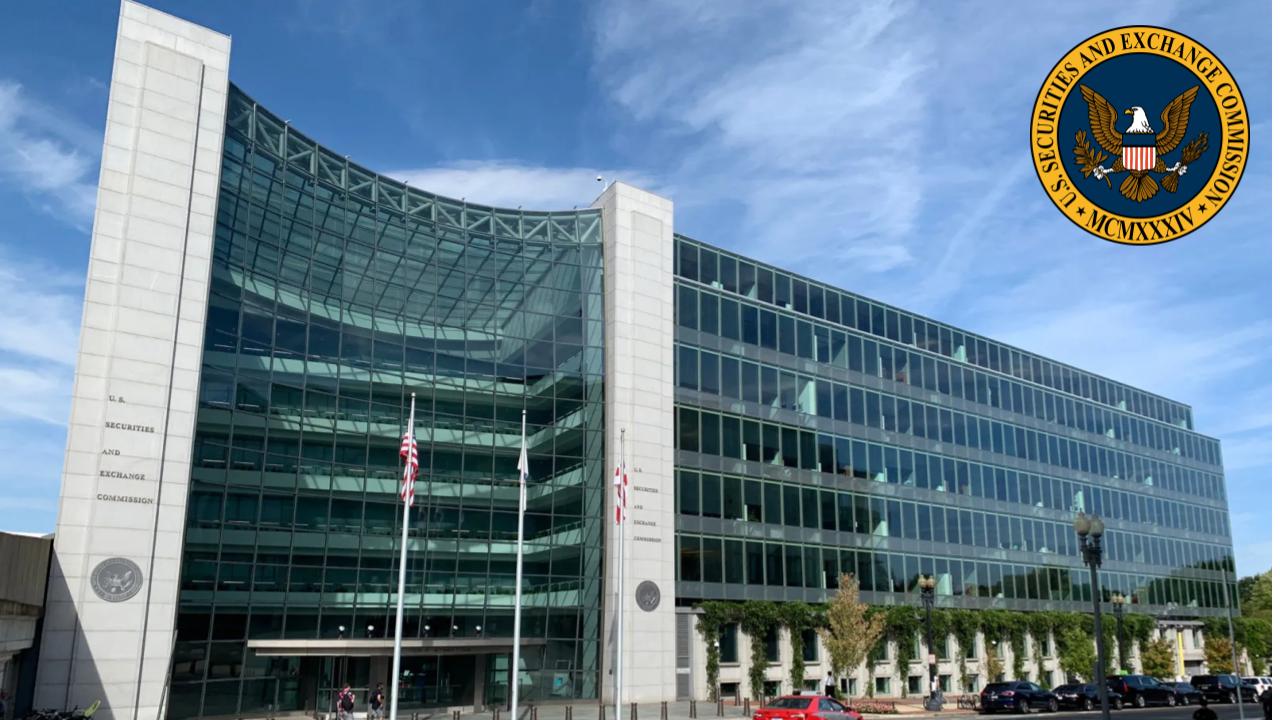
                                                                                                      The SEC headquarters in Washington, D.C., where staff supports the agency’s governance, rulemaking, law enforcement, and market oversight functions.

                                                                                                      The SEC is governed by a five-member commission appointed by the President with the advice and consent of the Senate, and the President designates one commissioner to serve as chair. Commissioners vote on major agency actions, including rulemaking, the approval of self-regulatory organization (SRO) rule changes (including those proposed by bodies such as the Financial Industry Regulatory Authority and the Municipal Securities Rulemaking Board), and the authorization of enforcement actions.

                                                                                                      The Commission sets policy and makes final determinations in many matters, while career staff and headquarters divisions conduct day-to-day supervision and case development, including examinations, investigations, litigation support, and ongoing market oversight. Major rules typically proceed under the Administrative Procedure Act through notice-and-comment rulemaking, are published in the Federal Register, and may be subject to review in the U.S. courts of appeals under the administrative law framework.

                                                                                                      Commission members

                                                                                                      See also: List of members of the Securities and Exchange Commission
                                                                                                      The public reference room at the SEC in Washington, D.C.
                                                                                                      The SEC public reference room (Library of Congress), reflecting the agency’s disclosure and public-access mission.

                                                                                                      Five presidentially appointed commissioners lead the agency. No more than three commissioners may be from the same political party. Commissioners serve staggered five-year terms, with one term expiring on June 5 each year; a commissioner may continue to serve for up to 18 months after the term expires while a successor is nominated and confirmed.

                                                                                                      The president designates one commissioner to serve as chair, the SEC’s chief executive. Commissioners may not be removed at will, a structural feature intended to support the agency’s independence.

                                                                                                      Current commissioners

                                                                                                      The commission’s membership as of January 7, 2026:[53]

                                                                                                      NamePartyTook officeTerm expires
                                                                                                      Chair: Paul S. AtkinsRepublicanApril 21, 2025June 5, 2026
                                                                                                      Hester PeirceRepublicanJanuary 11, 2018June 5, 2025
                                                                                                      Mark UyedaRepublicanJune 30, 2022June 5, 2028
                                                                                                      Vacant—N/a——
                                                                                                      Vacant—N/a——

                                                                                                      The chair and historical list of chairs

                                                                                                      President Donald Trump and Paul Atkins at a swearing-in ceremony in the Oval Office.
                                                                                                      President Donald Trump participates in the swearing-in of SEC Chair Paul Atkins in the Oval Office (April 22, 2025).

                                                                                                      The president appoints the commissioners with Senate confirmation and designates one commissioner to serve as chair.[54] The chair acts as the agency’s chief executive—setting priorities, directing the SEC’s staff and divisions, and representing the Commission to Congress, other regulators, and the public—while most Commission actions require a majority vote.[54]

                                                                                                      The current chair is Paul S. Atkins, sworn in as the 34th chair of the Securities and Exchange Commission on April 21, 2025, after being nominated by President Donald J. Trump on January 20, 2025 and confirmed by the U.S. Senate on April 9, 2025.[55] A former SEC commissioner (2002–2008), Atkins has been described as a business-friendly regulator and has drawn attention for past and current views on how securities regulation should apply to digital-asset markets.[56] In public remarks as chair, he has also emphasized the importance of cooperation with foreign counterparts on cross-border market oversight.[57]

                                                                                                      For additional information, see:

                                                                                                      Main article: List of Chairs of the Securities and Exchange Commission

                                                                                                      Divisions

                                                                                                      The SEC’s core work is carried out through six principal divisions headquartered in Washington, D.C.:[4]

                                                                                                      DivisionCore remitKey functions and notes
                                                                                                      Corporation FinancePublic-company disclosure; registration of securities offerings; certain corporate transactions (including mergers).Reviews registration statements and periodic reports for compliance with disclosure standards and issues comment letters seeking revisions or additional information. Operates EDGAR, the SEC’s electronic filing system used to make issuer disclosures broadly accessible.
                                                                                                      Trading and MarketsMarket structure; broker-dealers; self-regulatory organizations (SROs).Oversees SROs such as the Financial Industry Regulatory Authority (FINRA) and Municipal Securities Rulemaking Board (MSRB), reviews proposed SRO rule changes, and monitors industry practices. Many day-to-day broker-dealer oversight functions are carried out by FINRA under SEC supervision; firms not regulated by other SROs must register with FINRA, and individuals trading securities typically qualify through FINRA-administered examinations (e.g., the General Securities Representative Exam).[58]
                                                                                                      Investment ManagementInvestment companies and investment advisers.Regulates registered investment companies (including mutual funds) and registered investment advisors under the Investment Company Act of 1940 and the Investment Advisers Act of 1940.[59] Reviews filings; responds to no-action and exemptive requests; supports Commission rulemaking; assists enforcement matters involving advisers and funds.[60]
                                                                                                      EnforcementCivil enforcement of federal securities laws.Investigates potential violations and brings cases in federal court or through administrative proceedings. The SEC can file a civil action in a U.S. district court or initiate an administrative proceeding before an independent administrative law judge (ALJ). The division does not initiate criminal cases by itself, but can refer matters to prosecutors and works with DOJ/FBI on parallel civil/criminal proceedings. The agency has increased the division’s resources and emphasis in the 21st century in line with the agency’s post-2008 financial crisis priorities and scrutiny following the failure to detect the Madoff fraud.[61]
                                                                                                      Economic and Risk AnalysisEconomics and data analytics across SEC functions.Created in 2009 to integrate financial economics and data analytics into rulemaking, examinations, and enforcement. Produces economic and statistical analyses, develops analytic tools to identify risks and potential misconduct, and provides subject-matter expertise across the agency; houses the agency’s chief economist.[62]
                                                                                                      ExaminationsSupervisory examinations of regulated entities.Conducts the National Exam Program using risk-based strategies to assess compliance by regulated firms, identify and monitor emerging risks, inform policy and rulemaking through examination findings, and pursue misconduct.

                                                                                                      Field offices

                                                                                                      The agency maintains 10 regional offices in the United States, each led by a regional director.[63] The table lists the federal judicial district for each office’s location for reference.

                                                                                                      Office (City, State)Regional director(s)Federal judicial district (office location)
                                                                                                      Atlanta, GeorgiaNekia Hackworth JonesN.D. Ga.
                                                                                                      Boston, MassachusettsSilvestre A. FontesD. Mass.
                                                                                                      Chicago, IllinoisDaniel GregusN.D. Ill.
                                                                                                      Denver, ColoradoJason BurtD. Colo.
                                                                                                      Fort Worth, TexasEric R. WernerN.D. Tex.
                                                                                                      Los Angeles, CaliforniaKatharine Zoladz; J. Cindy EsonC.D. Cal.
                                                                                                      Miami, FloridaEric I. BustilloS.D. Fla.
                                                                                                      New York City, New YorkAntonia M. AppsS.D.N.Y.
                                                                                                      Philadelphia, PennsylvaniaNicholas P. GrippoE.D. Pa.
                                                                                                      San Francisco, CaliforniaMonique WinklerN.D. Cal.

                                                                                                      Offices and support functions

                                                                                                      In addition to its divisions, the SEC includes specialized offices that provide legal, accounting, operational, and policy support.

                                                                                                      Office/unitRole
                                                                                                      Office of General CounselRepresents the agency in appellate litigation and provides legal advice across the commission and staff.
                                                                                                      Office of the Chief AccountantSupports commission accounting and auditing policy and coordinates with standard setters and audit regulators, including the Financial Accounting Standards Board (GAAP), the Public Company Accounting Oversight Board (audit requirements), and the International Accounting Standards Board (IFRS).
                                                                                                      Office of International AffairsRepresents the SEC in cross-border regulatory and enforcement coordination and supports engagement with international counterparts, including the International Organization of Securities Commissions and the Financial Stability Forum.
                                                                                                      Cyber and Emerging Technologies Unit (CETU)Enforcement-focused unit covering cyber-related misconduct and emerging technologies, including digital assets and related market abuse (formerly the Crypto Assets and Cyber Unit (CACU)).
                                                                                                      Office of Information TechnologySupports agency systems, cybersecurity, infrastructure, and user services.
                                                                                                      Office of Inspector GeneralIndependent oversight office within the SEC. In January 2013, the SEC announced the appointment of Carl Hoecker as Inspector General; public reporting at the time described an OIG staff of 22.[64][65][66]
                                                                                                      Office of the WhistleblowerCreated by Section 922 of the Dodd–Frank Wall Street Reform and Consumer Protection Act, which added Section 21F to the Exchange Act.[67][68] The program provides a channel for tips and authorizes monetary awards to eligible whistleblowers whose original information leads to successful enforcement actions with monetary sanctions exceeding $1,000,000.[69]

                                                                                                      Budget and funding

                                                                                                      Revenue and fee mechanics: The SEC’s budget authority is provided by Congress through the annual appropriations process, and the agency’s operating costs are generally designed to be offset by regulatory fees (often described as “offsetting collections”).[70] In its Fiscal Year 2026 Congressional Budget Justification, the SEC requested $2.149 billion to support 4,101 full-time equivalents (FTE), describing the request as flat compared with Fiscal Year 2025.[71]

                                                                                                      The SEC collects several types of fees, including trading-related transaction fees under Section 31 of the Securities Exchange Act of 1934 and certain registration and filing fees. The agency deposits those fee collections in the U.S. Treasury.[72] Fee collections can exceed the SEC’s budget authority in periods of high market volume. For Fiscal Year 2025, the SEC reported Section 31 transaction fee revenue of about $3.3 billion and noted that Section 31 offsetting collections surpassed the SEC’s $2.2 billion budget authority as of February 2025; the SEC therefore set the Section 31 transaction fee rate at zero for most covered transactions, effective May 14, 2025, for the remainder of the fiscal year.[73][72]

                                                                                                      Scale of markets covered and staffing comparison: Using published market-size estimates and staffing figures, one rough comparison yields a lower staff-per-dollar ratio for the SEC than for federal banking regulators such as the FDIC, the Federal Reserve, and the OCC. Using common measures of U.S. capital-market size, SIFMA reported U.S. equity market capitalization of about $68.2 trillion at year-end 2025 and U.S. fixed-income securities outstanding (excluding MBS and ABS) of about $48.9 trillion as of 3Q 2025, or roughly $117.1 trillion combined.[74][75] On that basis, using the SEC’s FY 2026 requested staffing level, these numbers correspond to about 35 FTE per $1 trillion of market size (about $28.6 billion per FTE).

                                                                                                      A parallel illustration for the banking market uses staffing figures for the federal banking regulators and total assets at FDIC-insured institutions. For example, published staffing figures for the federal banking regulators—the FDIC, the Federal Reserve Board, and the OCC—indicate a higher staff-per-dollar ratio in banking than the SEC’s staff-per-dollar metric for the capital markets. The FDIC proposed staffing authorizations of 5,386 positions for 2026, the OCC projected 2,571 FTE for FY 2026, and the Federal Reserve Board reported 3,057 authorized positions for 2025 (11,014 positions combined).[76][77][78] For an illustrative size measure, the banking system reported $25.1 trillion in total assets in the third quarter of 2025, implying about 439 staff positions per $1 trillion of bank assets based on the combined staffing figures above.[79] Comparing this measure (i.e., staff per dollar ratio) for the U.S. capital markets and the U.S. banking sector indicates a considerably higher staff-per-dollar ratio in banking than the staff-per-dollar ratio implied for the SEC using the capital-market measures above. If taken at face value, the comparison implies that SEC staff oversee a larger notional volume of financial-market activity per employee than their counterparts in federal banking supervision.

                                                                                                      Major enforcement actions and market events

                                                                                                      Early legitimacy shocks and audit reforms (1934–1940)

                                                                                                      Black-and-white photo showing William O. Douglas and Solicitor General Robert Jackson at a White House meeting on antitrust matters.
                                                                                                      William O. Douglas (left), SEC Chair (1937–1939), and Robert H. Jackson, Solicitor General, after conferring with President Roosevelt on antitrust matters in Washington, D.C., June 24, 1938. (Library of Congress)

                                                                                                      Early scandals tested confidence in U.S. securities markets. In the late 1930s, Richard Whitney, then president of the New York Stock Exchange, was convicted of embezzlement-related offenses; later accounts cited the case in debates over exchange self-regulation and self-regulation by exchanges.[80][81] Later histories described the episode as an early example of how misconduct by market gatekeepers can affect investor confidence.

                                                                                                      A second benchmark was the McKesson & Robbins accounting fraud (1938–1940), in which fabricated inventory and receivables showed how weak verification can distort reported results.[82] The scandal prompted calls for stronger audit procedures and professional skepticism, and later commentary linked it to debates over internal controls and independent verification for new products and fast-growing firms.

                                                                                                      Early enforcement controversies also shaped later court decisions defining what counts as a security and when issuers must complete registration under U.S. securities laws.

                                                                                                      Defining the perimeter of federal securities law (1946–1953): “investment contracts” and the limits of “private” offerings

                                                                                                      Rows of orange trees in a Florida citrus grove
                                                                                                      Florida citrus grove—citrus-grove interests lay at the center of SEC v. W. J. Howey Co. (1946), which set out the “investment contract” (Howey) test.

                                                                                                      In the Commission’s early decades of major enforcement development, a recurring problem was jurisdictional as much as factual: before the SEC could police misconduct, courts had to define what kinds of transactions fall within the federal securities laws and which distributions can legitimately occur outside the registration-and-disclosure regime. Two Supreme Court decisions supplied durable perimeter-setting tools that shaped later enforcement eras—Howey on “investment contracts” and Ralston Purina on the limits of “private” offerings—allowing regulators and courts to treat economic substance as the key input rather than marketing labels.

                                                                                                      The Supreme Court’s decision in SEC v. W. J. Howey Co. (1946) articulated the “investment contract” framework that later became a central tool for evaluating novel fundraising structures under the federal securities laws.[83] The case involved sales of citrus-grove plots coupled with a service contract under which the promoter cultivated, harvested, and marketed the fruit; many purchasers lacked the ability or intent to manage the groves themselves and instead relied on the promoter’s efforts for returns.[83] The Court framed “investment contract” as a functional concept and directed courts to look to the transaction’s economic reality rather than its label or packaging, holding that the securities laws can reach arrangements that function as investments even when promoters describe them as real-estate or commercial transactions.[83]

                                                                                                      A 1902 brochure showcasing Ralston Purina products—an early company document from the issuer later involved in SEC v. Ralston Purina Co. (1953).

                                                                                                      Courts later summarized the Howey framework as asking whether a scheme involves (1) an investment of money, (2) in a common enterprise, (3) with a reasonable expectation of profits, (4) to be derived from the efforts of others.[83] Later Supreme Court decisions clarified important edges of that analysis, including that “profits” refers to investment returns rather than consumption value (United Housing Foundation, Inc. v. Forman (1975))[84] and that a promised fixed return can still satisfy the “profits” element (SEC v. Edwards (2004)).[85]

                                                                                                      Once an arrangement falls within the securities perimeter in substance, a second boundary question becomes central to enforcement: whether the issuer can avoid the registration-and-disclosure regime by claiming the distribution was “private.” In SEC v. Ralston Purina Co. (1953), the Court narrowed what qualifies as a truly “private” offering by tying exemptions to whether offerees can realistically fend for themselves (including access to information), rather than to a company’s informal framing of the sale.[86] Together, Howey and Ralston Purina influenced later enforcement waves by giving the SEC a theory for (1) novel instruments and (2) “private” distributions that function like public capital raising. Those concepts became especially visible again decades later in enforcement theories applied to token distributions and platform intermediation.

                                                                                                      Since the original case, regulators and courts have used the Howey approach across successive market cycles to evaluate new fundraising structures under existing securities statutes, particularly when issuers combine a sale of an asset with ongoing managerial promises that purchasers rely on for returns.[83] SEC guidance describing the application of Howey in the context of digital assets similarly emphasizes an objective inquiry into the transaction’s economic reality and whether purchasers reasonably expect returns from the efforts of a promoter or other active participants.[87]

                                                                                                      Insider trading and market integrity (1963–2014): materiality, duties, and the “expert network” era

                                                                                                      First page of the SEC’s civil complaint against Martha Stewart and Peter Bacanovic, filed June 4, 2003.
                                                                                                      First page of the SEC’s civil complaint in SEC v. Martha Stewart and Peter Bacanovic (S.D.N.Y.), filed June 4, 2003.
                                                                                                      Portrait of Martha Stewart.
                                                                                                      Martha Stewart.

                                                                                                      Insider-trading doctrine developed through a mix of landmark cases and evolving market tactics. SEC v. Texas Gulf Sulphur (1968) became an early touchstone for modern materiality analysis and for the principle that corporate insiders should not trade while in possession of material nonpublic information.[88]

                                                                                                      Later Supreme Court decisions refined when trading on information becomes unlawful. In Chiarella v. United States (1980), the Court limited liability absent a duty to disclose arising from a relationship of trust and confidence.[89] In Dirks v. SEC (1983), the Court articulated the “personal benefit” standard for tipper–tippee liability, shaping how regulators and prosecutors built tipping cases for decades.[90]

                                                                                                      In the early 2000s, the SEC brought several insider-trading cases that illustrated how the agency applied material nonpublic information and tipping theories in real-world settings, including through brokers and other intermediaries. One widely reported example involved the SEC’s civil action against Martha Stewart and her broker, Peter Bacanovic, arising from trading in ImClone Systems stock. In June 2003, the SEC filed a civil insider-trading complaint in the Southern District of New York alleging that Martha Stewart sold ImClone Systems stock after receiving material nonpublic information from her broker, Peter Bacanovic, about sales by ImClone CEO Samuel Waksal and his daughter.[91] In August 2006, Stewart and Bacanovic settled the SEC’s civil case without admitting or denying the allegations; Stewart agreed to disgorgement and interest totaling $58,062 and a civil penalty of $137,019 and accepted five-year public-company director/limited-officer restrictions, while Bacanovic agreed to disgorgement and interest totaling $645 and a $75,000 civil penalty.[92][93]

                                                                                                      By the late 2000s and early 2010s, enforcement attention increasingly centered on institutionalized pipelines (consultants, analysts, and trading desks). The SAC Capital matters (2009–2014) involved allegations of repeated misuse of corporate information across multiple traders and teams, and enforcement materials discussed controls, supervision, and compliance practices at large funds.[94] Commentators and enforcement materials often described these cases as focusing on firm systems—controls, supervision, and compliance—rather than a single actor.

                                                                                                      Corporate fraud, conflicts, and market structure (1969–2024): disclosure failures, gatekeepers, and market plumbing under stress

                                                                                                      Enron’s Code of Ethics (2000), signed by CEO Kenneth Lay (FBI artifact photograph, 2017).

                                                                                                      Major corporate fraud cases repeatedly forced upgrades to disclosure and gatekeeping norms. The Equity Funding scandal (1969–1973) drew attention as an early “technology-assisted” fraud episode—fabricated policies and numbers designed to inflate reported performance—illustrating how innovation can amplify deception as well as efficiency.[95] In the early 2000s, the Enron collapse and related actions (2001–2006) became a defining corporate-failure wave; the SEC charged Enron with massive accounting fraud, while the broader aftermath helped drive reforms and reshaped expectations for audit independence and internal controls.[96]

                                                                                                      Conflicts of interest and intermediary incentives also became central targets. The Global Research Analyst Settlement (2002–2003) addressed allegations that major firms allowed investment banking interests to improperly influence securities research and research analysts, creating conflicts the firms failed to manage adequately. The SEC’s enforcement actions alleged that, from roughly mid-1999 through mid-2001 or later, investment-banking pressure shaped analyst work at multiple firms; regulators also cited supervisory failures and, for some firms, allegations of “fraudulent research reports” or research containing exaggerated or unwarranted claims.[97] The same settlement also publicly surfaced practices that regulators said undermined market integrity—such as “spinning” allocations in “hot” initial public offerings and undisclosed payments connected to research—and it imposed structural reforms (including separating research from investment banking) alongside roughly $1.4 billion in combined payments for penalties, disgorgement, independent research, and investor education.[98]

                                                                                                      Outside the SEC’s jurisdiction but frequently cited as a cautionary example, the Bre-X collapse (1993–1997) showed how a compelling “mega-discovery” story can outrun verification when gatekeepers fail. Bre-X’s claims about a massive gold find in Indonesia helped drive its stock from penny-level prices to triple digits before prospective partner Freeport-McMoRan’s due diligence reported only minor gold, and a Canadian securities-regulator summary describes how core samples were “salted” with added gold (including filings from a wedding ring and purchased flakes) to fabricate assay results.[99] The same account notes that geologist Michael de Guzman died after reportedly jumping from a helicopter as the fraud unraveled, and Bre-X’s share price collapsed with trading suspended and bankruptcy proceedings that followed.[100]

                                                                                                      Elizabeth Holmes speaking at an event in 2013.
                                                                                                      Elizabeth Holmes, founder of Theranos.
                                                                                                      Tyler Shultz speaking at the International Journalism Festival in 2024.
                                                                                                      Tyler Shultz, a former Theranos employee who raised concerns about the company’s claims.
                                                                                                      Figures associated with the Theranos matter, which drew scrutiny from the SEC and other authorities.

                                                                                                      High-growth private fundraising also tested disclosure and gatekeeping norms outside the public markets. For example, in March 2018, the SEC charged privately held blood-testing startup Theranos, its founder and CEO Elizabeth Holmes, and former president Ramesh “Sunny” Balwani with fraud, alleging they raised more than $700 million from investors through false and misleading statements about the company’s technology, business, and financial performance.[101] As part of the SEC investigation, Holmes gave sworn deposition testimony[102] in July 2017; ABC News later reported it obtained video from her July 11, 2017 SEC deposition.[103] The SEC alleged Theranos claimed it had developed analyzers that could run a “comprehensive range” of laboratory tests from small amounts of blood and portrayed its technology and commercial progress in ways that materially overstated its capabilities.[104] The SEC emphasized that federal securities anti-fraud rules apply to private offerings as well as public-company disclosures.[101] Theranos and Holmes settled without admitting or denying the allegations, including penalties and governance restrictions, while the SEC’s civil litigation against Balwani continued.[101] Federal prosecutors later pursued a parallel criminal case, and the U.S. Attorney’s Office for the Northern District of California credited an investigation that included the FBI and other federal partners.[105]

                                                                                                      Later episodes highlighted how communications, retail participation, and cross-border listings can stress market “plumbing.” The Tesla “funding secured” matter (2018) focused on whether public statements by a CEO misled investors, becoming a high-visibility example of enforcement interacting with social-media-era disclosures and governance controls.[106][107]The 2021 meme-stock trading halts and the payment-for-order-flow debate drew attention to brokerage risk controls, clearinghouse margin demands, and market-structure incentives, prompting an SEC staff report and continued policy debate.[108]

                                                                                                      Separately, the HFCAA/PCAOB China audit-access dispute (2020–2024) showed how a technical audit-oversight fight can decide whether foreign companies keep access to U.S. investors and U.S. exchanges. In everyday terms, the issue was whether U.S. regulators could check the work behind the audits of some China- and Hong Kong–based issuers trading in the United States—and if they could not, whether those issuers should lose U.S. trading access. The Public Company Accounting Oversight Board (PCAOB)—a nonprofit audit regulator created by the Sarbanes–Oxley Act that inspects and investigates audit firms and operates under SEC oversight (the SEC appoints PCAOB board members and approves the PCAOB’s rules, standards, and budget)—determined in 2021 that it could not inspect or investigate completely in mainland China and Hong Kong because of restrictions imposed by local authorities.[109][110][111] Before the 2022 access agreement, U.S. policymakers and analysts argued that China’s restrictions on audit work papers and PCAOB inspections created a regulatory blind spot that could be exploited by fraudulent issuers and state-linked actors seeking access to U.S. capital markets without full audit transparency.[112]
                                                                                                      Chinese authorities had long limited foreign regulators’ access to audit documents, sometimes citing national security concerns, and U.S. policymakers described the issue as a conflict between U.S. oversight goals and China’s state-secrecy rules.[112] U.S. policymakers argued that prolonged non-access could weaken investor protections by limiting the ability of U.S. regulators to verify audits and detect issuer misconduct or undisclosed government influence in U.S.-listed companies.[112][113] The SEC’s rules implementing the Holding Foreign Companies Accountable Act (HFCAA) required affected issuers to submit documentation and make additional annual-report disclosures—such as whether the issuer is owned or controlled by a foreign governmental entity and details about audit arrangements and governmental influence—and the HFCAA framework can culminate in U.S. trading prohibitions when PCAOB non-access persists for the statutory period.[114][113] The dispute eased in late 2022 when the PCAOB reported it had secured complete access to inspect and investigate China- and Hong Kong–headquartered audit firms and voted to vacate its prior non-access determinations, effectively resetting the HFCAA delisting clock for then-affected issuers while leaving the framework in place for future reassessment.[115]

                                                                                                      Across these episodes, officials and analysts said that fraud and conflicts can weaken confidence, and that market stress can expose weaknesses in controls, liquidity, and information flow.

                                                                                                      Wall Street power plays and takeover-era policing (1986–1991): Drexel, Milken, and the boundaries of aggressive finance

                                                                                                      The leveraged buyout and junk-bond era created a different kind of enforcement flashpoint: not classic issuer fraud, but the policing of intermediaries whose influence could reshape markets. The SEC’s actions involving Drexel Burnham Lambert and Michael Milken (1986–1991) are often described as enforcement focused on misconduct by major intermediaries rather than a single issuer’s disclosures.[116]

                                                                                                      A Lower Manhattan office building
                                                                                                      The Wall Street-area headquarters of Drexel Burnham Lambert in New York City.
                                                                                                      Drexel Burnham Lambert logo
                                                                                                      Drexel Burnham Lambert logo.

                                                                                                      Contemporary accounts and later SEC histories described the crackdown as a chain reaction rather than a single case: the SEC’s 1986 insider-trading case involving arbitrageur Ivan Boesky ended in a headline settlement and a cooperation agreement that broadened scrutiny across Wall Street’s deal ecosystem (often dubbed “Boesky Day” in retrospective accounts).[117][116]

                                                                                                      As the inquiry widened, Drexel—then a central player in junk-bond financing—agreed to plead guilty and to pay what federal prosecutors described as a $650 million package combining criminal and civil penalties and an escrow fund tied to the SEC’s parallel civil action.[118][119] In related proceedings, Milken pleaded guilty in a criminal case, and SEC materials described civil judgments and administrative sanctions that included disgorgement and interest and imposed industry bars.[120][121][122][123] Across the related proceedings, accounts described concerns that concentrated incentives among a small set of intermediaries can affect market fairness.[116]

                                                                                                      Commentators emphasized institutional changes—supervision, compensation incentives, and information barriers (including Chinese walls)—particularly during market booms when compliance controls can weaken.

                                                                                                      Mega-frauds and examination failures (1992–2009): Madoff and the credibility gap

                                                                                                      Bernard Madoff.
                                                                                                      Bernard Madoff (U.S. Department of Justice photo, 2009).
                                                                                                      Diagram showing unsustainable payouts funded by new participants.
                                                                                                      Simplified diagram of a pyramid scheme; Ponzi schemes similarly depend on continuous new inflows to fund payouts to earlier participants.

                                                                                                      The collapse of Bernard Madoff’s firm in 2008 led to scrutiny of the SEC’s examinations and its handling of tips and warnings about the alleged fraud.[124]

                                                                                                      At its core, the scheme operated as a Ponzi fraud: instead of executing the securities strategy he represented to clients, Madoff allegedly fabricated trading records and customer account statements and used incoming investor money to fund redemptions and withdrawals, creating the appearance of steady, market-independent returns.[125][126] The misconduct harmed thousands of investors, charities, and institutions by wiping out principal and confidence at once, and it fit the core legal theory behind securities fraud: material misrepresentations and deceptive practices in connection with securities transactions and advisory services, including violations the SEC alleged under Securities Act Section 17(a), Exchange Act Section 10(b) and Rule 10b-5, and Advisers Act Sections 206(1)–(2).[126]

                                                                                                      The fraud came to light in December 2008 after Madoff disclosed to senior employees that the advisory business was “a fraud,” and the SEC filed an emergency civil action on December 11, 2008; the court later ordered relief including an asset freeze and other measures as the case proceeded.[126][127] In parallel, federal prosecutors brought criminal charges; Madoff pleaded guilty in March 2009 and was sentenced in June 2009 to 150 years’ imprisonment, underscoring that the case involved not only regulatory violations but criminal fraud and related offenses.[128] The SEC’s Office of Inspector General later documented that the SEC had received significant warnings and conducted multiple examinations and inquiries before 2008 but failed to uncover the scheme, and the episode became a catalyst for changes in how the agency evaluates tips, coordinates across offices, and prioritizes high-risk matters.[129]

                                                                                                      The Madoff case highlighted the need to treat credible anomaly evidence as urgent and to pursue it through standard investigative steps. The episode also contributed to later changes in tips intake, examination procedures, and risk-based prioritization, intended to reduce the risk that reputation or perceived sophistication overrides routine investigative discipline.

                                                                                                      During the financial crisis, regulators faced parallel pressures to address immediate failures and maintain public confidence in oversight.

                                                                                                      Financial crisis era interventions (2008–2010): emergency tools, disclosure stress tests, and enforcement credibility

                                                                                                      Diagram illustrating naked short selling (a form of short selling executed without borrowing or locating shares).

                                                                                                      The 2008 financial crisis produced enforcement and regulatory actions aimed at stabilizing markets under extreme conditions. In September 2008, the SEC issued emergency orders addressing abusive short selling practices, including efforts to curb “naked” short selling—selling shares short without borrowing the shares or confirming they can be borrowed for timely delivery—and adopted a temporary prohibition on short selling in certain financial stocks as markets convulsed.[130][131] The practice involves a trader who bets that a stock will fall but does not borrow the shares, or confirm they can be borrowed, for timely delivery. The episode remains a durable reference point in debates over how regulators should use emergency powers during market stress and how those interventions affect confidence, liquidity, and price discovery.

                                                                                                      2008 Financial Crisis: Lending & Borrowing. The SEC’s oversight is concentrated on the securities-market side—MBS structuring/marketing, broker-dealer conduct, and investor disclosure—rather than household borrowing decisions or mortgage origination.
                                                                                                      2008 Financial Crisis: Subprime Mortgage-Linked Securities. The SEC chiefly touches the “financial market” leg—issuance and trading of mortgage-linked securities (e.g., RMBS and CDOs) and related disclosures—more than bank capital supervision or foreclosure processes.

                                                                                                      During the same period, the SEC expanded a sweeping investigation into market manipulation and false rumors about financial institutions and required certain market participants to provide information about credit default swap positions under oath.[132] In the run-up to the subprime mortgage crisis, the SEC alleged that a disclosure-and-conflicts problem in complex structured products let sophisticated actors take hidden, economically adverse positions against other investors. In April 2010, the SEC charged Goldman Sachs and its vice president Fabrice Tourre over the structuring and marketing of ABACUS 2007-AC1, a synthetic collateralized debt obligation referencing subprime RMBS.[133] The SEC alleged that Paulson & Co. helped influence the reference-portfolio selection while taking a short position via credit default swaps, but marketing materials described the portfolio as selected by ACA Management without disclosing Paulson’s role or adverse economic interest; the SEC also alleged that Tourre misled ACA about Paulson’s position in the deal.[134]

                                                                                                      The matter was resolved as to Goldman in July 2010, when the firm agreed to pay $550 million and implement remedial measures tied to internal review of marketing materials for certain mortgage-securities offerings; the settlement contemplated returning $250 million to harmed investors through a Fair Fund distribution and paying $300 million to the U.S. Treasury.[135] Litigation continued against Tourre, and a federal court later ordered disgorgement and a civil penalty.[136] More broadly, the episode became part of the post-crisis debate over conflicts in securitization markets; after Dodd–Frank added Securities Act Section 27B (Section 621) to address material conflicts in certain securitizations, the SEC later implemented that mandate through Rule 192, which applies to asset-backed securities including synthetic securitizations.[137][138]

                                                                                                      Main article: List of major SEC enforcement actions (2009–12)

                                                                                                      The list covers selected major SEC actions from the crisis and immediate post-crisis period (2009–2012).

                                                                                                      Cross-border bribery, shadow finance, and illicit finance (1971–1991): fugitives, offshore structures, and limits of reach

                                                                                                      Several major cases underscored how cross-border structures can complicate detection and accountability. In November 1972, the SEC filed an injunctive enforcement action, SEC v. Robert L. Vesco, et al., naming Vesco and 41 other corporate and individual defendants, including International Controls Corp. The case centered on SEC allegations that Vesco and associates diverted about $224 million from IOS-managed funds using offshore banks, foreign entities, and layered transactions.[139] Vesco later left U.S. jurisdiction and spent years moving among countries while U.S. authorities pursued civil and criminal proceedings and sought extradition or deportation.[140][141] Contemporary reporting also described the matter taking on Watergate-era campaign-finance overtones, including allegations that Vesco made a $200,000 cash contribution to President Nixon’s reelection committee while seeking help in connection with the SEC investigation.[140] Related proceedings included indictments alleging efforts to impede the SEC investigation, followed by acquittals at trial in 1974 for former U.S. Attorney General John N. Mitchell and former Commerce Secretary Maurice H. Stans.[142][143]

                                                                                                      Declassified CIA records indicate that other parts of the federal government examined aspects of the Vesco matter as it unfolded. A May 1973 CIA memorandum reported that, after a query from the Director—apparently at the request of then–Treasury Secretary George Shultz—CIA analysts in October 1972 reviewed Securities and Exchange Commission files on Vesco via the agency’s Domestic Contact Service.[144] A Washington Post / UPI report preserved in declassified CIA files summarized an NBC News broadcast alleging that Vesco lived in Havana under Cuban government surveillance and that reporting had linked him to smuggling activity and cocaine trafficking.[145]
                                                                                                      Additional declassified CIA reports from the 1980s also linked Vesco to allegations involving narcotics transshipment activity described as affecting U.S. interests. A later-released CIA report summarizing contemporaneous cables stated that, in October 1982, Vesco and Interior Ministry official Paul Atha discussed a planned drug-smuggling operation intended to raise cash for Nicaragua’s Ministry of the Interior, with Vesco described as an adviser to Interior Minister Tomás Borge.[146] The same report relayed cable reporting that a participant described the aim as to “flood the U.S. with cocaine,” and that Colombian traffickers later used Vesco’s services in 1984 to obtain Cuban overflight approval for drug shipments as part of an alleged transshipment route moving drugs through Nicaragua and Cuba toward the United States.[146] The Vesco matter also showed how SEC enforcement can be complicated when a key defendant becomes a cross-border fugitive and other U.S. federal agencies treat the same individual as relevant to broader U.S. national-security or foreign-policy interests, beyond the securities-law violations alleged in the SEC’s case.

                                                                                                      A BCCI branch in Karachi.

                                                                                                      Unlike the Vesco episode, the BCCI / First American case (1978–1991) often illustrates a different oversight challenge. Vesco involved a cross-border fugitive, and other U.S. agencies treated him as relevant to broader U.S. national-security interests, which complicated a securities-law case. In the BCCI/First American matter, by contrast, money laundering and other illicit-finance risk sat inside complex, multi-jurisdiction structures that impeded detection and accountability even when multiple regulators and law-enforcement bodies engaged.

                                                                                                      From the SEC’s perspective, early scrutiny in the First American lineage focused on federal securities-law disclosure obligations associated with coordinated accumulations of stock in Financial General Bankshares (FGB), a predecessor of First American. Official accounts describe a February 7, 1978 FGB shareholder meeting at which Bert Lance stated that a BCCI-linked group controlled about 20 percent of FGB stock and sought eventual control, despite not having made disclosures described as required by federal securities laws. The Middendorf group then complained to the SEC and the Federal Reserve, and the SEC filed its own suit to block the takeover attempt; the report describes eleven defendants in the SEC action, including Lance, Agha Hasan Abedi, BCCI, and four BCCI clients. The same account characterizes the case’s resolution as a consent decree and permanent injunction framed as ensuring future compliance (rather than punishment) while permitting the transaction to proceed.[147]

                                                                                                      Commentators and official reviews have treated the broader BCCI / First American episode less as a single, discrete “SEC investigation case” and more as an illustration of how global banking opacity and political complexity can complicate oversight. Official reviews documented how BCCI’s structure and practices enabled evasion across jurisdictions, creating a complex enforcement environment involving multiple regulators and law-enforcement bodies.[148]

                                                                                                      In a parallel proceeding tied to the case, U.S. prosecutors filed money-laundering, narcotics, and conspiracy charges in 1988 against 15 individuals (including BCCI officers) and four corporations after a two-year undercover operation.[149] Almost three years later, U.S. District Judge William Terrell Hodges presided over a six-month jury trial that raised novel issues about the then-new federal money-laundering offense and whether extensive pretrial publicity required a change of venue.[149] The court’s historical account states that FBI Director Robert Mueller III described the resulting arrests and convictions as “one of the largest money-laundering prosecutions in United States history.”[149] The same account describes the undercover operation as spanning multiple U.S. cities and foreign jurisdictions and culminating in 1988 with a staged wedding event at Palm Harbor’s Innisbrook Resort that served as a coordinated arrest operation.[149]

                                                                                                      The BCCI episode is often cited in discussions of supervisory coordination, beneficial-ownership opacity, and the limits of single-agency action in globally distributed misconduct.

                                                                                                      National security and crisis-time market integrity (2001–2004): 9/11 trading scrutiny and inter-agency dynamics

                                                                                                      Cover of The 9/11 Commission Report (Final Report of the National Commission on Terrorist Attacks Upon the United States).
                                                                                                      Seal of the National Commission on Terrorist Attacks Upon the United States.

                                                                                                      After the September 11 attacks, market regulators faced intense pressure to determine whether anyone attempted to profit from advance knowledge through securities or derivatives trading. The SEC was tasked to review for any unusual trading activity tied to the attacks or potential foreknowledge of 9/11.[150] The episode showcases how market-integrity inquiries can intersect with national security urgency even where enforcement action may be limited or not warranted.

                                                                                                      In the aftermath of the September 11 attacks, the U.S. Securities and Exchange Commission (SEC) opened a market-abuse investigation to assess whether any trading activity suggested insider trading or other attempts to profit from advance knowledge of the attacks. According to the SEC, it began the inquiry on September 12, 2001 and coordinated with U.S. law-enforcement and market participants, including the Federal Bureau of Investigation (FBI) and the United States Department of Justice (DOJ), as well as U.S. and foreign market authorities, to collect and analyze trading records across multiple venues.[151]
                                                                                                      The SEC reported that it reviewed more than 9.5 million transactions and examined trading in the securities and derivatives of 103 companies across multiple industry groups and markets, including activity tied to broad market products such as exchange-traded funds and indices.[152] The agency stated that the investigation found no evidence that anyone traded with advance knowledge of the attacks, and it described the effort as a large-scale, multi-agency review conducted with extensive cooperation from exchanges and other regulators.[153]

                                                                                                      The 9/11 Commission Report cited these findings in addressing public claims that al-Qaeda or other actors profited through securities trading, reporting that investigations by the SEC, the FBI, and other authorities found no evidence of such profiting through U.S. market transactions.[154] The Commission also discussed trading rumors involving increased put option activity in securities tied to the parent companies of United Airlines (then UAL Corporation) and American Airlines (then AMR Corporation), and stated that investigators traced the relevant trades to non-terrorism-related explanations rather than to al-Qaeda.[155] In its broader account of the financial system’s response, the Commission described coordination among federal authorities—including the SEC—around the reopening of U.S. securities markets on September 17, 2001.[156]

                                                                                                      The 9/11 Commission’s reporting underscored the difficulty of separating rumor-driven market patterns from provable violations under intense public scrutiny and time pressure, making the episode a case study in how regulators communicate findings and coordinate across agencies when markets become a potential intelligence signal.

                                                                                                      Administrative-law constraints on SEC forums and remedies (2013–2024): constitutional limits on in-house adjudication

                                                                                                      SEC v. Jarkesy (2013–2024) became a major structural event for SEC enforcement, focusing on constitutional limits around the agency’s use of in-house administrative proceedings and the right to a jury trial in certain contexts.[157] The decision’s practical significance was procedural rather than narrative: it affected where and how the SEC can pursue certain contested penalties, with downstream effects for case strategy, settlement leverage, and litigation timelines.

                                                                                                      Raymond J. Lucia Jr., petitioner in Lucia v. SEC (2018), on appointment of SEC administrative law judges.
                                                                                                      Court opinions in Jarkesy v. SEC (5th Cir. 2022), a key precursor to later limits on SEC in-house penalties.

                                                                                                      Other Supreme Court decisions also reshaped the enforcement toolkit by limiting forums, timing, and remedies. In Lucia v. SEC (2018), the Court addressed who can lawfully appoint SEC administrative law judges (ALJs), the in-house judges who run many SEC administrative proceedings. The Court held that SEC ALJs exercise enough authority to count as “officers” under the Constitution, so they must be appointed by the Commission itself (or another constitutionally authorized appointing authority), not through a lower-level staff process; the remedy was a new hearing before a different, properly appointed adjudicator (or before the Commission).[158]

                                                                                                      A key timing constraint came from Kokesh v. SEC (2017), where the Court treated SEC “disgorgement” (an order to give back ill-gotten gains) as a penalty for statute-of-limitations purposes. That holding subjected disgorgement claims to the federal five-year limitations period in 28 U.S.C. § 2462, limiting how far back the SEC can seek disgorgement in many enforcement actions and potentially reducing recoveries in long-running schemes unless the SEC files earlier (or another limitations rule applies).[159]

                                                                                                      A related remedial limit came from Liu v. SEC (2020), which upheld disgorgement in principle but limited how the SEC may use it in federal court. The Court held that disgorgement can qualify as “equitable relief” only when it stays tied to a wrongdoer’s net profits (generally, revenue minus legitimate expenses) and is awarded for the benefit of investors rather than operating as a punitive sanction; the Court vacated and remanded for the lower courts to ensure the award followed those limits.[160]

                                                                                                      Together, these decisions reinforced the notion that major Supreme Court cases can influence. In other words, it highlighted that high-impact SEC enforcement matters are not limited to fraud allegations; courts also shape the rules of the enforcement game itself. When procedural and remedial constraints tighten, agencies often shift more activity into federal court and adapt how they select, negotiate, and litigate cases.

                                                                                                      In practical terms, these Supreme Court decisions changed SEC enforcement along four measurable margins: venue, timing, remedies, and (indirectly) case mix. After Lucia, the SEC had to redo a large set of in-house cases—Chair Jay Clayton said the agency reassigned about 200 administrative proceedings to newly appointed judges—consuming resources and delaying outcomes in matters already in progress.[161] Jarkesy then narrowed the SEC’s ability to seek civil monetary penalties for contested securities-fraud claims in its in-house forum, pushing more of those penalty fights into federal court with juries and typically longer litigation timelines; the SEC has described the added uncertainty and federal-court resource demands as a program-level challenge.[162][163] On remedies, Kokesh imposed a five-year time limit on disgorgement by treating it as a penalty for statute-of-limitations purposes, and the SEC’s Enforcement Division estimated the ruling could force it to forgo up to roughly $900 million in disgorgement in already-filed matters; Liu further limited disgorgement to a wrongdoer’s net profits and tied the remedy more closely to returning funds to investors, which can reduce recoveries in older or expense-heavy schemes and increase the practical burden of tracing and distributions.[164] Even with those constraints, aggregate totals can still swing on a small number of large matters: in FY 2024, the SEC filed 583 total enforcement actions (431 standalone) and obtained $8.194 billion in penalties and disgorgement, illustrating how procedural limits can shift venue and increase time-to-remedy without mechanically capping headline-dollar outcomes each year.[165]

                                                                                                      High-profile SEC enforcement against major cryptocurrency firms (2019–2025): registration, disclosure, custody, and platform theories

                                                                                                      Crypto enforcement in the 2020s grouped into two overlapping themes: (1) token-offering cases centered on whether fundraising and distribution resembled unregistered securities offerings; and (2) platform cases focused on whether intermediaries operated as unregistered exchanges, brokers, or clearing agencies. In the Telegram matter (2019–2020), the SEC alleged an unregistered offering tied to the distribution of digital tokens; Telegram agreed to return funds and pay a civil penalty, making the case an early high-visibility application of registration concepts to token distribution plans.[166] The settlement ordered $1,224,000,000 in disgorgement—credited for amounts returned to investors—and a $18,500,000 civil penalty.[167]

                                                                                                      Do Kwon and Terraform Labs (Terra–Luna matter).
                                                                                                      Sam Bankman-Fried at the Metropolitan Detention Center, Brooklyn, December 2023 (FTX-related proceedings).

                                                                                                      The Ripple litigation (2020–2025) similarly sharpened debates about how Howey applies in token markets and how facts about distribution and marketing shape outcomes. In December 2020, the SEC filed a civil enforcement action SEC v. Ripple Labs (XRP) against Ripple Labs and executives Bradley Garlinghouse and Christian A. Larsen, alleging that Ripple raised funds through sales of the digital asset XRP in an unregistered securities offering in violation of Section 5 of the Securities Act of 1933.[168][169] In a July 2023 summary-judgment decision, the district court held that Ripple’s institutional sales of XRP constituted unregistered offers and sales of investment contracts, while certain other distributions and programmatic sales on trading platforms did not.[170] In August 2024, the court entered final judgment imposing a $125,035,150 civil penalty and an injunction restraining Ripple from further violations of the Securities Act’s registration provisions.[171] The SEC and Ripple later filed a joint stipulation to dismiss their Second Circuit appeals, leaving the district court’s final judgment in effect.[172] In 2025 the SEC and Ripple filed a stipulation of dismissal as part of a broader resolution of the case.[172]

                                                                                                      Enforcement also targeted major collapses and alleged disclosure failures in crypto ecosystems. After the FTX failure (2022), the SEC filed charges against Samuel Bankman-Fried, alleging securities-law violations tied to statements to equity investors and the handling of customer assets; the episode became a high-profile reference point in debates over controls, custody, and affiliated trading risks at crypto intermediaries.[173] In December 2022, the SEC charged former FTX CEO Sam Bankman-Fried with defrauding equity investors in FTX; the SEC’s civil case was stayed pending the parallel criminal proceeding, in which he was later sentenced to 25 years’ imprisonment.[174][175][176] The SEC’s Terraform Labs (“Terra–Luna”) matter (filed in 2023) reflected related concerns, alleging misleading statements and fraud tied to marketed stability mechanisms and ecosystem representations—illustrating how disclosure theories and market integrity concerns can converge in digital-asset products.[177] After a jury verdict, the SEC announced a settlement exceeding $4.5 billion, including $420,000,000 in civil penalties against Terraform and $80,000,000 in civil penalties against Kwon, alongside disgorgement and prejudgment interest.[178]

                                                                                                      Large platform actions emphasized compliance architecture and the “platform vs. token” divide. In June 2023, the SEC sued Binance and its founder Changpeng Zhao, alleging violations including failures to comply with registration requirements and issues involving customer assets; the case was framed as a major test of how securities laws apply to global crypto trading venues serving U.S. customers.[179] On June 6, 2023, the SEC filed a separate action against Coinbase, alleging the company operated as an unregistered exchange, broker, and clearing agency; in 2025, the SEC announced dismissal of its civil enforcement action against Coinbase.[180][181] Across these matters, the recurring enforcement throughline has been familiar investor-protection plumbing—registration, disclosure, conflicts, and custody/controls—applied to new market forms even as courts and policymakers debate boundaries and appropriate regulatory frameworks.

                                                                                                      Regulatory flashpoints and emerging areas

                                                                                                      Digital assets, tokenization, and market structure

                                                                                                      A recurring point of dispute concerns when a digital asset constitutes a “security.” The SEC has applied the Howey framework and has argued that certain crypto offerings meet the definition of an investment contract when purchasers expect profits based on the efforts of others.[182] The SEC has classified many crypto assets as securities under this approach, often emphasizing the role of developers or other central parties in driving value. Industry participants and some commentators argue that applying Howey to crypto markets creates uncertainty, especially for networks that claim decentralization.

                                                                                                      Academic research reports recurring fraud and manipulation in cryptocurrency markets, including wash trading, coordinated pump-and-dump schemes, and trading patterns consistent with price manipulation, which can inflate reported volume, distort prices, and harm late-arriving traders.[183][184][185][186][187][188] Studies that compare trading venues find less evidence of wash trading and related distortions on more regulated exchanges than on less regulated venues, consistent with oversight improving transparency and market quality.[189][190] Research on token offerings also finds that more informative disclosure and credible intermediaries are associated with stronger fundraising outcomes and better post-issuance performance—results often cited in debates over applying securities-style disclosure and antifraud standards to crypto-asset markets.[191][192]

                                                                                                      Empirical studies that estimate the effects of SEC interventions in crypto markets find mixed short-run reactions: some announcements are followed by price drops and shifts in volatility or trading, while others produce smaller or more mixed effects, depending on the asset and the setting. One event-study analysis associates SEC interventions with negative abnormal returns and changes in volatility and trading activity for the named assets, interpreting the effects as a repricing of regulatory and legal risk.[193] Other interpretations emphasize that announcement effects may reflect compliance and legal-risk repricing rather than changes in underlying fundamentals.[194] The same research reports heterogeneous effects by asset characteristics such as liquidity, volatility, size, and age.[195] Evidence of elevated pre-announcement trading volume has also been interpreted as consistent with information asymmetries that disclosure and enforcement aim to reduce.[196] Other empirical work similarly emphasizes persistent manipulation risks and information problems in crypto markets and argues that clearer disclosure expectations and credible enforcement can improve market integrity over time even when short-run reactions appear volatile.[197][198][199]

                                                                                                      Tokenization-related staff guidance and no-action activity

                                                                                                      In December 2025, the Securities and Exchange Commission provided the Depository Trust & Clearing Corporation (DTCC) with a no-action letter allowing the organization to hold and record tokenized equities and other real-world assets on blockchain networks. The authorization enables DTCC to deliver tokenization-related services on approved blockchains for a period of three years.[200] On January 28, 2026, the Divisions of Corporation Finance, Investment Management, and Trading and Markets issued a statement on tokenized securities, clarifying that the format does not alter the application of federal securities laws and categorizing them into issuer-sponsored and third party-sponsored types.

                                                                                                      Risk disclosures

                                                                                                      Cybersecurity. On July 26, 2023, the SEC adopted the Cybersecurity Risk Management, Strategy, Governance, and Incident Disclosure rule to encourage public companies to more transparently and effectively manage and disclose cybersecurity risk. However, according to a CIO analysis of a proposed AI disclosure rule and its connection to the earlier cybersecurity disclosure regime, some experts argue that the cybersecurity rule’s broad, materiality-based thresholds and reliance on company-defined terms create challenges for consistent reporting. Critics also note that many disclosures rely on boilerplate language and provide limited investor insight.[201]

                                                                                                      Climate-related disclosures. In 2024, the SEC decided on a climate disclosure rule, The Enhancement and Standardization of Climate-Related Disclosures for Investors. It requires companies to disclose information on their risk to be impacted by climate change and a company’s risks to profit by a growing number of climate change regulations, concerning direct and indirect greenhouse gas emissions produced.[202]

                                                                                                      Law enforcement partnerships and regulatory coordination

                                                                                                      Law enforcement partnerships and regulatory coordination — quick map
                                                                                                      Partnership / coordination channelWho participatesHow it works in practice (summary)Typical outputs / where it shows up
                                                                                                      Parallel civil–criminal enforcementSEC (civil enforcement) and DOJ (criminal prosecution), often working with the FBI and U.S. Attorneys’ OfficesThe SEC investigates and pursues civil remedies while DOJ evaluates criminal charges based on overlapping conduct. The SEC describes its Enforcement Division mission as enforcing federal securities laws and seeking remedies such as injunctions, penalties, disgorgement, and bars through federal court litigation and administrative proceedings; major matters can therefore proceed on parallel tracks.SEC releases and litigation releases frequently reference coordination and parallel criminal proceedings and may expressly thank DOJ prosecutors and the FBI for assistance in complex matters.[203][204]
                                                                                                      Market-integrity and stability coordinationPresident’s Working Group on Financial Markets (created by Executive Order 12631; chaired by the Treasury Secretary, with the SEC Chair among its members)Interagency coordination mechanisms provide a forum for senior-level alignment on market functioning and stress events, where supervision, enforcement, and crisis communications can interact.Formal interagency forum used during periods of market stress; coordination may affect monitoring, response options, and communications across agencies.[205]
                                                                                                      Cyber- and technology-enabled misconductSEC enforcement units (including a crypto/cyber function) working with federal and local partners; broader federal cyber coordination through the National Cyber Investigative Joint Task Force (NCIJTF)The SEC has described building specialized enforcement capacity for cyber and digital-asset matters, including expanding a Crypto Assets and Cyber Unit in 2022 and later reorganizing efforts into a Cyber and Emerging Technologies Unit focused on technology-driven retail harms and market-integrity threats. The SEC also describes working with federal and local partners on cybersecurity issues affecting markets and public companies, and NCIJTF provides a multi-agency coordination hub and intelligence-analysis support that can intersect with securities-market cyber incidents.SEC unit announcements and SEC cybersecurity materials describe scope and focus; FBI materials describe NCIJTF’s coordination role.[206][207][208][209]
                                                                                                      Self-regulatory organizations and market utilitiesSelf-regulatory organizations (SROs), including FINRA and the Municipal Securities Rulemaking Board (MSRB), operating under SEC oversightU.S. broker-dealers commonly interact with SRO rules and processes (including examinations and discipline) as part of day-to-day regulation. The SEC retains authority over the federal securities laws and oversees SRO rule filings, approvals, and governance arrangements, alongside supervision of market infrastructure intended to support orderly markets and investor confidence.SEC investor-facing materials describe the broker-dealer/SRO framework; SRO “about” pages describe rulemaking and administration subject to SEC oversight and approval.[210][211][212]
                                                                                                      International regulatory and enforcement cooperationSEC Office of International Affairs (OIA) and foreign securities regulatorsBecause U.S. securities markets operate globally, the SEC uses multilateral engagement, technical assistance, and bilateral cooperation tools. OIA has described its role as encouraging international regulatory and enforcement cooperation and negotiating information-sharing arrangements for regulatory and enforcement matters.Bilateral MOUs and other cooperation arrangements facilitate information exchange and assistance in cross-border investigations and supervision; the SEC posts examples of such arrangements.[213][214]
                                                                                                      Advisory committees and structured stakeholder inputSEC advisory committees, including the Asset Management Advisory Committee (AMAC)The SEC uses advisory committees to obtain structured input from external experts and market participants, complementing enforcement and supervision with formal policy-feedback channels. Committees surface practical implications of proposed rules and guidance, including effects on market structure, disclosure regimes, and technology trends.Committee pages and press releases describe committee mandates and membership; AMAC was established in 2019 to provide perspectives on asset management issues affecting investors and market participants.[215][216]

                                                                                                      Data and Transparency

                                                                                                      The SEC provides public access to many filings and datasets through its website and responds to records requests under the Freedom of Information Act (FOIA). The agency also collects non-public sensitive data on market transactions used for market oversight, examinations, and enforcement.

                                                                                                      Public datasets

                                                                                                      The SEC publishes datasets extracted from filings and other sources to support research and analysis on capital market issues.

                                                                                                      • EDGAR (Electronic Data Gathering, Analysis, and Retrieval) is the SEC’s electronic filing system for documents submitted under the federal securities laws.[217] Through the SEC’s website, EDGAR provides free public access to many filings and related submissions, with search tools that allow users to locate documents by issuer or filer, form type, and date range.[218]
                                                                                                      • SEC Data Library: The SEC publishes downloadable datasets extracted from filings received by the Commission.[219]

                                                                                                      Non-public sensitive data

                                                                                                      The SEC collects and obtains non-public data used for market surveillance and enforcement.

                                                                                                      • Consolidated Audit Trail (CAT): Under SEC Rule 613, national securities exchanges, FINRA, and their members report detailed quote and order data for National Market System (NMS) securities to a central repository so regulators can reconstruct activity across markets.[220] Reported information is designed to link an order’s full life cycle—including receipt/origination, modification, cancellation, routing, and execution—using unique order and reporter identifiers (e.g., CAT-Order-ID and CAT-Reporter-ID), synchronized timestamps (millisecond or finer), and key “material terms” (such as symbol, security type, price, size, side, order type, time-in-force, and certain handling instructions).[221] The CAT framework also supports linking trading activity to customer and account information (e.g., account number, account type, customer type, date opened, and large trader identifier), while assigning a customer identifier used for regulatory purposes.[222][223] Because the data can include customer/account identifiers and other personally identifiable information (PII), the Commission issued exemptive relief from reporting certain sensitive PII and approved amendments intended to eliminate requirements to report items such as names, addresses, years of birth, and taxpayer identifiers, while continuing to support the generation of anonymized customer IDs for regulatory use.[224][225]
                                                                                                      • Electronic Blue Sheets (EBS): Broker-dealers provide securities transaction and related account information to regulators in response to requests.[226][227] Requests typically specify one or more securities and a review period, and firms submit trade-level details for relevant proprietary and customer transactions so regulators can identify buyers and sellers and reconstruct trading activity.[228] Submissions also include account-level fields and account-holder information associated with the transactions, including certain standardized identifiers for arrangements such as prime brokerage and average-price accounts.[229][230]
                                                                                                      • Form PF: The SEC maintains Form PF as a confidential reporting form for certain SEC-registered investment advisers to private funds.[231] Filers report fund identifiers and classifications, assets under management, valuation measures (e.g., gross and net asset value or calculated equivalents), borrowings, and key terms affecting investor liquidity such as redemption restrictions and side-pocket arrangements.[232] Depending on adviser size and fund type, the form also captures exposures and risk metrics—such as derivatives and trading activity, leverage and financing, and counterparty and collateral information that can include legal entity names and LEIs for creditors and counterparties, as well as investor concentration details for large beneficial owners.[233] The agency treats Form PF as confidential because it can reveal trading strategies and other competitively sensitive information, and the SEC states it does not intend to make public Form PF information that is identifiable to any particular adviser or private fund (though it may use the information in enforcement actions).[234][235]

                                                                                                      Freedom of Information Act processing performance

                                                                                                      A 2015 analysis by Center for Effective Government of 15 federal agencies receiving the most FOIA requests (using 2012–2013 data) ranked the SEC among the five lowest performers, assigning it a D− based on a score of 61 out of 100.[236]
                                                                                                      In contrast, a 2025 Department of Justice assessment—based on the 2025 Chief FOIA Officer Reports for agencies receiving more than 1,000 requests—reported higher ratings for the SEC across assessed categories.[237]

                                                                                                      Oversight scrutiny and accountability concerns

                                                                                                      Accountability critiques and major investigations

                                                                                                      Commentators have criticized the SEC as overly cautious in confronting Wall Street misconduct and as insufficiently effective at holding senior executives accountable.[238][239][240]

                                                                                                      Madoff-related scrutiny

                                                                                                      Former SEC chair Christopher Cox acknowledged multiple failures connected to the Bernard Madoff fraud.[241] The SEC’s involvement with Madoff-related matters dated back at least to a 1992 investigation into a feeder fund that invested only with Madoff and that, according to the SEC, promised “curiously steady” returns.[242] Critics have alleged that the agency missed red flags and did not act on tips and warnings about Madoff’s alleged fraud.[243]

                                                                                                      Cox later said the agency would investigate “all staff contact and relationships with the Madoff family and firm, and their impact, if any, on decisions by staff regarding the firm.”[244] One episode that drew attention involved SEC assistant director Eric Swanson, who met Shana Madoff while participating in an SEC examination of the firm (specifically pertaining to an allegation that Bernard Madoff was running a Ponzi scheme); she served as the firm’s compliance attorney. The SEC closed the inquiry, and Swanson later left the agency and married Shana Madoff.[245]

                                                                                                      Surveys reported that approximately 45 percent of institutional investors believed stronger SEC oversight could have prevented the Madoff fraud.[246] In 2000, Harry Markopolos contacted the SEC’s Boston office and urged staff to investigate Madoff, arguing that the returns Madoff claimed could not be generated legally using the strategy described.[247]

                                                                                                      Other high-profile inquiries and criticisms

                                                                                                      In June 2010, the SEC settled a wrongful termination lawsuit with former SEC enforcement lawyer Gary J. Aguirre, who was terminated in September 2005 after attempting to subpoena Wall Street figure John J. Mack in an insider trading case involving hedge fund Pequot Capital Management.[248] Mary Jo White, who later served as chair of the SEC, represented Morgan Stanley in connection with the matter.[249] Although the SEC dropped the case at the time, the agency filed charges against Pequot about a month before settling with Aguirre.[248] The U.S. Senate report issued in August 2007 discussed the episode and urged reforms.[250]

                                                                                                      On September 26, 2016, Democratic senator Mark Warner sent a letter to the agency to evaluate whether the disclosure regime remained adequate, citing the low number of company disclosures at that point.[251][252][253]

                                                                                                      Inspector general scrutiny and internal governance concerns

                                                                                                      In 2009, the Project on Government Oversight (POGO), a government watchdog group, sent a letter to Congress criticizing the SEC for failing to implement more than half of the recommendations issued by its inspector general.[254] POGO claimed that the SEC took no action on 27 of 52 recommended reforms from inspector general reports over the prior two years and still listed 197 of 312 audit recommendations as “pending.” POGO’s cited recommendations included disciplining employees who accepted improper gifts and investigating the causes of failures to detect the Madoff Ponzi scheme.[255]
                                                                                                      In a 2011 Rolling Stone article by Matt Taibbi quoted former SEC employees criticizing the SEC’s Office of the Inspector General (OIG) and described reporting concerns to the office as potentially harmful to careers.[256]

                                                                                                      After former SEC investigator David P. Weber raised concerns about conduct by SEC inspector general H. David Kotz, David C. Williams (Inspector General of the U.S. Postal Service) conducted an external review in 2012.[257] Williams concluded in a 66-page report that Kotz violated ethics rules by overseeing probes involving people with whom he had conflicts due to “personal relationships.” [257][258] The report questioned Kotz’s work on the Madoff investigation and other matters because it described Kotz as a “very good friend” of Markopolos.[258][259][260][261] The report also stated that Kotz “appeared to have a conflict of interest” in a separate Stanford-related investigation due to a personal relationship with an attorney representing fraud victims.[259]

                                                                                                      Records retention and early-stage inquiry files

                                                                                                      According to former SEC employee and whistleblower Darcy Flynn—also reported by Taibbi—the agency routinely destroyed thousands of documents related to preliminary inquiries into alleged wrongdoing by Deutsche Bank, Goldman Sachs, Lehman Brothers, SAC Capital, and other financial firms involved in the Great Recession that the SEC was supposed to be regulating. The destroyed materials allegedly included records tied to “Matters Under Inquiry” (MUI), the SEC’s term for the earliest stage of the investigation process. Flynn stated that the practice began as early as the 1990s and led to conflict with the National Archives and Records Administration after it was disclosed to them in 2010. Flynn also described a meeting at the SEC in which senior staff discussed refusing to acknowledge the destruction, because doing so might have been illegal.[256]

                                                                                                      Whistleblowers have alleged that the agency routinely destroyed thousands of documents related to “Matters Under Inquiry” (MUI), the earliest stage of investigations into major financial firms. Critics and the National Archives and Records Administration said that purging early-stage inquiry files reduced transparency about why certain cases were not pursued, while the SEC said the practice supported administrative efficiency. The SEC has since defended its practices, while legal experts have debated what qualifies as a formal “investigative record” under federal rules.[262] Federal officials argued that no judge had ruled that papers tied to early-stage SEC inquiries are investigative records. The SEC’s inspector general stated that he was conducting a thorough investigation and would issue a report by the end of September.

                                                                                                      Related legislation

                                                                                                      • Foundational securities statutes: Securities Act of 1933; Securities Exchange Act of 1934; Trust Indenture Act of 1939; Investment Advisers Act of 1940; Investment Company Act of 1940.
                                                                                                      • Market structure and banking-era reforms: Williams Act (1968); Garn–St. Germain Depository Institutions Act (1982); Gramm–Leach–Bliley Act (1999); Commodity Futures Modernization Act of 2000.
                                                                                                      • Post-Enron and post-crisis legislation: Sarbanes–Oxley Act (2002); Fair and Accurate Credit Transactions Act (2003); Credit Rating Agency Reform Act (2006); Dodd–Frank Wall Street Reform and Consumer Protection Act (2010) (including the Volcker Rule).
                                                                                                      • Recent laws and rules: Holding Foreign Companies Accountable Act (2020); Cybersecurity Risk Management, Strategy, Governance, and Incident Disclosure by Public Companies (2023).[263] GENIUS Act (2025).
                                                                                                      • Regulations: Title 17 of the Code of Federal Regulations.
                                                                                                      • Related bodies: Temporary National Economic Committee (established 1938).

                                                                                                      See also

                                                                                                      • flagUnited States portal
                                                                                                      • Securities regulation and oversight: United States securities regulation; Financial regulation; Regulation D (SEC); Securities market participants (United States); List of financial supervisory authorities by country.
                                                                                                      • Governance and incentives: Regulatory capture.
                                                                                                      • Risk concepts: Risk management; Financial risk management.
                                                                                                      • Exchanges: NYSE Chicago.
                                                                                                      • Common SEC forms: SEC filing; Form 4; Form 8-K; Form 10-K; Form 10-Q; Form S-1 (for an IPO).

                                                                                                      References

                                                                                                      1. ^ FY 2025 Congressional Budget Justification (PDF). U.S. Securities and Exchange Commission. 2026. p. 16.
                                                                                                      2. ^ Van Loo, Rory (August 1, 2018). “Regulatory Monitors: Policing Firms in the Compliance Era”. Faculty Scholarship. 119 (2): 369.
                                                                                                      3. ^ “History Associates Details the Evolution of Securities Market Structure in New Online Exhibit”. History Associates. Retrieved April 28, 2019.
                                                                                                      4. ^ a b [1] U.S. Securities and Exchange Commission
                                                                                                      5. ^ SEC (June 10, 2013). “What We Do”. SEC.gov. U.S. Securities and Exchange Commission. Retrieved March 24, 2017.
                                                                                                      6. ^ Hirst, Scott (July 1, 2018). “The Case for Investor Ordering”. The Harvard Law School Program on Corporate Governance Discussion Paper. 2017–13.
                                                                                                      7. ^ a b “SEC Charges Samuel Bankman-Fried with Defrauding Investors in FTX Trading Ltd”. U.S. Securities and Exchange Commission. December 13, 2022. Retrieved January 30, 2026.
                                                                                                      8. ^ “Terraform and Kwon to Pay $4.5 Billion Following Fraud Verdict”. U.S. Securities and Exchange Commission. July 2, 2024. Retrieved January 30, 2026.
                                                                                                      9. ^ “Paul S. Atkins Sworn In as SEC Chairman”. SEC.gov. U.S. Securities and Exchange Commission. April 21, 2025. Retrieved February 13, 2026.
                                                                                                      10. ^ “The SEC’s Approach to Digital Assets: Inside “Project Crypto”“. SEC.gov. U.S. Securities and Exchange Commission. November 12, 2025. Retrieved February 13, 2026.
                                                                                                      11. ^ “SEC v. Jarkesy, 22-859 (Opinion of the Court)” (PDF). SupremeCourt.gov. Supreme Court of the United States. June 27, 2024. Retrieved February 13, 2026.
                                                                                                      12. ^ “17 CFR § 229.303—Item 303: Management’s discussion and analysis of financial condition and results of operations”. Legal Information Institute. Cornell Law School. Retrieved February 8, 2026.
                                                                                                      13. ^ “SEC.gov | About EDGAR”. www.sec.gov. Retrieved January 31, 2026.
                                                                                                      14. ^ “Securities Act of 1933” (PDF). Retrieved March 1, 2013.
                                                                                                      15. ^ “SEC.gov | Division of Examinations”. www.sec.gov. Retrieved January 31, 2026.
                                                                                                      16. ^ “About FINRA”. www.finra.org. Retrieved January 31, 2026.
                                                                                                      17. ^ “SEC.gov | Division of Enforcement”. www.sec.gov. Retrieved January 31, 2026.
                                                                                                      18. ^ “Division of Enforcement Manual” (PDF). SEC.gov. U.S. Securities and Exchange Commission. November 28, 2017. Section 5.2.
                                                                                                      19. ^ Sun, Mengqi (June 1, 2020). “Tips to SEC Surge as Working From Home Emboldens Whistleblowers”. The Wall Street Journal. ISSN 0099-9660. Retrieved January 19, 2022.
                                                                                                      20. ^ a b “Whistleblower in largest-ever award by US government”. BBC News. September 22, 2014. Retrieved January 19, 2022.
                                                                                                      21. ^ “Office of the Whistleblower”. SEC.gov. Retrieved January 19, 2022.
                                                                                                      22. ^ Henning, Peter J. (September 6, 2016). “Whistle-Blowing Insiders: ‘Game Changer’ for the S.E.C.”. The New York Times. ISSN 0362-4331. Retrieved January 19, 2022.
                                                                                                      23. ^ Zuckerman, Jason; Stock, Matthew (November 6, 2020). “Dodd-Frank SEC Whistleblower Protection Post-Digital Realty”. The National Law Review. Retrieved January 19, 2022.
                                                                                                      24. ^ “SEC Hits $1 Billion Milestone”. JD Supra. October 14, 2021. Retrieved January 19, 2022.
                                                                                                      25. ^ “2021 Annual Whistleblower Program Report to Congress” (PDF). U.S. Securities and Exchange Commission. Archived (PDF) from the original on June 12, 2023.
                                                                                                      26. ^ “Fast Answers: Comment Letters”. SEC.gov. Retrieved October 16, 2015.
                                                                                                      27. ^ “Filing Review Process”. SEC.gov. Retrieved October 16, 2015.
                                                                                                      28. ^ a b Gretchen Morgenson (May 28, 2008). “Deafened by the S.E.C.’s Silence, He Sued”. The New York Times.
                                                                                                      29. ^ “Blue Sky laws”. Seclaw.com. July 7, 2007. Archived from the original on December 9, 2017. Retrieved March 1, 2013.
                                                                                                      30. ^ “Securities Exchange Act of 1934” (PDF). Retrieved March 1, 2013.
                                                                                                      31. ^ David Nasaw, The Patriarch: The Remarkable Life and Turbulent Times of Joseph P. Kennedy (2012), pp. 204–37.
                                                                                                      32. ^ a b Nassau, The Patriarch, pp. 226–28
                                                                                                      33. ^ “Joseph P. Kennedy: First Chairman of the SEC (1934–1935)”. Economic Regulation Papers. George Washington University. Retrieved February 8, 2026.
                                                                                                      34. ^ Reed, Elizabeth (September 19, 2025). “How Did Joe Kennedy Make His Money?”. HISTORY. Retrieved February 8, 2026.
                                                                                                      35. ^ “Allen W. Dulles, Oral History Interview (December 5 and 6, 1964)” (PDF). John F. Kennedy Library Oral History Program. Retrieved February 8, 2026.
                                                                                                      36. ^ “David Saperstein, 89, Corporate Lawyer and SEC Official”. The New York Times. December 31, 1990. Retrieved October 28, 2025.
                                                                                                      37. ^ Poser, Norman S. (January 13, 1991). “Pioneer of Stock Market Regulation Needs to Be Heeded More”. The New York Times. Retrieved October 28, 2025.
                                                                                                      38. ^ “Segregation of Functions of Dealer and Broker (Mar. 30, 1936)” (PDF). SEC Historical Society. Retrieved October 28, 2025.
                                                                                                      39. ^ “The Laws That Govern the Securities Industry”. SEC.gov. U.S. Securities and Exchange Commission. Retrieved February 5, 2026.
                                                                                                      40. ^ “Public Utility Holding Company Act of 1935”. Investor.gov. U.S. Securities and Exchange Commission. Retrieved February 5, 2026.
                                                                                                      41. ^ “Trust Indenture Act of 1939”. Investor.gov. U.S. Securities and Exchange Commission. Retrieved February 5, 2026.
                                                                                                      42. ^ “Investment Company Act of 1940”. Investor.gov. U.S. Securities and Exchange Commission. Retrieved February 5, 2026.
                                                                                                      43. ^ “Investment Advisers Act of 1940”. Investor.gov. U.S. Securities and Exchange Commission. Retrieved February 5, 2026.
                                                                                                      44. ^ “Records of the Securities and Exchange Commission (Record Group 266)”. National Archives. National Archives and Records Administration. Retrieved February 5, 2026.
                                                                                                      45. ^ “Records of the Temporary National Economic Committee”. National Archives. Retrieved March 1, 2013.
                                                                                                      46. ^ “The Laws That Govern the Securities Industry”. SEC.gov. U.S. Securities and Exchange Commission. Retrieved February 5, 2026.
                                                                                                      47. ^ “Spotlight on the Dodd-Frank Act”. SEC.gov. U.S. Securities and Exchange Commission. Retrieved February 5, 2026.
                                                                                                      48. ^ “SEC Office of the Whistleblower”. SEC.gov. U.S. Securities and Exchange Commission. Retrieved February 5, 2026.
                                                                                                      49. ^ “Spotlight on the JOBS Act”. SEC.gov. U.S. Securities and Exchange Commission. Retrieved February 5, 2026.
                                                                                                      50. ^ “SEC Adopts Rules and Interpretations to Enhance Protections and Preserve Choice for Retail Investors in Their Relationships With Financial Professionals”. SEC.gov. U.S. Securities and Exchange Commission. June 5, 2019. Retrieved February 5, 2026.
                                                                                                      51. ^ “Holding Foreign Companies Accountable Act (HFCAA)”. SEC.gov. U.S. Securities and Exchange Commission. Retrieved February 5, 2026.
                                                                                                      52. ^ “SEC Adopts Rules on Cybersecurity Risk Management, Strategy, Governance, and Incident Disclosure by Public Companies”. SEC.gov. U.S. Securities and Exchange Commission. July 26, 2023. Retrieved February 5, 2026.
                                                                                                      53. ^ “SEC Commissioners”. SEC.gov. U.S. Securities and Exchange Commission. Retrieved January 7, 2026.
                                                                                                      54. ^ a b “SEC Commissioners”. U.S. Securities and Exchange Commission. Retrieved February 5, 2026.
                                                                                                      55. ^ “Paul S. Atkins Sworn In as SEC Chairman”. U.S. Securities and Exchange Commission. April 21, 2025. Retrieved February 5, 2026.
                                                                                                      56. ^ “US Senate confirms Trump’s pick to be Wall Street regulator”. Reuters. April 10, 2025. Retrieved February 5, 2026.
                                                                                                      57. ^ with counterparts abroad is vital-2026-02-03/ “US SEC Chairman Atkins says co-operation with counterparts abroad is vital”. Reuters. February 3, 2026. Retrieved February 5, 2026. {{cite news}}: Check |url= value (help)
                                                                                                      58. ^ “Financial Industry Regulatory Authority”. FINRA.org. Retrieved February 8, 2026.
                                                                                                      59. ^ Lemke and Lins, Regulation of Investment Advisers (Thomson West, 2013 ed.); Lemke, Lins and Smith, Regulation of Investment Companies (Matthew Bender, 2013 ed.).
                                                                                                      60. ^ “How the SEC Protects Investors, Maintains Market Integrity, and Facilitates Capital Formation”. SEC.gov. Retrieved February 8, 2026.
                                                                                                      61. ^ Klimczak, Karol Marek; Sison, Alejo José G.; Prats, Maria; Torres, Maximilian B. (May 6, 2021). “How to Deter Financial Misconduct if Crime Pays?”. Journal of Business Ethics. 179. Springer Science and Business Media LLC: 205–222. doi:10.1007/s10551-021-04817-0. ISSN 0167-4544.
                                                                                                      62. ^ “Economic and Risk Analysis”. SEC.gov. Retrieved February 8, 2026.
                                                                                                      63. ^ “SEC Regional Offices”. U.S. Securities and Exchange Commission. Retrieved February 8, 2026.
                                                                                                      64. ^ Schroeder, Peter (January 29, 2013). “SEC names new inspector general – The Hill’s On The Money”. The Hill. Retrieved March 1, 2013.
                                                                                                      65. ^ “Jon Rymer Named Interim Inspector General”. SEC.gov.
                                                                                                      66. ^ Greene, Jenna (July 27, 2011). “The Conversation Stopper: SEC Inspector General H. David Kotz”. Corporate Counsel. ALM Media Properties, LLC. Retrieved May 21, 2021.
                                                                                                      67. ^ “Office of the SEC Whistleblower”. SEC.gov. Retrieved December 5, 2013. Public Domain This article incorporates text from this source, which is in the public domain.
                                                                                                      68. ^ “Regulation 21F: Securities Whistleblower Incentives and Protection” (PDF). U.S. Securities and Exchange Commission. Retrieved May 21, 2021.
                                                                                                      69. ^ “Annual Report on the Dodd-Frank Whistleblower Program Fiscal Year 2012” (PDF). U.S. Securities and Exchange Commission. November 2012. Public Domain This article incorporates text from this source, which is in the public domain.
                                                                                                      70. ^ Financial Services and General Government (FSGG) Appropriations: Overview (Report). Congressional Research Service.
                                                                                                      71. ^ “FY 2026 Congressional Budget Justification and Annual Performance Plan” (PDF). U.S. Securities and Exchange Commission.
                                                                                                      72. ^ a b SEC 2025 Agency Financial Report (PDF) (Report). U.S. Securities and Exchange Commission. January 12, 2026.
                                                                                                      73. ^ “Section 31 Transaction Fee Rate Advisory for Fiscal Year 2025”. U.S. Securities and Exchange Commission. April 8, 2025.
                                                                                                      74. ^ “Research Quarterly: Equity and Related”. SIFMA. Retrieved February 7, 2026.
                                                                                                      75. ^ “US Fixed Income Securities Statistics”. SIFMA. Retrieved February 7, 2026.
                                                                                                      76. ^ “Proposed 2026 FDIC Operating Budget” (PDF). Federal Deposit Insurance Corporation. December 12, 2025. Retrieved February 7, 2026.
                                                                                                      77. ^ “Office of the Comptroller of the Currency: FY 2026 Congressional Budget Justification” (PDF). U.S. Department of the Treasury. May 30, 2025. Retrieved February 7, 2026.
                                                                                                      78. ^ “Note about the implementation of the Board’s 2025 budget” (PDF). Board of Governors of the Federal Reserve System. December 17, 2024. Retrieved February 7, 2026.
                                                                                                      79. ^ “Quarterly Banking Profile: Third Quarter 2025” (PDF). Federal Deposit Insurance Corporation. 2025. Retrieved February 7, 2026.
                                                                                                      80. ^ “Draft of September 21, 1938 report (Richard Whitney and related matters)” (PDF). Securities and Exchange Commission Historical Society. Retrieved February 4, 2026.
                                                                                                      81. ^ “Richard Whitney Goes to Sing Sing”. The Harvard Crimson. March 10, 1938. Retrieved February 4, 2026.
                                                                                                      82. ^ “Remarks Before the 2009 AICPA National Conference on Current SEC and PCAOB Developments”. U.S. Securities and Exchange Commission. December 9, 2009. Retrieved February 4, 2026.
                                                                                                      83. ^ a b c d e “SEC v. W. J. Howey Co., 328 U.S. 293 (1946)” (PDF). Supreme Court of the United States (U.S. Reports, Library of Congress). Retrieved February 8, 2026.
                                                                                                      84. ^ “United Housing Foundation, Inc. v. Forman, 421 U.S. 837 (1975)”. Cornell Law School, Legal Information Institute. Retrieved February 8, 2026.
                                                                                                      85. ^ “SEC v. Edwards, 540 U.S. 389 (2004)” (PDF). Supreme Court of the United States (U.S. Reports, Library of Congress). Retrieved February 8, 2026.
                                                                                                      86. ^ “SEC v. Ralston Purina Co., 346 U.S. 119 (1953)”. Cornell Law School – Legal Information Institute. Retrieved February 4, 2026.
                                                                                                      87. ^ “Framework for “Investment Contract” Analysis of Digital Assets”. SEC.gov. April 3, 2019. Retrieved February 8, 2026.
                                                                                                      88. ^ “SEC v. Texas Gulf Sulphur Co., 401 F.2d 833 (2d Cir. 1968)”. Justia Law. Retrieved February 15, 2026.
                                                                                                      89. ^ “Chiarella v. United States”. Oyez. Retrieved February 15, 2026.
                                                                                                      90. ^ “Dirks v. SEC”. Oyez. Retrieved February 15, 2026.
                                                                                                      91. ^ “Martha Stewart and Peter Bacanovic”. SEC.gov. Retrieved February 8, 2026.
                                                                                                      92. ^ “Martha Stewart and Peter Bacanovic Settle SEC’s Insider Trading Charges”. SEC.gov. Retrieved February 8, 2026.
                                                                                                      93. ^ “Martha Stewart and Peter Bacanovic”. SEC.gov. Retrieved February 8, 2026.
                                                                                                      94. ^ “SAC Capital Advisors L.P. Pleads Guilty and Is Sentenced in Federal Insider Trading Case”. U.S. Department of Justice. March 28, 2014. Retrieved February 4, 2026.
                                                                                                      95. ^ “SEC News Digest, Oct. 2, 1973 (Equity Funding)” (PDF). U.S. Securities and Exchange Commission. Retrieved February 4, 2026.
                                                                                                      96. ^ “SEC Charges Enron with Massive Accounting Fraud”. U.S. Securities and Exchange Commission. October 16, 2002. Retrieved February 4, 2026.
                                                                                                      97. ^ “Ten of Nation’s Top Investment Firms Settle Enforcement Actions Involving Conflicts of Interest Between Research and Investment Banking”. U.S. Securities and Exchange Commission. April 28, 2003. Retrieved February 15, 2026.
                                                                                                      98. ^ “2003 Global Settlement”. FINRA. May 21, 2003. Retrieved February 15, 2026.
                                                                                                      99. ^ “Fraudster Friday: Bre-X Ltd. Gold Fraud”. Nova Scotia Securities Commission. March 16, 2018. Retrieved February 15, 2026.
                                                                                                      100. ^ “Fraudster Friday: Bre-X Ltd. Gold Fraud”. Nova Scotia Securities Commission. March 16, 2018. Retrieved February 15, 2026.
                                                                                                      101. ^ a b c “SEC Charges Theranos, CEO Elizabeth Holmes, and Former President Ramesh Balwani with Massive Fraud”. U.S. Securities and Exchange Commission. March 14, 2018. Retrieved February 6, 2026.
                                                                                                      102. ^ https://www.youtube.com/watch?v=OuMIxiPxJU4
                                                                                                      103. ^ “Ex-Theranos exec describes toxic company culture amid Holmes trial”. ABC News. March 12, 2019. Retrieved February 6, 2026.
                                                                                                      104. ^ “SEC Charges Theranos, CEO and Former President with Massive Fraud”. U.S. Securities and Exchange Commission. March 14, 2018. Retrieved February 6, 2026.
                                                                                                      105. ^ “Theranos President Ramesh Balwani Found Guilty Of All Counts Of Fraud”. U.S. Attorney’s Office, Northern District of California. July 7, 2022. Retrieved February 6, 2026.
                                                                                                      106. ^ “SEC Charges Tesla CEO Elon Musk with Securities Fraud”. SEC.gov. U.S. Securities and Exchange Commission. September 27, 2018. Retrieved February 15, 2026.
                                                                                                      107. ^ “Elon Musk Settles SEC Fraud Charges; Tesla Charged With and Resolves Securities Law Charge”. SEC.gov. U.S. Securities and Exchange Commission. September 29, 2018. Retrieved February 15, 2026.
                                                                                                      108. ^ “Staff Report on Equity and Options Market Structure Conditions in Early 2021” (PDF). SEC.gov. U.S. Securities and Exchange Commission. October 14, 2021. Retrieved February 15, 2026.
                                                                                                      109. ^ “About the PCAOB”. PCAOB. Retrieved February 8, 2026.
                                                                                                      110. ^ “Inspections”. PCAOB. Retrieved February 8, 2026.
                                                                                                      111. ^ “SEC Appoints New Chairman and Board Members to PCAOB”. SEC.gov. January 30, 2026. Retrieved February 8, 2026.
                                                                                                      112. ^ a b c “U.S.-China Auditing Agreement and Issues for Congress”. Congressional Research Service. September 13, 2022. Retrieved February 8, 2026.
                                                                                                      113. ^ a b “Trading Prohibitions on Foreign Companies Under the HFCAA: Updated Investor Bulletin”. Investor.gov. January 9, 2023. Retrieved February 8, 2026.
                                                                                                      114. ^ “Holding Foreign Companies Accountable Act”. SEC.gov. Retrieved February 8, 2026.
                                                                                                      115. ^ “PCAOB Secures Complete Access to Inspect and Investigate Chinese Firms for First Time in History (Fact Sheet)”. PCAOB. December 15, 2022. Retrieved February 8, 2026.
                                                                                                      116. ^ a b c “Enforcement Division: A History”. SEC Historical Society. Retrieved February 8, 2026.
                                                                                                      117. ^ “The Boesky Case—Introduction (SEC Historical Society)” (PDF). SEC Historical Society. Retrieved February 8, 2026.
                                                                                                      118. ^ “Letter Agreement (U.S. Attorney SDNY and Drexel) describing $650 million payment structure” (PDF). SEC Historical Society. Retrieved February 8, 2026.
                                                                                                      119. ^ “Litigation Release materials summarizing SEC settlement provisions with Drexel (Apr. 13, 1989)” (PDF). SEC Historical Society. Retrieved February 8, 2026.
                                                                                                      120. ^ “United States v. Milken, 759 F. Supp. 109 (S.D.N.Y. 1990)”. Justia Law. Retrieved February 8, 2026.
                                                                                                      121. ^ “SEC News Digest, 04-24-1990 (Milken settlement/cooperation described)” (PDF). U.S. Securities and Exchange Commission. Retrieved February 8, 2026.
                                                                                                      122. ^ “Michael R. Milken and MC Group (Litigation Release / background and sanctions)”. U.S. Securities and Exchange Commission. Retrieved February 8, 2026.
                                                                                                      123. ^ “Exchange Act Release discussing Milken bar (Jan. 30, 2008)” (PDF). U.S. Securities and Exchange Commission. Retrieved February 8, 2026.
                                                                                                      124. ^ “Investigation of Failure of the SEC to Uncover Bernard Madoff’s Ponzi Scheme”. SEC.gov (Office of Inspector General). September 3, 2009. Retrieved February 15, 2026.
                                                                                                      125. ^ “SEC Charges Bernard L. Madoff for Multi-Billion Dollar Ponzi Scheme”. SEC.gov. December 11, 2008. Retrieved February 8, 2026.
                                                                                                      126. ^ a b c “Bernard L. Madoff and Bernard L. Madoff Investment Securities LLC”. SEC.gov. December 11, 2008. Retrieved February 8, 2026.
                                                                                                      127. ^ “Defendant Bernard L. Madoff Consents to Partial Judgment”. SEC.gov. June 29, 2009. Retrieved February 8, 2026.
                                                                                                      128. ^ “United States v. Bernard L. Madoff and Related Cases”. U.S. Department of Justice, U.S. Attorney’s Office (SDNY). Retrieved February 8, 2026.
                                                                                                      129. ^ “Investigation of Failure of the SEC to Uncover Bernard Madoff’s Ponzi Scheme”. SEC.gov (Office of Inspector General). September 3, 2009. Retrieved February 8, 2026.
                                                                                                      130. ^ “SEC Halts Short Selling of Financial Stocks to Protect Investors and Markets”. U.S. Securities and Exchange Commission. September 18, 2008. Retrieved February 4, 2026.
                                                                                                      131. ^ “SEC Expands Sweeping Investigation of Market Manipulation”. U.S. Securities and Exchange Commission. September 23, 2008. Retrieved February 4, 2026.
                                                                                                      132. ^ “SEC Expands Sweeping Investigation of Market Manipulation”. U.S. Securities and Exchange Commission. September 23, 2008. Retrieved February 15, 2026.
                                                                                                      133. ^ “SEC Charges Goldman Sachs With Fraud in Structuring and Marketing of CDO Tied to Subprime Mortgages”. SEC.gov. U.S. Securities and Exchange Commission. April 16, 2010. Retrieved February 15, 2026.
                                                                                                      134. ^ “SEC Charges Goldman Sachs With Fraud in Structuring and Marketing of CDO Tied to Subprime Mortgages”. SEC.gov. U.S. Securities and Exchange Commission. April 16, 2010. Retrieved February 15, 2026.
                                                                                                      135. ^ “Goldman Sachs to Pay Record $550 Million to Settle SEC Charges Related to Subprime Mortgage CDO”. SEC.gov. U.S. Securities and Exchange Commission. July 15, 2010. Retrieved February 15, 2026.
                                                                                                      136. ^ “Statement on Judge’s Ruling on Sanctions for Fabrice Tourre”. SEC.gov. U.S. Securities and Exchange Commission. March 12, 2014. Retrieved February 15, 2026.
                                                                                                      137. ^ “Prohibition Against Conflicts of Interest in Certain Securitizations”. Federal Register. December 7, 2023. Retrieved February 15, 2026.
                                                                                                      138. ^ “Prohibition Against Conflicts of Interest in Certain Securitizations”. SEC.gov. U.S. Securities and Exchange Commission. Retrieved February 15, 2026.
                                                                                                      139. ^ “International Controls Corp. v. Vesco, 490 F.2d 1334 (2d Cir. 1974)”. Justia Law. Retrieved February 9, 2026.
                                                                                                      140. ^ a b “Robert Lee Vesco, fugitive financier”. UPI Archives. May 13, 1982. Retrieved February 8, 2026.
                                                                                                      141. ^ “Investors Overseas Services”. Encyclopaedia Britannica. Retrieved February 8, 2026.
                                                                                                      142. ^ “United States v. Mitchell, 372 F. Supp. 1239 (S.D.N.Y. 1973)”. Justia Law. Retrieved February 8, 2026.
                                                                                                      143. ^ “Trials: Mitchell and Stans: Not Guilty”. Time. May 6, 1974. Retrieved February 8, 2026.
                                                                                                      144. ^ “Research Project on Robert Vesco”. CIA FOIA Electronic Reading Room. Retrieved February 8, 2026.
                                                                                                      145. ^ “CIA-RDP90-00552R000706850006-1 (PDF)” (PDF). CIA FOIA Electronic Reading Room. Retrieved February 8, 2026.
                                                                                                      146. ^ a b “Report of Investigation (Approved for Release 2025/05/19; C06974497)” (PDF). CIA FOIA Electronic Reading Room. Retrieved February 15, 2026.
                                                                                                      147. ^ “The BCCI Affair – BCCI in the United States: Initial Entry and FGB and NBG Takeovers”. Federation of American Scientists (hosting U.S. Senate Foreign Relations Committee report material). Retrieved February 9, 2026.
                                                                                                      148. ^ John Kerry; Hank Brown (1992). The BCCI Affair: A Report to the Committee on Foreign Relations, United States Senate (Senate Print 102-140) (PDF) (Report). U.S. Senate Committee on Foreign Relations (hosted copy). Retrieved February 9, 2026.{{cite report}}: CS1 maint: multiple names: authors list (link)
                                                                                                      149. ^ a b c d “Drugs, Money, and the Bank of Credit and Commerce International”. United States District Court, Middle District of Florida. Retrieved February 8, 2026.
                                                                                                      150. ^ “The 9/11 Commission Report” (PDF). GovInfo (U.S. Government Publishing Office). 2004. Retrieved February 4, 2026.
                                                                                                      151. ^ “SEC Announces Results of Investigation into Trading in Advance of 9/11 Attacks”. SEC.gov. U.S. Securities and Exchange Commission. October 21, 2004. Retrieved February 15, 2026.
                                                                                                      152. ^ “SEC Announces Results of Investigation into Trading in Advance of 9/11 Attacks”. SEC.gov. U.S. Securities and Exchange Commission. October 21, 2004. Retrieved February 15, 2026.
                                                                                                      153. ^ “SEC Announces Results of Investigation into Trading in Advance of 9/11 Attacks”. SEC.gov. U.S. Securities and Exchange Commission. October 21, 2004. Retrieved February 15, 2026.
                                                                                                      154. ^ The 9/11 Commission Report: Final Report of the National Commission on Terrorist Attacks Upon the United States (PDF) (Report). National Commission on Terrorist Attacks Upon the United States. July 22, 2004. Retrieved February 15, 2026.
                                                                                                      155. ^ The 9/11 Commission Report: Final Report of the National Commission on Terrorist Attacks Upon the United States (PDF) (Report). National Commission on Terrorist Attacks Upon the United States. July 22, 2004. Retrieved February 15, 2026.
                                                                                                      156. ^ The 9/11 Commission Report: Final Report of the National Commission on Terrorist Attacks Upon the United States (PDF) (Report). National Commission on Terrorist Attacks Upon the United States. July 22, 2004. Retrieved February 15, 2026.
                                                                                                      157. ^ “SEC v. Jarkesy”. Oyez. Retrieved February 4, 2026.
                                                                                                      158. ^ “Lucia v. SEC (Supreme Court opinion)” (PDF). Supreme Court of the United States. June 21, 2018. Retrieved February 9, 2026.
                                                                                                      159. ^ “Kokesh v. SEC (Supreme Court opinion)” (PDF). Supreme Court of the United States. June 5, 2017. Retrieved February 9, 2026.
                                                                                                      160. ^ “Liu v. SEC (Supreme Court opinion)” (PDF). Supreme Court of the United States. June 22, 2020. Retrieved February 9, 2026.
                                                                                                      161. ^ “Keynote Remarks at the Mid-Atlantic Regional Conference”. U.S. Securities and Exchange Commission. June 5, 2019. Retrieved February 9, 2026.
                                                                                                      162. ^ “SEC v. Jarkesy (Supreme Court opinion)” (PDF). Supreme Court of the United States. June 27, 2024. Retrieved February 9, 2026.
                                                                                                      163. ^ SEC Agency Financial Report (FY 2024) (PDF) (Report). U.S. Securities and Exchange Commission. November 12, 2024. Retrieved February 9, 2026.
                                                                                                      164. ^ “Annual Report 2018: Division of Enforcement” (PDF). U.S. Securities and Exchange Commission. Retrieved February 9, 2026.
                                                                                                      165. ^ “Enforcement Results for Fiscal Year 2024 (Addendum/Statistics)” (PDF). U.S. Securities and Exchange Commission. Retrieved February 9, 2026.
                                                                                                      166. ^ “Telegram to Return $1.2 Billion to Investors and Pay $18.5 Million Penalty to Settle SEC Charges”. SEC.gov. U.S. Securities and Exchange Commission. June 26, 2020. Retrieved February 15, 2026.
                                                                                                      167. ^ “Telegram to Return $1.2 Billion to Investors and Pay $18.5 Million Penalty to Settle SEC Charges”. SEC.gov. U.S. Securities and Exchange Commission. June 26, 2020. Retrieved February 15, 2026.
                                                                                                      168. ^ “SEC Charges Ripple and Two Executives with Conducting $1.3 Billion Unregistered Securities Offering”. SEC.gov. December 22, 2020. Retrieved February 8, 2026.
                                                                                                      169. ^ “SEC v. Ripple Labs, Inc., et al. — Complaint” (PDF). SEC.gov. December 22, 2020. Retrieved February 8, 2026.
                                                                                                      170. ^ “SEC v. Ripple Labs, Inc., No. 20-cv-10832 (S.D.N.Y.) — Order on Cross-Motions for Summary Judgment (July 13, 2023)” (PDF). United States District Court for the Southern District of New York. July 13, 2023. Retrieved February 8, 2026.
                                                                                                      171. ^ “Securities and Exchange Commission v. Ripple Labs Inc. — Final Judgment and Order (Aug. 7, 2024)”. Justia. August 7, 2024. Retrieved February 8, 2026.
                                                                                                      172. ^ a b “Ripple Labs, Inc., Bradley Garlinghouse, and Christian A. Larsen (Litigation Release No. 26369)”. SEC.gov. August 7, 2025. Retrieved February 8, 2026.
                                                                                                      173. ^ “SEC Charges Samuel Bankman-Fried with Defrauding Investors in Crypto Asset Trading Platform FTX”. SEC.gov. U.S. Securities and Exchange Commission. December 13, 2022. Retrieved February 15, 2026.
                                                                                                      174. ^ “SEC Charges Samuel Bankman-Fried with Defrauding Investors in Crypto Asset Trading Platform FTX”. SEC.gov. Retrieved February 8, 2026.
                                                                                                      175. ^ “U.S. judge puts SEC, CFTC cases against FTX’s Sam Bankman-Fried on hold”. Reuters. February 13, 2023. Retrieved February 8, 2026.
                                                                                                      176. ^ “Samuel Bankman-Fried Sentenced to 25 Years for His Orchestration of Multiple Fraudulent Schemes”. Justice.gov. March 28, 2024. Retrieved February 8, 2026.
                                                                                                      177. ^ “SEC Charges Terraform and CEO Do Kwon with Crypto Asset Securities Fraud”. U.S. Securities and Exchange Commission. February 16, 2023. Retrieved February 4, 2026.
                                                                                                      178. ^ “Terraform and Kwon to Pay $4.5 Billion Following Fraud Verdict”. SEC.gov. U.S. Securities and Exchange Commission. June 13, 2024. Retrieved February 15, 2026.
                                                                                                      179. ^ “SEC Charges Binance and Founder Changpeng Zhao with Securities Law Violations”. U.S. Securities and Exchange Commission. June 5, 2023. Retrieved February 4, 2026.
                                                                                                      180. ^ “SEC Charges Coinbase for Operating as an Unregistered Securities Exchange, Broker, and Clearing Agency”. U.S. Securities and Exchange Commission. June 6, 2023. Retrieved February 4, 2026.
                                                                                                      181. ^ “SEC Announces Dismissal of Civil Enforcement Action Against Coinbase”. U.S. Securities and Exchange Commission. February 27, 2025. Retrieved February 4, 2026.
                                                                                                      182. ^ Godoy, Jody (June 7, 2023). “What makes a crypto asset a security in the U.S.?”. Reuters. Archived from the original on June 8, 2023. Retrieved July 7, 2023.
                                                                                                      183. ^ Saggu, Aman; Ante, Lennart; Kopiec, Kaja (February 1, 2025). “Uncertain Regulations, Definite Impacts: The Impact of the U.S. Securities and Exchange Commission’s Regulatory Interventions on Crypto Assets”. Finance Research Letters. 72 106413. arXiv:2412.02452. doi:10.1016/j.frl.2024.106413. ISSN 1544-6123.
                                                                                                      184. ^ Cong, Lin William; Li, Ye; Tang, Ke; Yang, Yang (November 2023). “Crypto Wash Trading”. Management Science. 69 (11): 6427–6454. doi:10.1287/mnsc.2021.02709. ISSN 0025-1909.
                                                                                                      185. ^ Dhawan, Vibhav; Putnins, Tom J. (2023). “A New Wolf in Town? Pump-and-Dump Manipulation in Cryptocurrency Markets”. Review of Finance. 27 (3): 935–975. doi:10.1093/rof/rfac051.
                                                                                                      186. ^ Li, Tao; Shin, Donghwa; Wang, Baolian (2025). “Cryptocurrency Pump-and-Dump Schemes”. Journal of Financial and Quantitative Analysis. 60 (8): 3622–3659. doi:10.1017/S0022109025000201.
                                                                                                      187. ^ Gandal, Neil; Hamrick, J. T.; Moore, Tyler; Oberman, Tali (2018). “Price manipulation in the Bitcoin ecosystem”. Journal of Monetary Economics. 95: 86–96. doi:10.1016/j.jmoneco.2017.12.004.
                                                                                                      188. ^ Griffin, John M.; Shams, Amin (2020). “Is Bitcoin Really Un-Tethered?”. The Journal of Finance. 75 (4): 1913–1964. doi:10.1111/jofi.12903.
                                                                                                      189. ^ Cong, Lin William; Li, Xi; Tang, Ke; Yang, Yang (2023). “Crypto Wash Trading”. Management Science. 69 (11): 6427–6454. doi:10.1287/mnsc.2021.02709.
                                                                                                      190. ^ Aloosh, Arash; Li, Jiasun (2024). “Direct Evidence of Bitcoin Wash Trading”. Management Science. 70 (12): 8875–8921. doi:10.1287/mnsc.2021.01448.
                                                                                                      191. ^ Howell, Sabrina T.; Niessner, Marina; Yermack, David (2020). “Initial Coin Offerings: Financing Growth with Cryptocurrency Token Sales”. The Review of Financial Studies. 33 (9): 3925–3974. doi:10.1093/rfs/hhz131.
                                                                                                      192. ^ Bourveau, Thomas; De George, François; Ellahie, Atif; Macciochi, Daniel (2022). “The Role of Disclosure and Information Intermediaries in an Unregulated Capital Market: Evidence from Initial Coin Offerings”. Journal of Accounting Research. 60 (1): 129–167. doi:10.1111/1475-679X.12404.
                                                                                                      193. ^ Saggu, Aman; Ante, Lennart; Kopiec, Kaja (2025). “Uncertain Regulations, Definite Impacts: The Impact of the U.S. Securities and Exchange Commission’s Regulatory Interventions on Crypto Assets”. Finance Research Letters. 72 106413. arXiv:2412.02452. doi:10.1016/j.frl.2024.106413.
                                                                                                      194. ^ Saggu, Aman; Ante, Lennart; Kopiec, Kaja (2025). “Uncertain Regulations, Definite Impacts: The Impact of the U.S. Securities and Exchange Commission’s Regulatory Interventions on Crypto Assets”. Finance Research Letters. 72 106413. arXiv:2412.02452. doi:10.1016/j.frl.2024.106413. ISSN 1544-6123.
                                                                                                      195. ^ Saggu, Aman; Ante, Lennart; Kopiec, Kaja (2025). “Uncertain Regulations, Definite Impacts: The Impact of the U.S. Securities and Exchange Commission’s Regulatory Interventions on Crypto Assets”. Finance Research Letters. 72 106413. arXiv:2412.02452. doi:10.1016/j.frl.2024.106413. ISSN 1544-6123.
                                                                                                      196. ^ Saggu, Aman; Ante, Lennart; Kopiec, Kaja (2025). “Uncertain Regulations, Definite Impacts: The Impact of the U.S. Securities and Exchange Commission’s Regulatory Interventions on Crypto Assets”. Finance Research Letters. 72 106413. arXiv:2412.02452. doi:10.1016/j.frl.2024.106413. ISSN 1544-6123.
                                                                                                      197. ^ Cong, Lin William; Li, Xi; Tang, Ke; Yang, Yang (2023). “Crypto Wash Trading”. Management Science. 69 (11): 6427–6454. doi:10.1287/mnsc.2021.02709.
                                                                                                      198. ^ Dhawan, Vibhav; Putnins, Tom J. (2023). “A New Wolf in Town? Pump-and-Dump Manipulation in Cryptocurrency Markets”. Review of Finance. 27 (3): 935–975. doi:10.1093/rof/rfac051.
                                                                                                      199. ^ Li, Tao; Shin, Donghwa; Wang, Baolian (2025). “Cryptocurrency Pump-and-Dump Schemes”. Journal of Financial and Quantitative Analysis. 60 (8): 3622–3659. doi:10.1017/S0022109025000201.
                                                                                                      200. ^ Doherty, Katherine (December 11, 2025). “SEC Gives OK to Tokenize Some Stocks in Move to Blockchain”. Bloomberg.
                                                                                                      201. ^ “The devil of proposed SEC AI disclosure rule is in the details”. CIO. Retrieved January 9, 2026.
                                                                                                      202. ^ Delouya, Samantha (December 30, 2023). “A new rule requiring companies to climate risk is coming in 2024. Here’s what you need to know”. Retrieved November 17, 2024.
                                                                                                      203. ^ “Division of Enforcement”. U.S. Securities and Exchange Commission. Retrieved February 5, 2026.
                                                                                                      204. ^ “SEC Charges Individuals for Fraud and Registration Violations in Connection with a Crypto Asset Investment Scam”. U.S. Securities and Exchange Commission. Retrieved February 5, 2026.
                                                                                                      205. ^ “Executive Order 12631—Working Group on Financial Markets”. National Archives (Federal Register). Retrieved February 5, 2026.
                                                                                                      206. ^ “SEC Nearly Doubles Size of Enforcement’s Crypto Assets and Cyber Unit”. U.S. Securities and Exchange Commission. Retrieved February 5, 2026.
                                                                                                      207. ^ “SEC Announces Cyber and Emerging Technologies Unit to Protect Retail Investors”. U.S. Securities and Exchange Commission. Retrieved February 5, 2026.
                                                                                                      208. ^ “Cybersecurity”. U.S. Securities and Exchange Commission. Retrieved February 5, 2026.
                                                                                                      209. ^ “National Cyber Investigative Joint Task Force”. Federal Bureau of Investigation. Retrieved February 5, 2026.
                                                                                                      210. ^ “Broker-Dealers”. U.S. Securities and Exchange Commission (Investor.gov / SEC publications). Retrieved February 5, 2026.
                                                                                                      211. ^ “About FINRA”. FINRA. Retrieved February 5, 2026.
                                                                                                      212. ^ “About the MSRB”. Municipal Securities Rulemaking Board. Retrieved February 5, 2026.
                                                                                                      213. ^ International Affairs (PDF). U.S. Securities and Exchange Commission (Report). Retrieved February 5, 2026.
                                                                                                      214. ^ SEC–CNBV Memorandum of Understanding Concerning Consultation, Cooperation and the Exchange of Information Related to the Supervision of Cross-Border Regulated Entities (PDF). U.S. Securities and Exchange Commission (Report). Retrieved February 5, 2026.
                                                                                                      215. ^ “Advisory Committees”. U.S. Securities and Exchange Commission. Retrieved February 5, 2026.
                                                                                                      216. ^ “SEC Asset Management Advisory Committee Formally Established”. U.S. Securities and Exchange Commission. Retrieved February 5, 2026.
                                                                                                      217. ^ “About EDGAR”. U.S. Securities and Exchange Commission. Retrieved February 2, 2026.
                                                                                                      218. ^ “Search Filings”. U.S. Securities and Exchange Commission. Retrieved February 2, 2026.
                                                                                                      219. ^ “Data and Research”. SEC.gov. Retrieved February 8, 2026.
                                                                                                      220. ^ “Rule 613 (Consolidated Audit Trail)”. SEC.gov. Retrieved February 8, 2026.
                                                                                                      221. ^ “17 CFR § 242.613 (Consolidated audit trail)”. Law.Cornell.Edu. Retrieved February 8, 2026.
                                                                                                      222. ^ “17 CFR § 242.613 (Consolidated audit trail)”. Law.Cornell.Edu. Retrieved February 8, 2026.
                                                                                                      223. ^ “What is Customer Account Information and Customer Identifying Information?”. CATNMSPLAN. Retrieved February 8, 2026.
                                                                                                      224. ^ “Exemption From the Requirement to Report Certain Personally Identifiable Information to the Consolidated Audit Trail”. SEC.gov. Retrieved February 8, 2026.
                                                                                                      225. ^ “Joint Industry Plan; Order Approving an Amendment to the National Market System Plan Governing the Consolidated Audit Trail… (Customer and Account Information System)”. FederalRegister.gov. Retrieved February 8, 2026.
                                                                                                      226. ^ “Electronic Blue Sheets (EBS)”. FINRA.org. Retrieved February 8, 2026.
                                                                                                      227. ^ “Electronic Submission of Securities Transaction Information by Exchange Members, Brokers and Dealers”. SEC.gov. Retrieved February 8, 2026.
                                                                                                      228. ^ “Electronic Submission of Securities Transaction Information by Exchange Members, Brokers and Dealers”. SEC.gov. Retrieved February 8, 2026.
                                                                                                      229. ^ “Electronic Blue Sheets (EBS)”. FINRA.org. Retrieved February 8, 2026.
                                                                                                      230. ^ “Proposed Collection; Comment Request; Extension: Rule 17a-25”. FederalRegister.gov. Retrieved February 8, 2026.
                                                                                                      231. ^ “Form PF; Reporting Requirements for All Filers and Large Hedge Fund Advisers”. SEC.gov. Retrieved February 8, 2026.
                                                                                                      232. ^ “Form PF” (PDF). SEC.gov. Retrieved February 8, 2026.
                                                                                                      233. ^ “Form PF” (PDF). SEC.gov. Retrieved February 8, 2026.
                                                                                                      234. ^ “Form PF” (PDF). SEC.gov. Retrieved February 8, 2026.
                                                                                                      235. ^ “Form PF; Reporting Requirements for All Filers and Large Hedge Fund Advisers (Joint final rule)” (PDF). SEC.gov. Retrieved February 8, 2026.
                                                                                                      236. ^ Making the Grade: Access to Information Scorecard 2015 Archived August 11, 2019, at the Wayback Machine March 2015, 80 pages, Center_for_Effective_Government, retrieved 21 March 2016
                                                                                                      237. ^ “Office of Information Policy | Reports”. www.justice.gov. July 23, 2014. Retrieved January 28, 2026.
                                                                                                      238. ^ Jason Breslow (Director) (April 8, 2014). “Is SEC “Fearful” of Wall Street? Agency Insider Says Yes”. Frontline (U.S. TV series). PBS. Retrieved December 14, 2014.
                                                                                                      239. ^ Schmidt, Robert (April 8, 2014). “SEC Goldman Lawyer Says Agency Too Timid on Wall Street Misdeeds”. Bloomberg. Retrieved December 14, 2014.
                                                                                                      240. ^ Kidney, Jim (2014). “Retirement Remarks” (PDF). SEC Union, NTEU Chapter 293. Archived from the original (PDF) on September 12, 2014. Retrieved November 20, 2014.
                                                                                                      241. ^ Chung, Joanna (December 17, 2008). “Financial Times: SEC chief admits to failures in Madoff case”. Ft.com. Archived from the original on December 10, 2022. Retrieved March 1, 2013.
                                                                                                      242. ^ Moyer, Liz (December 23, 2008). “Could SEC Have Stopped Madoff Scam In 1992?”. Forbes. Archived from the original on February 1, 2009. Retrieved December 24, 2008.
                                                                                                      243. ^ Weil, Jonathan. “Madoff exposes double standard for Ponzi schemes”. Bloomberg News. Greater Fort Wayne Business Weekly. Retrieved December 26, 2008.[dead link]
                                                                                                      244. ^ Serchuk, David (December 22, 2008). “Love, Madoff And The SEC”. Forbes. Archived from the original on January 2, 2013. Retrieved December 24, 2008.
                                                                                                      245. ^ Labaton, Stephen (December 19, 2008). “Unlikely Player Pulled Into Madoff Swirl”. The New York Times.
                                                                                                      246. ^ “Little faith in regulators and rating agencies, as LP demand for alternatives cools off, finds survey”. Archived from the original on July 8, 2011. Retrieved March 17, 2009.
                                                                                                      247. ^ Markopolos, H (2010). No One Would Listen: A True Financial Thriller. John Wiley & Sons. pp. 55–60. ISBN 978-0-470-55373-2.
                                                                                                      248. ^ a b Blaylock D. (June 2010). SEC Settles with Aguirre Archived January 11, 2012, at the Wayback Machine. Government Accountability Project.
                                                                                                      249. ^ Choice of Mary Jo White to Head SEC Puts Fox In Charge of Hen House. Rolling Stone.
                                                                                                      250. ^ Committee on Finance, Committee on the Judiciary.The Firing of an SEC Attorney and the Investigation of Pequot Capital Management. U.S. Government Printing Office.
                                                                                                      251. ^ “20160926 Letter to SEC on Yahoo Breach”. Retrieved December 13, 2016.
                                                                                                      252. ^ Volz, Dustin. “Yahoo hack may become test case for SEC data breach disclosure rules”. Reuters. Retrieved December 13, 2016.
                                                                                                      253. ^ “Sen. Warner Calls on SEC to Investigate Disclosure of Yahoo Breach”. September 26, 2016. Retrieved December 13, 2016.
                                                                                                      254. ^ Johnson, Fawn. (December 17, 2009) “Group Alleges Slack SEC Response to Internal Watchdog”. NASDAQ.
                                                                                                      255. ^ Brian, Danielle. (December 16, 2009) “POGO Letter to SEC Chairman Mary Schapiro regarding SEC’s failure to act on hundreds of Inspector General recommendations” Archived August 4, 2010, at the Wayback Machine. The Project On Government Oversight Website.
                                                                                                      256. ^ a b Is the SEC Covering Up Wall Street Crimes? Archived August 22, 2017, at the Wayback Machine, Matt Taibbi, 2011 August 17
                                                                                                      257. ^ a b Schmidt, Robert (January 25, 2013). “SEC Said to Back Hire of U.S. Capitol Police Inspector General”. Bloomberg. Retrieved February 10, 2013.
                                                                                                      258. ^ a b Schmidt, Robert; Joshua Gallu (October 26, 2012). “Former SEC Watchdog Kotz Violated Ethics Rules, Review Finds”. Bloomberg. Retrieved February 10, 2013.
                                                                                                      259. ^ a b Robert Schmidt and Joshua Gallu (October 6, 2012). “Former SEC Watchdog Kotz Violated Ethics Rules, Review Finds”. Business Week. Archived from the original on May 2, 2013. Retrieved February 12, 2013.
                                                                                                      260. ^ Sarah N. Lynch (November 15, 2012). “David Weber Lawsuit: Ex-SEC Investigator Accused Of Wanting To Carry A Gun At Work, Suing For $20 Million”. The Huffington Post. Retrieved February 10, 2013.
                                                                                                      261. ^ “David Kotz, Ex-SEC Inspector General, May Have Had Conflicts Of Interest”. The Huffington Post. October 5, 2012. Retrieved February 10, 2013.
                                                                                                      262. ^ Johnson, Carrie, “SEC Documents Destroyed, Employee Tells Congress”, National Public Radio (transcript and audio), August 18, 2011. Retrieved August 18, 2011.
                                                                                                      263. ^ “SEC Adopts Rules on Cybersecurity Risk Management, Strategy, Governance, and Incident Disclosure by Public Companies”. SEC.gov. July 26, 2023. Retrieved February 8, 2026.

                                                                                                      External links

                                                                                                      • Official website Edit this at Wikidata
                                                                                                      • SEC in the Federal Register
                                                                                                      • SEC on USAspending.gov
                                                                                                      • Securities and Exchange Commission Historical Society
                                                                                                      • Association of Securities and Exchange Commission Alumni (ASECA)
                                                                                                      Chairmen of the United States Securities and Exchange Commission
                                                                                                      • Kennedy
                                                                                                      • Landis
                                                                                                      • Douglas
                                                                                                      • Frank
                                                                                                      • Eicher
                                                                                                      • Purcell
                                                                                                      • Caffrey
                                                                                                      • Hanrahan
                                                                                                      • McDonald
                                                                                                      • D. Cook
                                                                                                      • Demmler
                                                                                                      • Armstrong
                                                                                                      • Gadsby
                                                                                                      • Cary
                                                                                                      • Cohen
                                                                                                      • Budge
                                                                                                      • Casey
                                                                                                      • B. Cook
                                                                                                      • Garrett
                                                                                                      • Hills
                                                                                                      • Williams
                                                                                                      • Shad
                                                                                                      • Ruder
                                                                                                      • Breeden
                                                                                                      • Levitt
                                                                                                      • Pitt
                                                                                                      • Donaldson
                                                                                                      • Cox
                                                                                                      • Schapiro
                                                                                                      • Walter
                                                                                                      • White
                                                                                                      • Clayton
                                                                                                      • Gensler
                                                                                                      Franklin D. Roosevelt
                                                                                                      • 32nd President of the United States (1933–1945)
                                                                                                      • 44th Governor of New York (1929–1932)
                                                                                                      • Assistant Secretary of the Navy (1913–1920)
                                                                                                      • New York State Senator (1911–1913)
                                                                                                      Presidency
                                                                                                      (timeline)
                                                                                                      • Transition
                                                                                                        • Assassination attempt
                                                                                                      • Inaugurations
                                                                                                        • 1st
                                                                                                        • 2nd
                                                                                                        • 3rd
                                                                                                        • 4th
                                                                                                      • First and second terms
                                                                                                      • Third and fourth terms
                                                                                                      • Foreign policy
                                                                                                      • New Deal
                                                                                                        • overview
                                                                                                        • New Deal coalition
                                                                                                        • First 100 days
                                                                                                        • Second New Deal
                                                                                                      • Federal Emergency Relief Administration
                                                                                                      • Civilian Conservation Corps
                                                                                                      • Agricultural Adjustment Act
                                                                                                      • Emergency Banking Act
                                                                                                      • Federal-Aid Highway Act of 1944
                                                                                                      • Fish and Wildlife Coordination Act
                                                                                                      • Tennessee Valley Authority
                                                                                                      • National Labor Relations Act of 1935
                                                                                                      • National Industrial Recovery Act of 1933
                                                                                                        • Public Works Administration
                                                                                                        • National Recovery Administration
                                                                                                      • Works Progress Administration
                                                                                                        • National Youth Administration
                                                                                                      • Social Security Act
                                                                                                        • Aid to Families with Dependent Children
                                                                                                      • Communications Act of 1934
                                                                                                        • Federal Communications Commission
                                                                                                      • Securities and Exchange Commission
                                                                                                      • Monetary gold ownership
                                                                                                        • Gold Reserve Act
                                                                                                        • Silver seizure
                                                                                                      • Record on civil rights
                                                                                                        • Defense industry non-discrimination
                                                                                                        • Fair Employment Practice Committee
                                                                                                      • Indian Reorganization Act
                                                                                                      • Executive Orders 9066, 9102
                                                                                                        • War Relocation Authority
                                                                                                        • Japanese American internment
                                                                                                        • German-American internment
                                                                                                        • Italian-American internment
                                                                                                      • Brownlow Committee
                                                                                                      • Executive Office of the President
                                                                                                      • G.I. Bill of Rights
                                                                                                      • Cullen–Harrison Act
                                                                                                      • Roerich Pact
                                                                                                      • Four Freedoms
                                                                                                        • Four Freedoms Monument
                                                                                                      • Black Cabinet
                                                                                                      • Jefferson’s Birthday holiday
                                                                                                      • Jefferson Memorial
                                                                                                      • Judicial Court-Packing Bill
                                                                                                      • Cannabis policy
                                                                                                      • Federal Judicial appointments
                                                                                                        • Supreme Court
                                                                                                        • Harlan F. Stone Supreme Court nomination
                                                                                                        • Wiley Rutledge Supreme Court nomination
                                                                                                      • Cabinet
                                                                                                      • “Brain Trust”
                                                                                                      • March of Dimes
                                                                                                      • Modern Oval Office
                                                                                                      • Official car
                                                                                                      • Criticism
                                                                                                        • Franksgiving
                                                                                                      • Executive Orders
                                                                                                      • Presidential Proclamations
                                                                                                      • Business Plot
                                                                                                      Presidential
                                                                                                      foreign policy
                                                                                                      • Banana Wars
                                                                                                        • U.S. occupation of Nicaragua, 1912–1933
                                                                                                        • U.S. occupation of Haiti, 1915–1934
                                                                                                      • Good Neighbor Policy (1933–1945)
                                                                                                      • Montevideo Convention (1933)
                                                                                                      • Second London Naval Treaty (1936)
                                                                                                      • ABCD line (1940)
                                                                                                      • Export Control Act
                                                                                                      • Four Policemen
                                                                                                      • Destroyers-for-bases deal
                                                                                                      • Lend-Lease
                                                                                                      • 1940 Selective Service Act
                                                                                                      • Hull note
                                                                                                      • Atlantic Charter (1941)
                                                                                                      • Military history of the United States during World War II
                                                                                                        • Home front during World War II
                                                                                                        • Combined Munitions Assignments Board
                                                                                                        • War Production Board
                                                                                                      • Declaration by United Nations (1942)
                                                                                                        • Dumbarton Oaks Conference
                                                                                                      • World War II conferences
                                                                                                      • Quebec Agreement
                                                                                                      • Europe first
                                                                                                      • Morgenthau Plan support
                                                                                                      Presidential
                                                                                                      speeches
                                                                                                      • 1932 Acceptance speech
                                                                                                      • Commonwealth Club Address
                                                                                                      • Madison Square Garden speech
                                                                                                      • “Four Freedoms“
                                                                                                      • Day of Infamy speech
                                                                                                      • Arsenal of Democracy
                                                                                                      • “…is fear itself”
                                                                                                      • Fireside chats
                                                                                                      • “Look to Norway“
                                                                                                      • Quarantine Speech
                                                                                                      • “The More Abundant Life“
                                                                                                      • State of the Union Addresses
                                                                                                        • 1934
                                                                                                        • 1935
                                                                                                        • 1936
                                                                                                        • 1937
                                                                                                        • 1938
                                                                                                        • 1939
                                                                                                        • 1940
                                                                                                        • 1941
                                                                                                          • Four Freedoms
                                                                                                        • 1942
                                                                                                        • 1943
                                                                                                        • 1944
                                                                                                          • Second Bill of Rights
                                                                                                        • 1945
                                                                                                      Other events
                                                                                                      • Early life, education, career
                                                                                                      • Warm Springs Institute
                                                                                                      • Governorship of New York
                                                                                                      Elections
                                                                                                      • 1928 New York state election
                                                                                                      • 1930
                                                                                                      • Democratic National Convention, 1920
                                                                                                      • 1924
                                                                                                      • 1932
                                                                                                      • 1936
                                                                                                      • 1940
                                                                                                      • 1944
                                                                                                      • 1920 United States presidential election
                                                                                                      • 1932
                                                                                                        • theme song
                                                                                                      • 1936
                                                                                                      • 1940
                                                                                                      • 1944
                                                                                                      Life and homes
                                                                                                      • Early life and education
                                                                                                        • Groton School
                                                                                                      • Springwood birthplace, home, and gravesite
                                                                                                      • Adams House
                                                                                                        • FDR Suite
                                                                                                      • Campobello home
                                                                                                      • Paralytic illness
                                                                                                      • New York State Executive Mansion
                                                                                                      • Top Cottage
                                                                                                      • Little White House, Warm Springs, Georgia
                                                                                                      • Ferdinand Magellan railcar
                                                                                                      Legacy
                                                                                                      • Bibliography
                                                                                                      • Statues
                                                                                                      • Presidential Library and Museum
                                                                                                        • Roosevelt Institute
                                                                                                        • Roosevelt Institute Campus Network
                                                                                                      • Franklin Delano Roosevelt Foundation
                                                                                                      • Franklin Delano Roosevelt Memorial
                                                                                                      • Roosevelt Island
                                                                                                        • Four Freedoms Park
                                                                                                      • White House Roosevelt Room
                                                                                                      • Roosevelt Institute for American Studies
                                                                                                      • USS Franklin D. Roosevelt
                                                                                                      • USS Roosevelt
                                                                                                      • Four Freedoms Award
                                                                                                      • Four Freedoms paintings
                                                                                                      • Unfinished portrait
                                                                                                      • U.S. Postage stamps
                                                                                                      • Roosevelt dime
                                                                                                      • I’d Rather Be Right 1937 musical
                                                                                                      • Films
                                                                                                        • The Roosevelt Story 1947
                                                                                                        • Sunrise at Campobello 1960
                                                                                                        • Eleanor and Franklin 1976, The White House Years 1977
                                                                                                        • Backstairs at the White House 1979 miniseries
                                                                                                        • World War II: When Lions Roared 1997 miniseries
                                                                                                        • Warm Springs 2005
                                                                                                        • Hyde Park on Hudson 2012
                                                                                                        • The Roosevelts 2014 documentary
                                                                                                        • The First Lady 2022 miniseries
                                                                                                        • FDR 2023 miniseries
                                                                                                        • The Six Triple Eight 2024 film
                                                                                                      • Other namesakes
                                                                                                      Family
                                                                                                      (Roosevelt
                                                                                                       • Delano)
                                                                                                      • Eleanor Roosevelt (wife)
                                                                                                      • Anna Roosevelt Halsted (daughter)
                                                                                                      • James Roosevelt II (son)
                                                                                                      • Elliott Roosevelt (son)
                                                                                                      • Franklin Delano Roosevelt Jr. (son)
                                                                                                      • John Aspinwall Roosevelt II (son)
                                                                                                      • James Roosevelt I (father)
                                                                                                      • Sara Ann Delano (mother)
                                                                                                      • James Roosevelt Roosevelt (half-brother)
                                                                                                      • Isaac Roosevelt (grandfather)
                                                                                                      • Warren Delano Jr. (grandfather)
                                                                                                      • Fala (family dog)
                                                                                                      • Major (family dog)
                                                                                                      • ← Herbert Hoover
                                                                                                      • Harry S. Truman →
                                                                                                      • Category
                                                                                                      Economy of the United States
                                                                                                      Companies of the United States
                                                                                                      History
                                                                                                      • History
                                                                                                      • American School
                                                                                                      • American System
                                                                                                      • Industrial Revolution
                                                                                                      • Gilded Age
                                                                                                      Industries
                                                                                                      • Industry
                                                                                                        • History
                                                                                                      • Aquaculture
                                                                                                      • Automotive
                                                                                                      • Aviation
                                                                                                      • Beer
                                                                                                      • Biotechnology
                                                                                                      • Cement
                                                                                                      • Coffee
                                                                                                      • Cotton
                                                                                                      • Electric power
                                                                                                      • Electronics
                                                                                                      • Film
                                                                                                      • Fishing
                                                                                                      • Gambling
                                                                                                      • Hedge fund
                                                                                                      • Internet
                                                                                                      • Media
                                                                                                      • Mining
                                                                                                        • Gold mining
                                                                                                      • Pharmaceuticals and Pharmacy
                                                                                                      • Publishing
                                                                                                      • Radio
                                                                                                      • Railway
                                                                                                      • Real estate
                                                                                                      • Renewable energy
                                                                                                      • Steel
                                                                                                      • Telecommunications
                                                                                                      • Television
                                                                                                        • Digital
                                                                                                      • Tourism
                                                                                                      • Textiles
                                                                                                      • Video gaming
                                                                                                      • Wine
                                                                                                      Special Economic Zones
                                                                                                      • Empowerment Zone
                                                                                                      • Opportunity Zone
                                                                                                      • Targeted Employment Area
                                                                                                      • Foreign Trade Zones
                                                                                                      • Metropolitan Statistical Area
                                                                                                      Energy
                                                                                                      • Energy policy
                                                                                                      • Coal
                                                                                                      • Oil
                                                                                                        • Oil shale
                                                                                                        • Oil refineries
                                                                                                      • Nuclear
                                                                                                      • Renewable
                                                                                                        • Wind
                                                                                                        • Solar
                                                                                                        • Geothermal
                                                                                                      Trade and infrastructure
                                                                                                      • Transportation
                                                                                                      • Communications
                                                                                                      • Postal history
                                                                                                      • Tourism
                                                                                                      • Shipping
                                                                                                      • Illegal drug trade
                                                                                                      • Committee on Foreign Investment in the United States
                                                                                                      • Ports
                                                                                                      • Water supply and sanitation
                                                                                                      • Exports
                                                                                                      • Trading partners
                                                                                                      Law and regulations
                                                                                                      • Tax system
                                                                                                      • Labor law
                                                                                                      • Child labor laws
                                                                                                      • Right-to-work law
                                                                                                      • Minimum wage
                                                                                                      • Food safety
                                                                                                      Finance and banking
                                                                                                      • Financial services
                                                                                                      • Dollar
                                                                                                      • Bureau of Engraving and Printing
                                                                                                      • Banking
                                                                                                        • History
                                                                                                        • Central bank
                                                                                                        • Other banks
                                                                                                      • Wall Street
                                                                                                      • New York Stock Exchange (NYSE Composite)
                                                                                                      • Nasdaq (Nasdaq Composite)
                                                                                                      • Chicago Board of Trade
                                                                                                      • New York Board of Trade
                                                                                                      • Intercontinental Exchange
                                                                                                      • Accounting
                                                                                                      Government institutions
                                                                                                      • Department of the Treasury
                                                                                                      • Department of Commerce
                                                                                                      • Department of Labor
                                                                                                      • Office of the United States Trade Representative
                                                                                                      • Small Business Administration
                                                                                                      • Internal Revenue Service
                                                                                                      • National Labor Relations Board
                                                                                                      • United States Trade and Development Agency
                                                                                                      • Customs and Border Protection
                                                                                                      • Office of the Comptroller of the Currency
                                                                                                      • Consumer Financial Protection Bureau
                                                                                                      • Securities and Exchange Commission
                                                                                                      • Federal Deposit Insurance Corporation
                                                                                                      • National Credit Union Administration
                                                                                                      • United States International Trade Commission
                                                                                                      • Statistics
                                                                                                      Development
                                                                                                      • International rankings
                                                                                                      • States by GDP
                                                                                                      • Social welfare
                                                                                                      • Poverty
                                                                                                      • Labor force
                                                                                                      • Unemployment
                                                                                                        • Causes
                                                                                                        • State unemployment rate
                                                                                                      • Corruption
                                                                                                      • Standard of living
                                                                                                      • Urbanization
                                                                                                      • Emigration
                                                                                                      International development
                                                                                                      • U.S. International Development Finance Corporation
                                                                                                      • Blue Dot Network
                                                                                                      • Partnership for Global Infrastructure and Investment
                                                                                                      • Export–Import Bank of the United States
                                                                                                      Economic initiatives
                                                                                                      • AmeriCorps VISTA
                                                                                                      • Job Corps
                                                                                                      • Pathways out of Poverty
                                                                                                      Events
                                                                                                      • 2006–2012 housing bubble
                                                                                                      • 2008 financial crisis
                                                                                                      • 2008–2010 automotive industry crisis
                                                                                                      • 2008 economic stimulus plan
                                                                                                      • China–United States trade war
                                                                                                      • 2025–26 United States trade war with Canada and Mexico
                                                                                                      Related topics
                                                                                                      • Agriculture
                                                                                                      • Bankruptcy
                                                                                                      • Companies
                                                                                                        • Largest
                                                                                                        • Top 500
                                                                                                        • SOEs
                                                                                                      • Demographics
                                                                                                      • National Standards
                                                                                                      • FCC mark
                                                                                                      • Made in USA
                                                                                                      • List of Americans by net worth
                                                                                                      • American economists
                                                                                                      • Science and technology
                                                                                                      See also
                                                                                                      Category
                                                                                                      Outline of the United States
                                                                                                      Economy of North America
                                                                                                      Authority control databases Edit this at Wikidata
                                                                                                      International
                                                                                                      • ISNI
                                                                                                      • VIAF
                                                                                                      • GND
                                                                                                      National
                                                                                                      • United States
                                                                                                      • France
                                                                                                      • BnF data
                                                                                                      • Czech Republic
                                                                                                      • Spain
                                                                                                      • Portugal
                                                                                                      • Israel
                                                                                                      • Catalonia
                                                                                                      Academics
                                                                                                      • CiNii
                                                                                                      Other
                                                                                                      • IdRef
                                                                                                      • Yale LUX


                                                                                                      source: https://en.wikipedia.org/wiki/U.S._Securities_and_Exchange_Commission


                                                                                                      United States Securities and Exchange Commission


                                                                                                      Add topic

                                                                                                        Discuss

                                                                                                        OnAir membership is required. The lead Moderator for the discussions is US onAir Curator. We encourage civil, honest, and safe discourse. For more information on commenting and giving feedback, see our Comment Guidelines.

                                                                                                        • Questions
                                                                                                        • Feedback
                                                                                                        • Open Discussion

                                                                                                        Home › Forums › Questions

                                                                                                        • This topic has 0 replies, 1 voice, and was last updated 1 year, 11 months ago by US onAir Curator.
                                                                                                        Viewing 1 post (of 1 total)
                                                                                                        • Author
                                                                                                          Posts
                                                                                                        • February 26, 2024 at 5:24 pm #51764
                                                                                                          US onAir Curator
                                                                                                          Keymaster
                                                                                                        • Author
                                                                                                          Posts
                                                                                                        Viewing 1 post (of 1 total)
                                                                                                        • You must be logged in to reply to this topic.
                                                                                                        Log In
                                                                                                        • Stories
                                                                                                        • Thank Yous
                                                                                                        • Likes & Endorsements
                                                                                                        • Post Content Edits
                                                                                                        • Post Suggestions
                                                                                                        • Forum Suggestions

                                                                                                        This is an open discussion on the contents of this post.

                                                                                                        Home › Forums › Open Discussion

                                                                                                        • This topic has 0 replies, 1 voice, and was last updated 1 year, 11 months ago by US onAir Curator.
                                                                                                        Viewing 1 post (of 1 total)
                                                                                                        • Author
                                                                                                          Posts
                                                                                                        • February 26, 2024 at 5:22 pm #51759
                                                                                                          US onAir Curator
                                                                                                          Keymaster
                                                                                                        • Author
                                                                                                          Posts
                                                                                                        Viewing 1 post (of 1 total)
                                                                                                        • You must be logged in to reply to this topic.
                                                                                                        Log In
                                                                                                        Creative Commons BY-NC
                                                                                                        © 2026 US onAIR Network Contact Terms of Service Privacy Policy
                                                                                                          Skip to toolbar
                                                                                                          • UNITED STATES
                                                                                                          • The People's Network for Democracy
                                                                                                            • Midwestern State Hubs
                                                                                                              • Illinois onAir
                                                                                                              • Indiana onAir
                                                                                                              • Iowa onAir
                                                                                                              • Kansas onAir
                                                                                                              • Michigan onAir
                                                                                                              • Minnesota onAir
                                                                                                              • Missouri onAir
                                                                                                              • Nebraska onAir
                                                                                                              • North Dakota onAir
                                                                                                              • Ohio onAir
                                                                                                              • South Dakota onAir
                                                                                                              • Wisconsin onAir
                                                                                                            • Northeastern State Hubs
                                                                                                              • Maine onAir
                                                                                                              • Connecticut onAir
                                                                                                              • Massachusetts onAir
                                                                                                              • New Hampshire onAir
                                                                                                              • New Jersey onAir
                                                                                                              • New York onAir
                                                                                                              • Pennsylvania onAir
                                                                                                              • Rhode Island onAir
                                                                                                              • Vermont onAir
                                                                                                            • Southern State Hubs
                                                                                                              • Alabama onAir
                                                                                                              • Arkansas onAir
                                                                                                              • Delaware onAir
                                                                                                              • Florida onAir
                                                                                                              • Georgia onAir
                                                                                                              • Kentucky onAir
                                                                                                              • Louisiana onAir
                                                                                                              • Maryland onAir
                                                                                                              • Mississippi onAir
                                                                                                              • North Carolina onAir
                                                                                                              • Oklahoma onAir
                                                                                                              • South Carolina onAir
                                                                                                              • Tennessee onAir
                                                                                                              • Texas onAir
                                                                                                              • Virginia onAir
                                                                                                              • West Virginia onAir
                                                                                                            • Western State Hubs
                                                                                                              • Alaska onAir
                                                                                                              • Arizona onAir
                                                                                                              • California onAir
                                                                                                              • Colorado onAir
                                                                                                              • Hawaii onAir
                                                                                                              • Idaho onAir
                                                                                                              • Montana onAir
                                                                                                              • Nevada onAir
                                                                                                              • New Mexico onAir
                                                                                                              • Oregon onAir
                                                                                                              • Utah onAir
                                                                                                              • Washington onAir
                                                                                                              • Wyoming onAir
                                                                                                          • Issues
                                                                                                            • Democracy
                                                                                                            • Economy & Jobs
                                                                                                            • Education
                                                                                                            • Energy & Environment
                                                                                                            • ----
                                                                                                            • Federal Government
                                                                                                            • Food and Housing
                                                                                                            • Global Affairs
                                                                                                            • Healthcare
                                                                                                            • --------------
                                                                                                            • Human Rights
                                                                                                            • Immigration
                                                                                                            • Infrastructure
                                                                                                            • National Security
                                                                                                            • ------------
                                                                                                            • Public Safety
                                                                                                            • Science & Technology
                                                                                                            • Seniors
                                                                                                            • Veterans
                                                                                                          • |
                                                                                                          • Representatives
                                                                                                            • Office of the President
                                                                                                            • ---------------------
                                                                                                            • All US Senators
                                                                                                            • Democratic Senate Leaders
                                                                                                            • Democratic Senators
                                                                                                            • Republican Senate Leaders
                                                                                                            • Republican Senators
                                                                                                            • _______________
                                                                                                            • Democratic House Leaders
                                                                                                            • Democratic House Members
                                                                                                            • Republican House Leaders
                                                                                                            • Republican House Members
                                                                                                          • Government
                                                                                                            • US Executive Branch
                                                                                                            • Trump Cabinet
                                                                                                            • Key Trump Appointments
                                                                                                            • US Government Departments
                                                                                                            • Key US Agencies
                                                                                                            • ------------------
                                                                                                            • US Senate Committees
                                                                                                            • US House Committees
                                                                                                            • Joint Committees
                                                                                                            • -----------
                                                                                                            • US Judicial Branch
                                                                                                          • Elections
                                                                                                            • Voting Info by State
                                                                                                            • ----------
                                                                                                            • 2020 Races
                                                                                                              • 2020 Presidential Race
                                                                                                              • 2020 US Senate Races
                                                                                                              • 2020 Governor Races
                                                                                                            • 2022 Races
                                                                                                              • 2022 All Governor Races
                                                                                                              • 2022 Competitive Governor Races
                                                                                                              • 2022 All Senate Races
                                                                                                              • 2022 Competitive US Senate Races
                                                                                                              • 2022 Competitive US House Races
                                                                                                            • 2024 Races
                                                                                                              • 2024 US Presidential Race
                                                                                                              • 2024 Competitive US Senate Races
                                                                                                              • 2024 Competitive US House Races
                                                                                                          • |
                                                                                                          • States
                                                                                                            • onAir State Hubs
                                                                                                            • US & the States
                                                                                                            • --------------
                                                                                                            • Governors
                                                                                                              • Democratic Governors
                                                                                                              • Republican Governors
                                                                                                            • State Executive Branches
                                                                                                            • State Judicial Branches
                                                                                                            • State Legislatures
                                                                                                          • |
                                                                                                          • About
                                                                                                            • US onAir Network
                                                                                                            • Becoming a Member
                                                                                                            • Tips for Using onAir
                                                                                                            • ---------
                                                                                                            • The People's Internet
                                                                                                              • Project Liberty
                                                                                                              • DSNP Apps
                                                                                                              • DSNPs
                                                                                                              • DSNP Advocates
                                                                                                              • DSNP Organizations
                                                                                                            • Free Info Sources
                                                                                                            • Champions of Democracy
                                                                                                            • -----------------
                                                                                                            • Universities
                                                                                                              • DC area Universities
                                                                                                              • John Hopkins University
                                                                                                            • Political Organizations
                                                                                                              • Parties
                                                                                                              • Political Action Committees
                                                                                                              • Think Tanks
                                                                                                            • --------
                                                                                                            • People
                                                                                                              • Academics
                                                                                                              • Civic Billionaires
                                                                                                              • Journalists and Authors
                                                                                                              • Network Hosts
                                                                                                              • Nonprofits
                                                                                                              • Podcasters
                                                                                                            • Join Us
                                                                                                            • Login
                                                                                                          • Join Us
                                                                                                          • Login
                                                                                                          • Web Links
                                                                                                            • US onAir YouTube Channel
                                                                                                            • About US onAir Network
                                                                                                            • US onAir Substack
                                                                                                            • US onAir BlueSky
                                                                                                            • ------------
                                                                                                            • The White House
                                                                                                            • Senate. Gov
                                                                                                            • House.Gov
                                                                                                          • YouTube
                                                                                                            • onAir YouTube Channel
                                                                                                          • How To