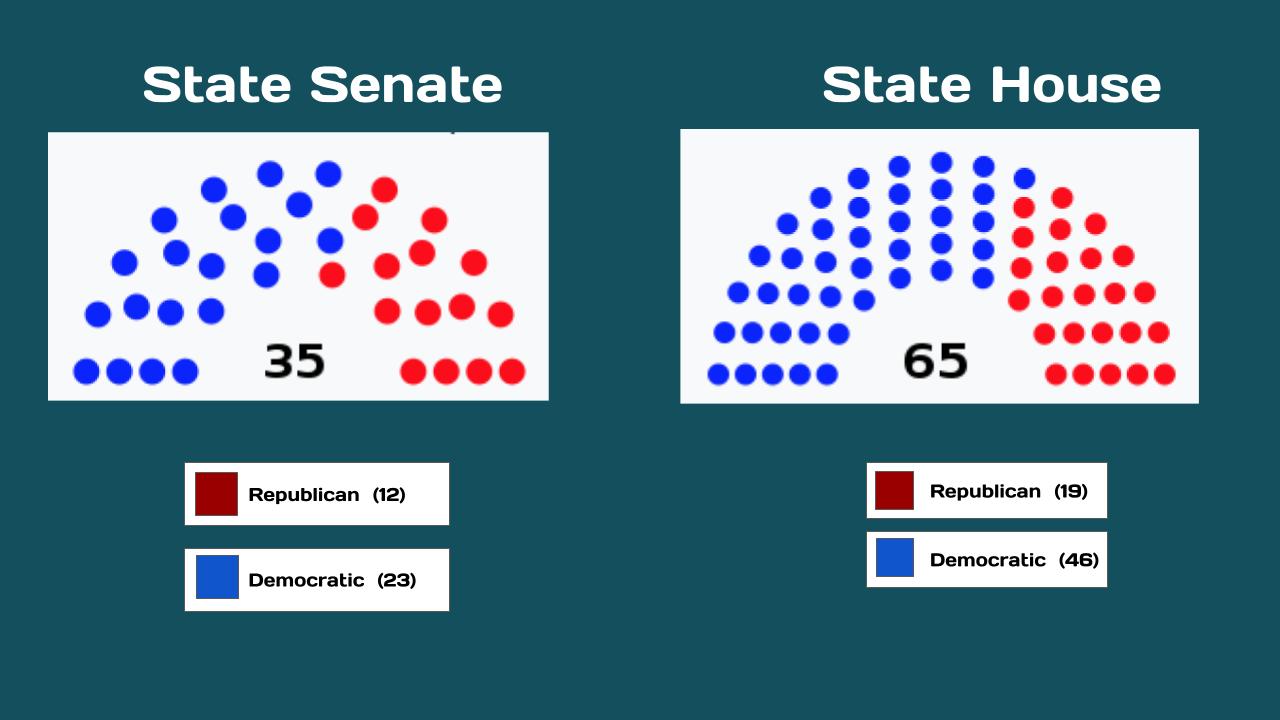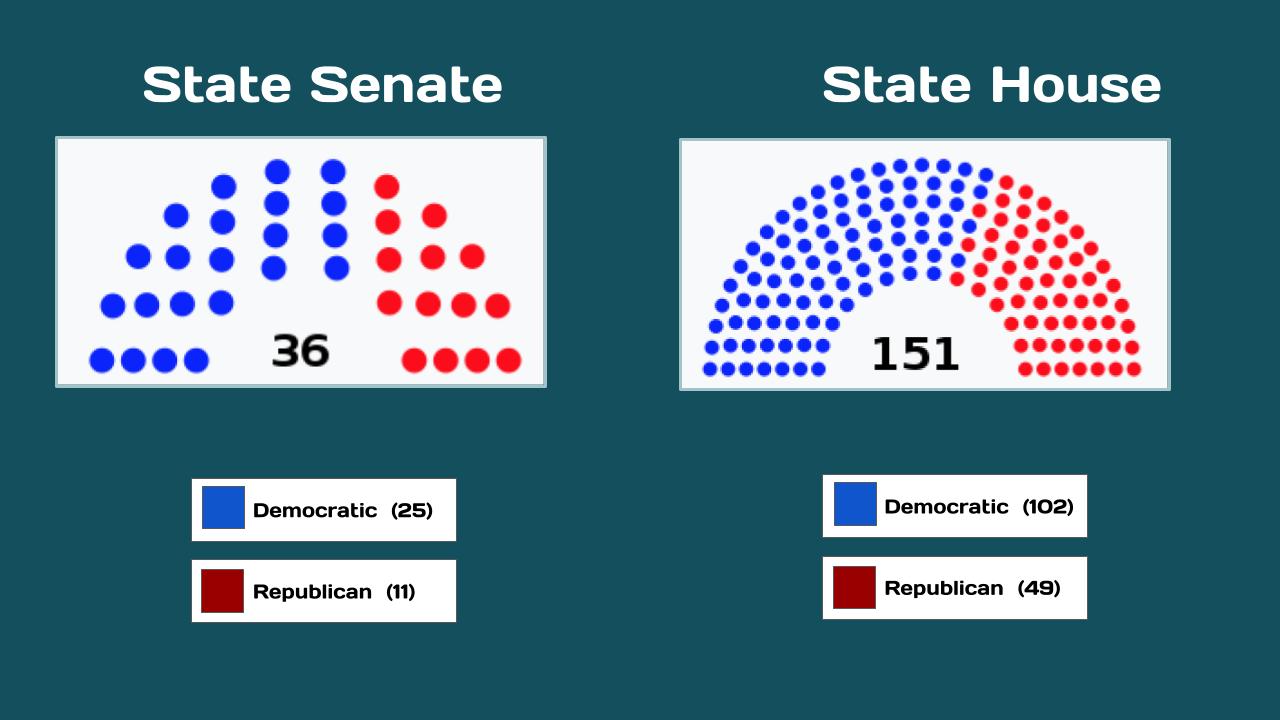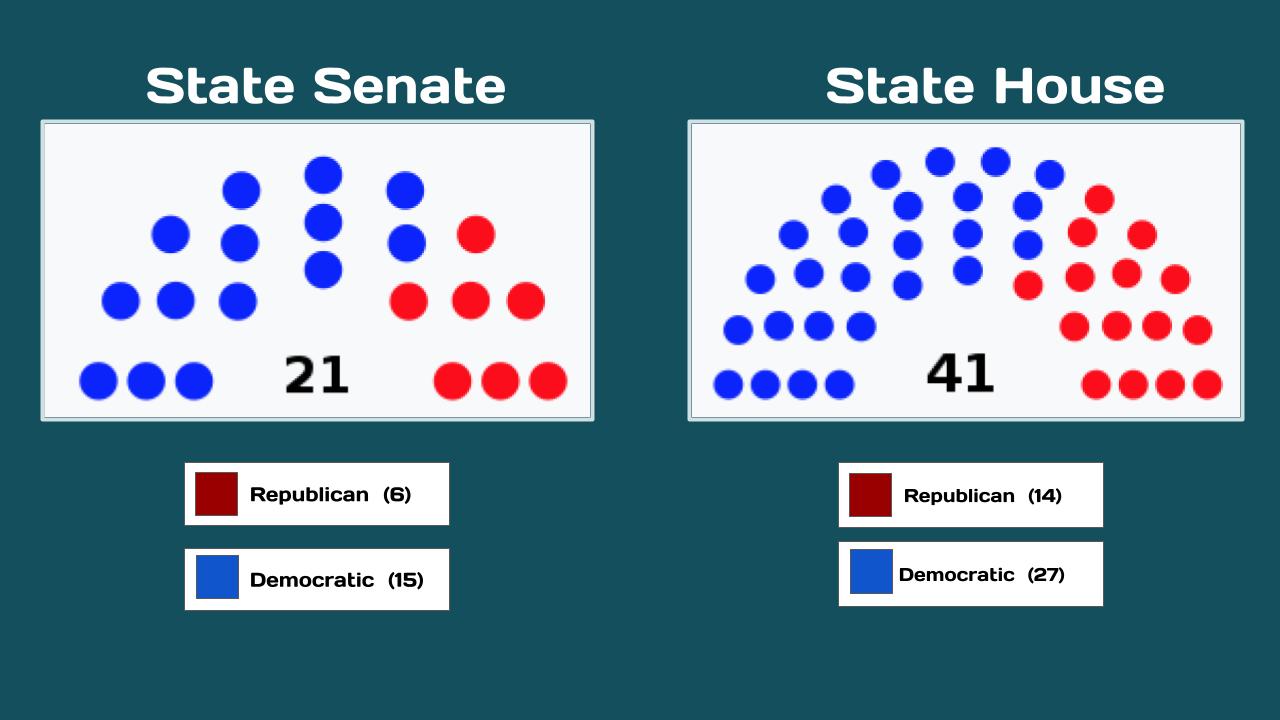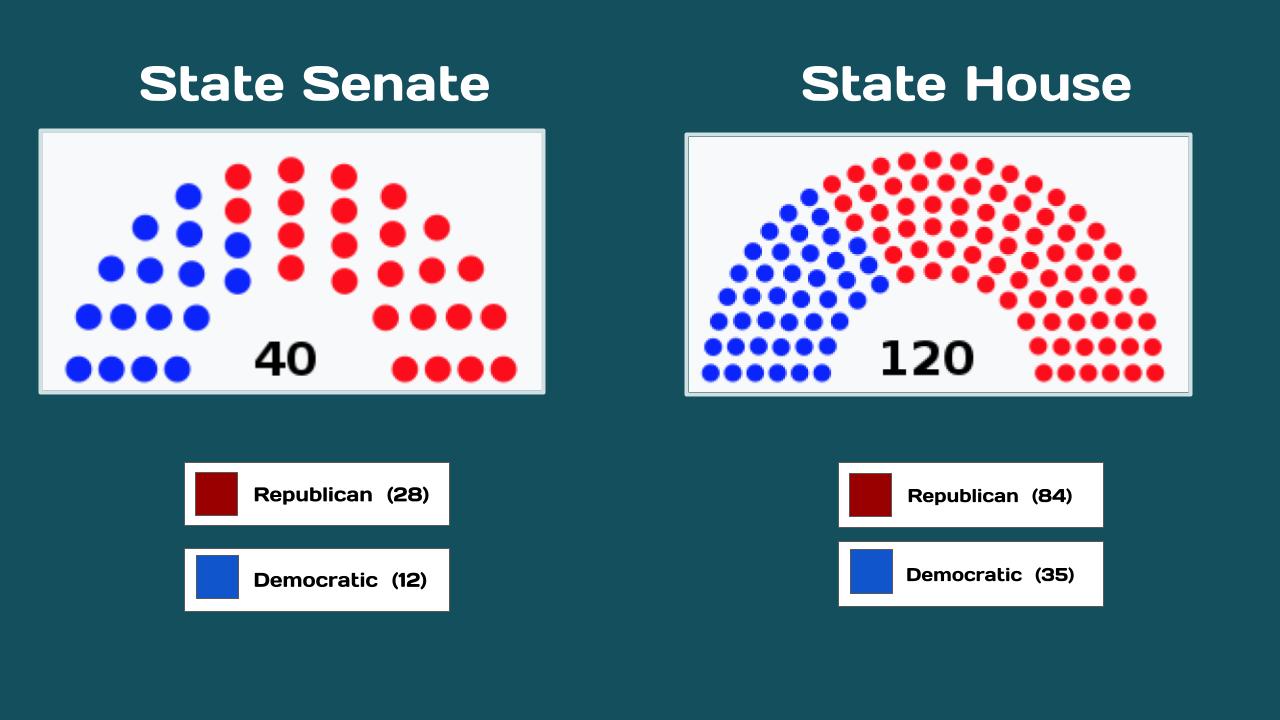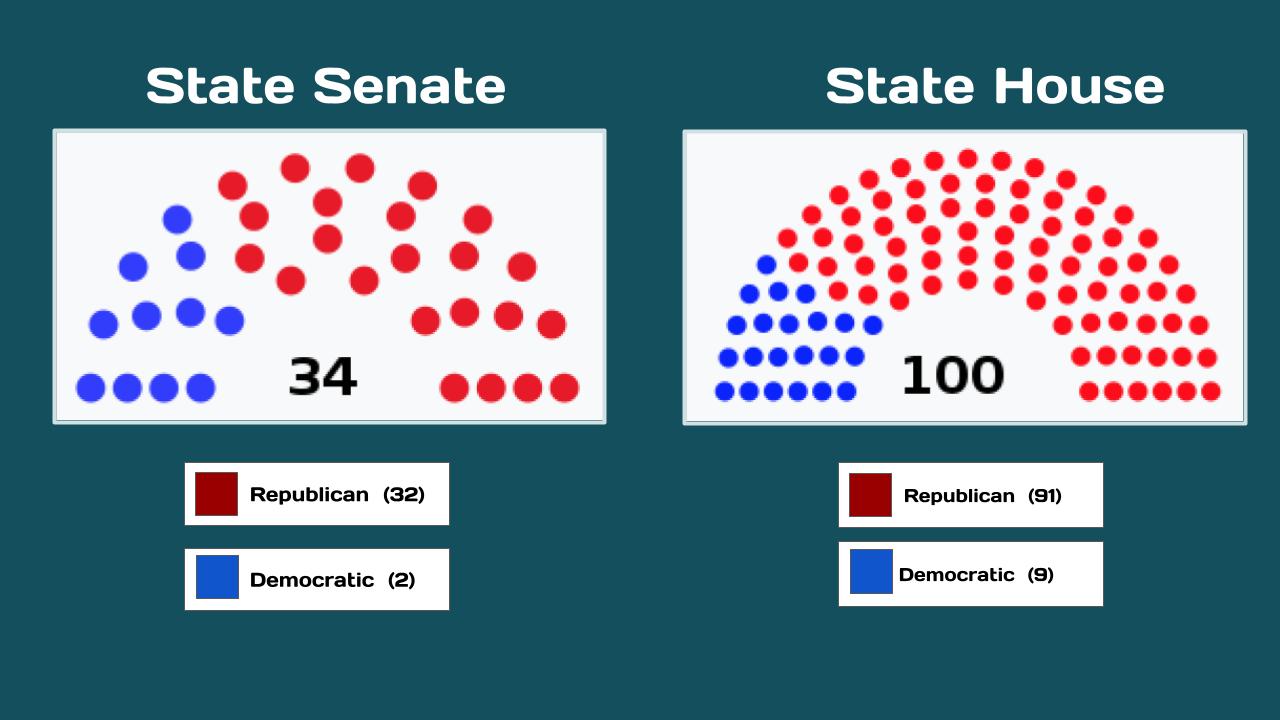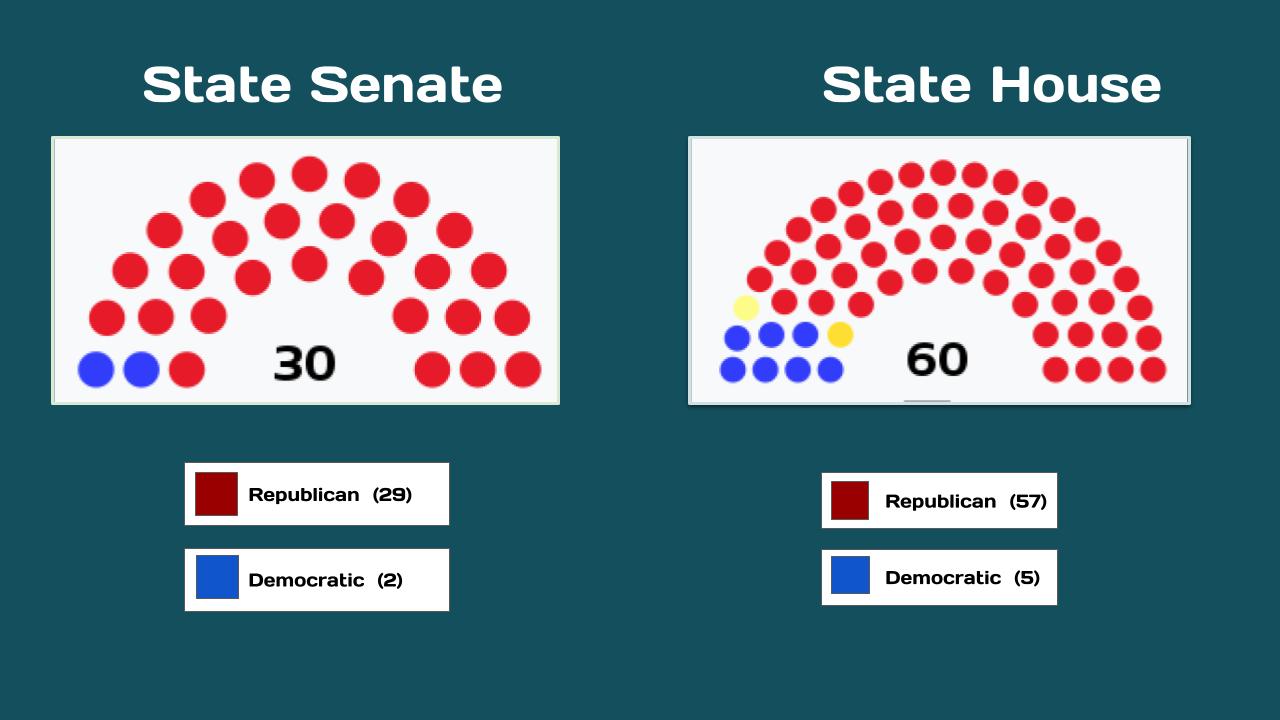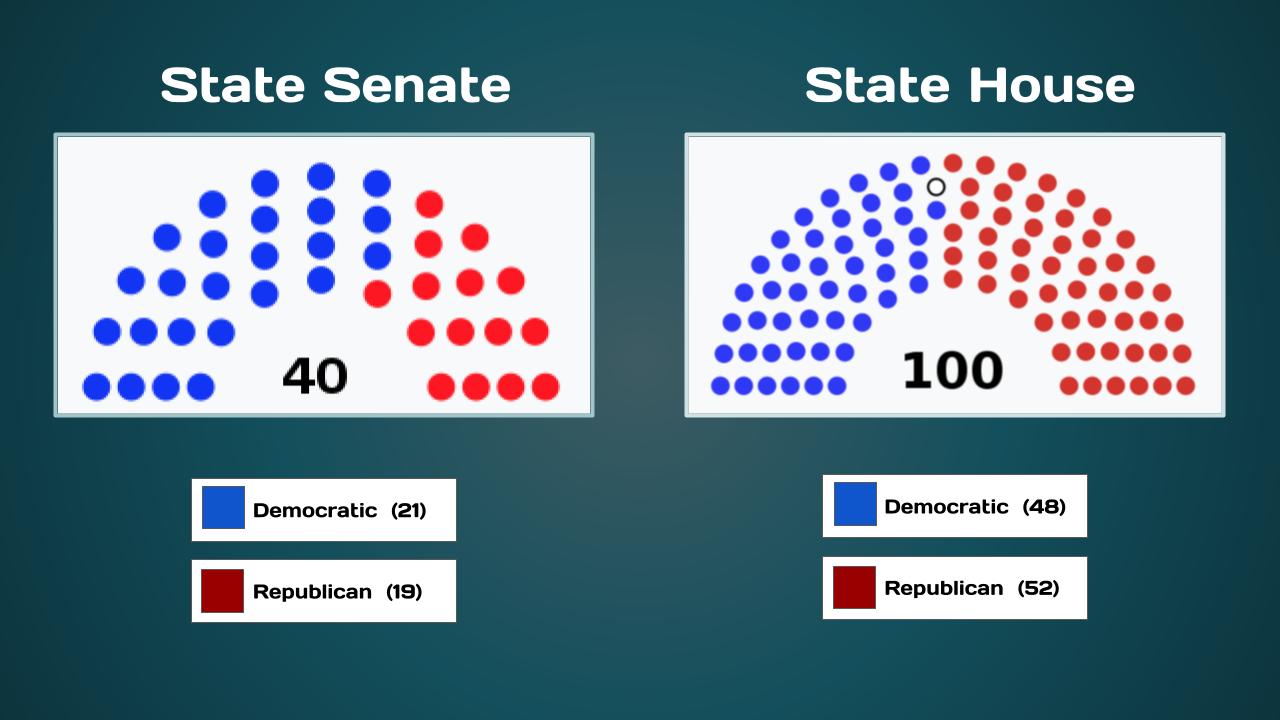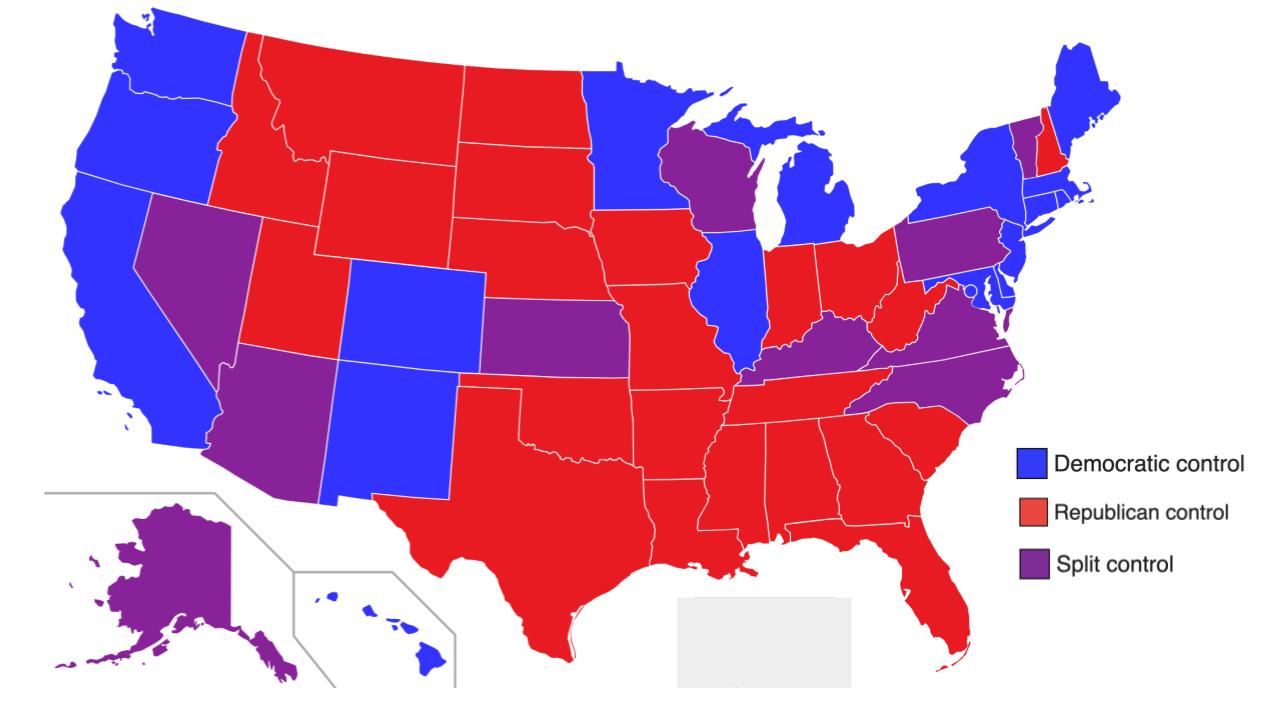
State Legislatures

This is a list of United States state legislatures. Each state in the United States has a legislature as part of its form of civil government. Most of the fundamental details of the legislature are specified in the state constitution. With the exception of Nebraska, all state legislatures are bicameral bodies, composed of a lower house (Assembly, General Assembly, State Assembly, House of Delegates, or House of Representatives) and an upper house (Senate).

The United States also has one federal district and five non-state territories with local legislative branches, which are listed below. Among the states, the Nebraska Legislature is the only state with a unicameral body. However, three other jurisdictions – the District of Columbia, Guam, and the U.S. Virgin Islands – also have unicameral bodies.

The exact names, dates, term lengths, term limits, electoral systems, electoral districts, and other details are determined by an individual state’s laws.

OnAir Post: State Legislatures
AL Legislature

The Alabama Legislature is the legislative branch of the state government of Alabama. It is a bicameral body composed of the House of Representatives and Senate. It is one of the few state legislatures in which members of both chambers serve four-year terms and in which all are elected in the same cycle. The most recent election was on November 6, 2018. The new legislature assumes office immediately following the certification of the election results by the Alabama Secretary of State which occurs within a few days following the election.
The Legislature meets in the Alabama State House in Montgomery. The original capitol building, located nearby, has not been used by the Legislature on a regular basis since 1985, when it closed for renovations. In the 21st century, it serves as the seat of the executive branch as well as a museum.

Source: Wikipedia

OnAir Post: AL Legislature

AK Legislature

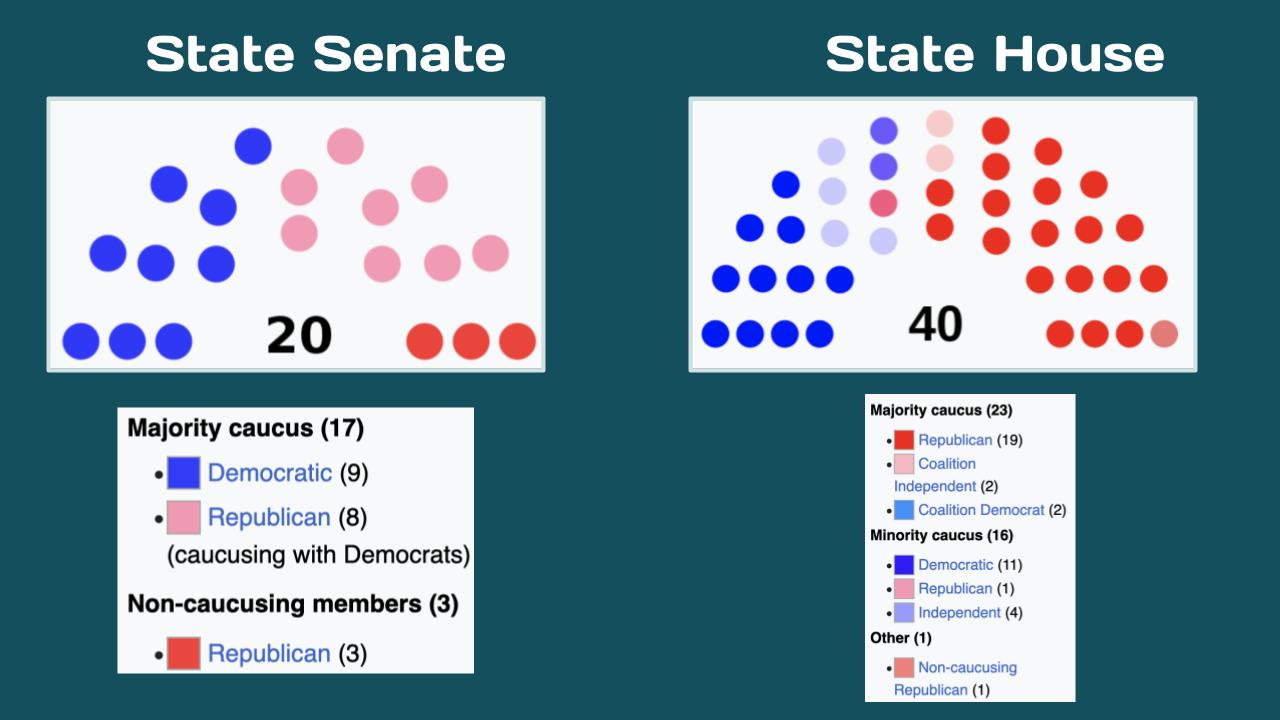
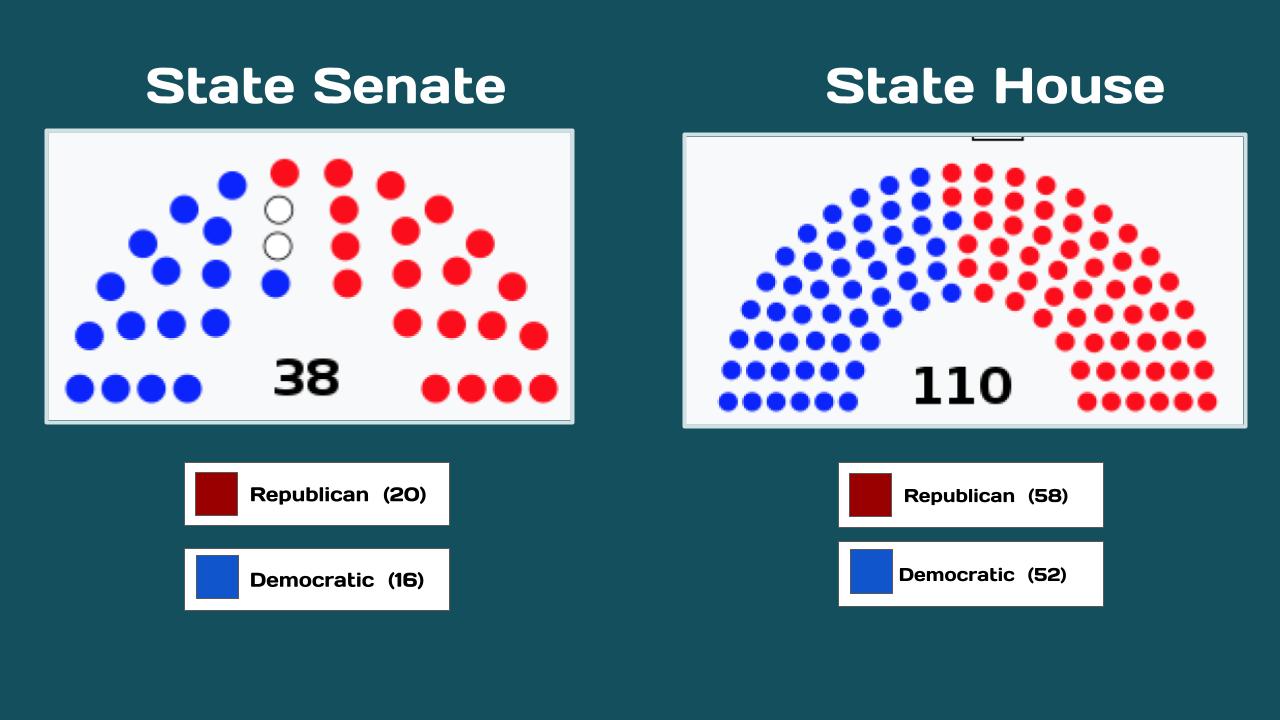
The Alaska Legislature is the state legislature of the U.S. state of Alaska. It is a bicameral institution consisting of the 40-member Alaska House of Representatives (lower house) and the 20-member Alaska Senate (upper house). There are 40 House Districts (1–40) and 20 Senate Districts (A–T).  With a total of 60 lawmakers, the Alaska Legislature is the smallest bicameral state legislature in the United States and the second-smallest of all state legislatures (only the 49-member unicameral Nebraska Legislature is smaller). There are no term limits for either chamber.
The Alaska Legislature meets in the Alaska State Capitol in Juneau, Alaska.

The current sitting is the 32nd Alaska State Legislature.

Source: Wikipedia

OnAir Post: AK Legislature

AR General Assembly

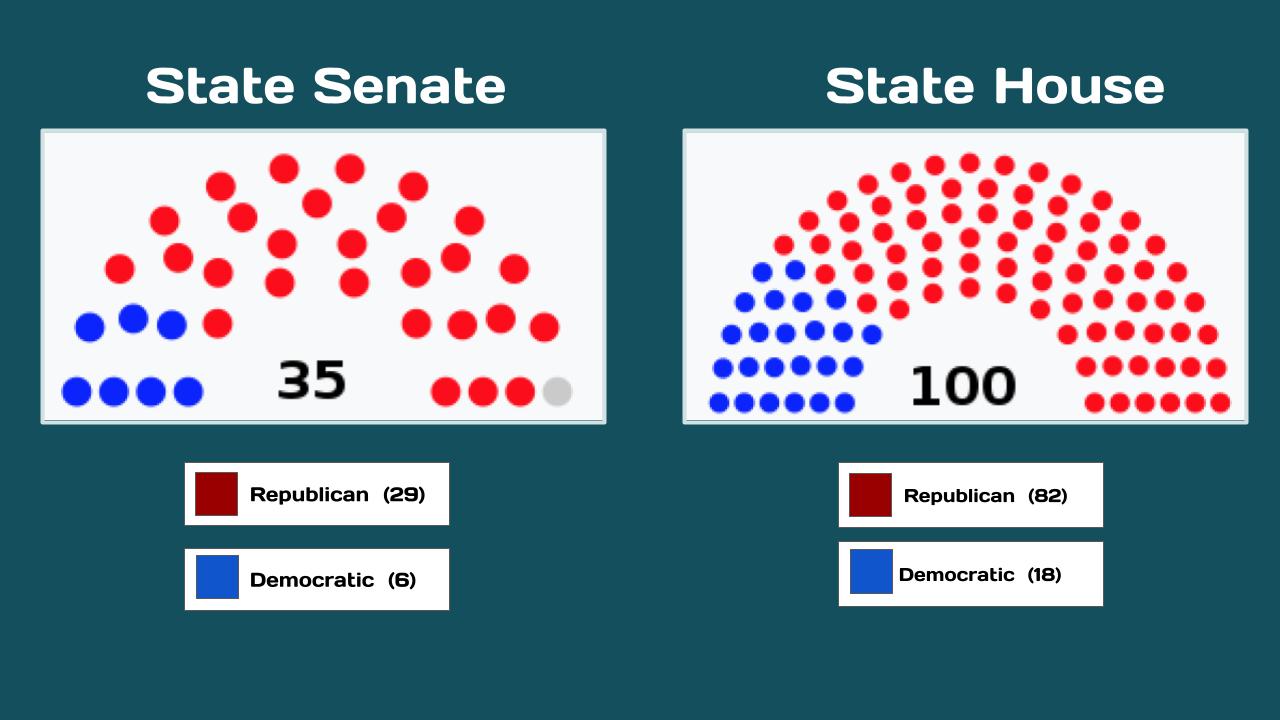
The Arkansas General Assembly is the state legislature of the U.S. state of Arkansas. The legislature is a bicameral body composed of the upper house Arkansas Senate with 35 members, and the lower Arkansas House of Representatives with 100 members. All 135 representatives and state senators represent an equal number of constituent districts.

The General Assembly convenes on the second Monday of every other year. A session lasts for 60 days unless the legislature votes to extend it. The Governor of Arkansas can issue a “call” for a special session during the interims between regular sessions. The General Assembly meets at the Arkansas State Capitol in Little Rock.

Source: Wikipedia

OnAir Post: AR General Assembly

AZ Legislature

The Arizona State Legislature is the state legislature of the U.S. state of Arizona. It is a bicameral legislature that consists of a lower house, the House of Representatives, and an upper house, the Senate. Composed of 90 legislators, the state legislature meets in the Capitol Complex in the state capital of Phoenix, Arizona. Created by the Arizona Constitution upon statehood in 1912, the Arizona State Legislature met biennially until 1950. Today, they meet annually.

Arizona’s electoral districts are different from the majority of U.S. states. The state is divided into 30 legislative districts, each of which elects one senator and two representatives. Legislators are term limited to eight consecutive years in office, but can run again after two years or run for the other house than the one in which they serve.

Source: Wikipedia

OnAir Post: AZ Legislature

CA Legislature

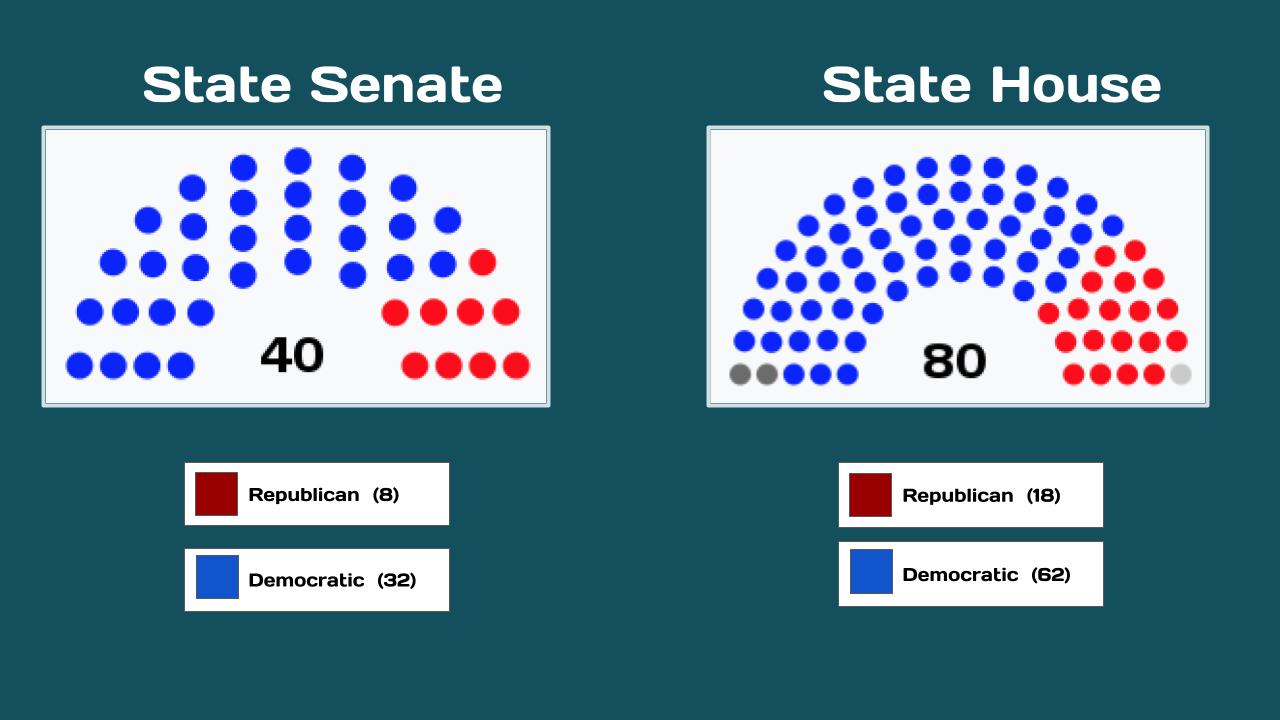
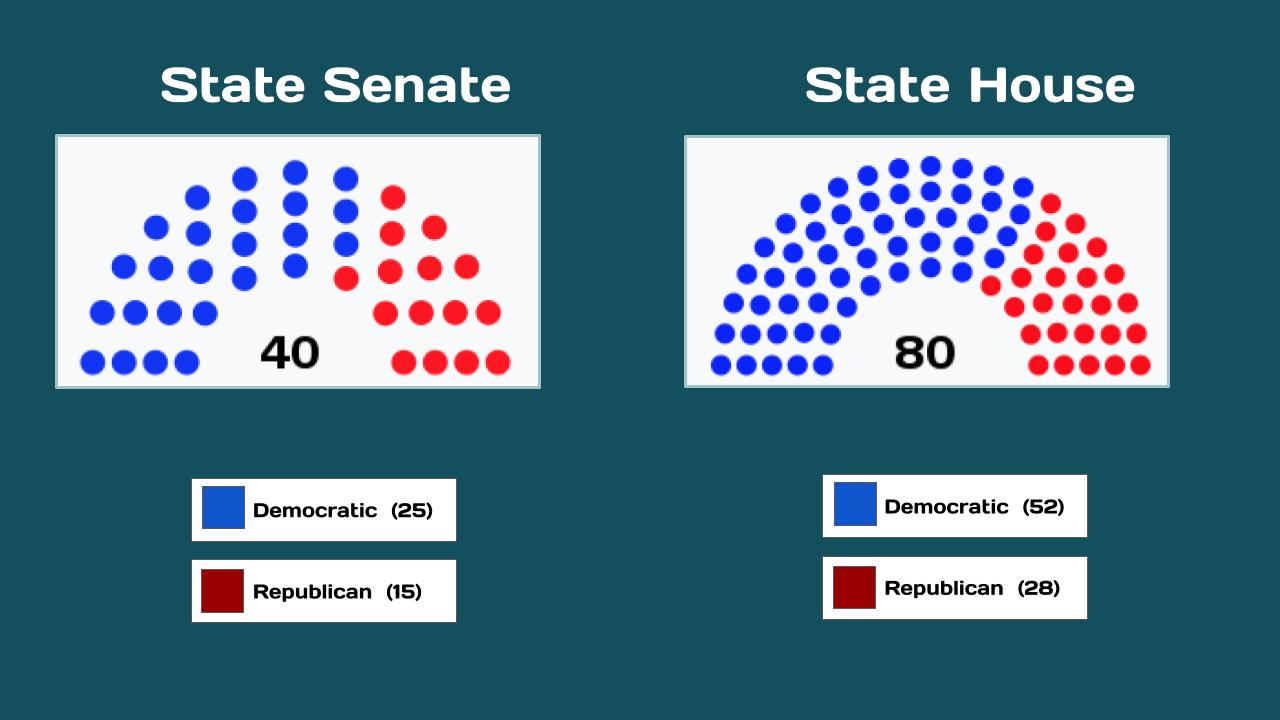
The California State Legislature is a bicameral state legislature consisting of a lower house, the California State Assembly, with 80 members; and an upper house, the California State Senate, with 40 members. Both houses of the Legislature convene at the California State Capitol in Sacramento. The California state legislature is one of just ten full-time state legislatures in the United States.
The Democratic Party currently holds veto-proof supermajorities in both houses of the California State Legislature. The Assembly consists of 60 Democrats and 19 Republicans, with one independent, while the Senate is composed of 30 Democrats and 9 Republicans, also with one vacancy. Except for a brief period from 1995 to 1996, the Assembly has been in Democratic hands since the 1970 election. The Senate has been under continuous Democratic control since 1970.

Source: Wikipedia

OnAir Post: CA Legislature

CO General Assembly

The Colorado General Assembly is the state legislature of the State of Colorado. It is a bicameral legislature that was created by the 1876 state constitution. Its statutes are codified in the Colorado Revised Statutes (C.R.S.). The session laws are published in the Session Laws of Colorado.

Colorado’s legislature is similar to those of other states, except that, unlike many states, Colorado does not give its lieutenant governor any legislative authority (e.g. tie-breaking vote).

Source: Wikipedia

OnAir Post: CO General Assembly

CT General Assembly

The Connecticut General Assembly (CGA) is the state legislature of the U.S. state of Connecticut. It is a bicameral body composed of the 151-member House of Representatives and the 36-member Senate. It meets in the state capital, Hartford. There are no term limits for either chamber.

During even-numbered years, the General Assembly is in session from February to May. In odd-numbered years, when the state budget is completed, session lasts from January to June. The governor has the right to call for a special session after the end of the regular session, while the General Assembly can call for a “veto session” after the close in order to override gubernatorial vetoes.

During the first half of session, the House and Senate typically meet on Wednesdays only, though by the end of the session, they meet daily due to increased workload and deadlines.

OnAir Post: CT General Assembly

DE General Assembly

The Delaware General Assembly is the legislature of the U.S. state of Delaware. It is a bicameral legislature composed of the Delaware Senate with 21 senators and the Delaware House of Representatives with 41 representatives. It meets at Legislative Hall in Dover, Delaware, convening on the second Tuesday of January of odd-numbered years, with a second session of the same Assembly convening likewise in even-numbered years. Normally the sessions are required to adjourn by the last day of June of the same calendar year. However the Governor can call a special session of the legislature at any time.

Members are elected from single-member districts, all apportioned to roughly equal populations after each decennial Census. Elections are held on the Tuesday after the first Monday in November and about one-half of the Senate is elected every two years for a four-year term, and the entire House of Representatives is elected every two years for a two-year term. Vacancies are filled through special elections. There are no term limits for either chamber.

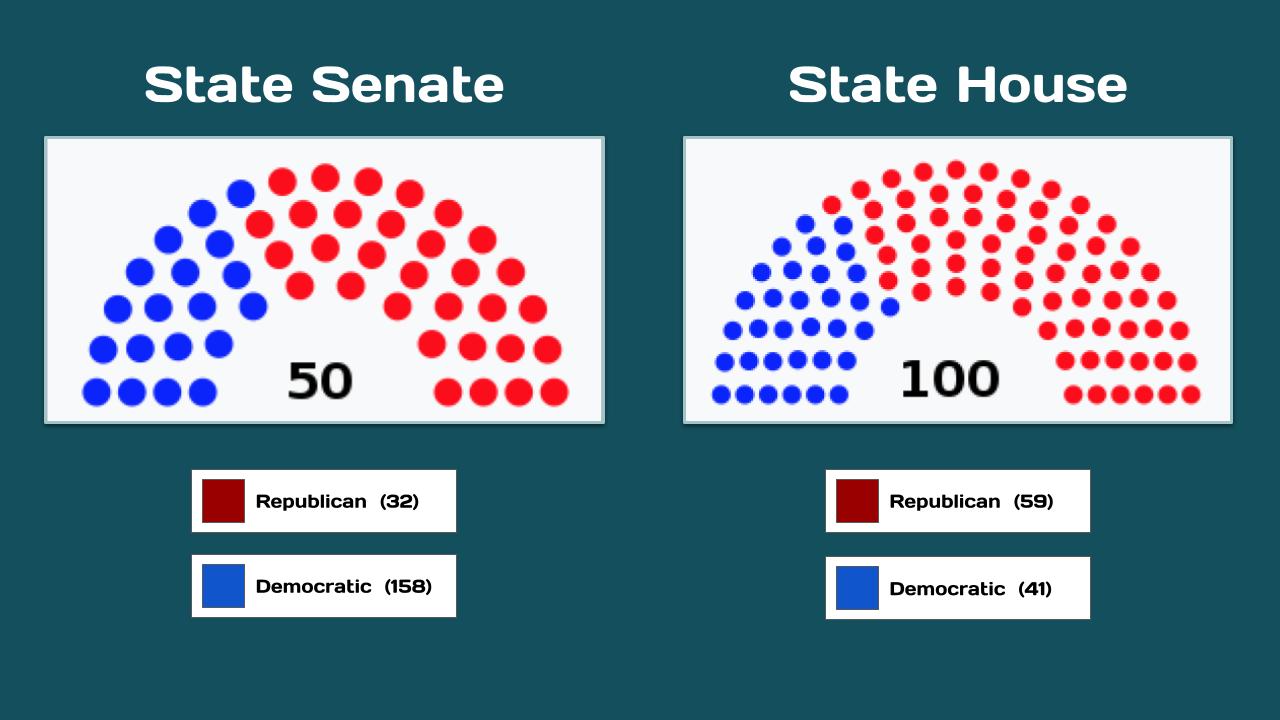
With 62 seats, the Delaware General Assembly is the second-smallest bicameral state legislature in the United States – ahead of Alaska (60 seats) and behind Nevada (63).

Source: Wikipedia

OnAir Post: DE General Assembly

FL Legislature

The Florida Legislature is the legislature of the U.S. State of Florida. It is organized as a bicameral body composed of an upper chamber, the Senate, and a lower chamber, the House of Representatives. Article III, Section 1 of the Florida Constitution, adopted in 1968, defines the role of the legislature and how it is to be constituted. The legislature is composed of 160 state legislators (120 in the House and 40 in the Senate).

The primary purpose of the legislature is to enact new laws and amend or repeal existing laws. It meets in the Florida State Capitol building in Tallahassee.

Source: Wikipedia

OnAir Post: FL Legislature

GA General Assembly

The Georgia General Assembly is the state legislature of the U.S. state of Georgia. It is bicameral, consisting of the Senate and the House of Representatives.

Each of the General Assembly’s 236 members serve two-year terms and are directly elected by constituents of their district. The Constitution of Georgia vests all legislative power with the General Assembly. Both houses have similar powers, though each has unique duties as well. For example, the origination of appropriations bills only occurs in the House, while the Senate is tasked with confirmation of the Governor’s appointments.

The General Assembly meets in the Georgia State Capitol in Atlanta.

Source: Wikipedia

OnAir Post: GA General Assembly

IA General Assembly

The Iowa General Assembly is the legislative branch of the state government of Iowa. Like the federal United States Congress, the General Assembly is a bicameral body, composed of the upper house Iowa Senate and the lower Iowa House of Representatives respectively. The Senate consists of four year terms and the House consists of two year terms. The General Assembly convenes within the Iowa State Capitol in Des Moines.

OnAir Post: IA General Assembly

ID Legislature

The Idaho Legislature consists of the upper Idaho Senate and the lower Idaho House of Representatives. Idaho is divided into 35 legislative districts, which each elect one senator and two representatives. There are no term limits for either chamber.

The crossing of upper and lower house districts into a single constituency is found in only seven U.S. state legislatures: Idaho, Arizona, Maryland, New Jersey, North Dakota, South Dakota, and Washington. Based on 2010 census data, each legislative district in the state of Idaho had approximately 44,788 residents.

Source: Wikipedia

OnAir Post: ID Legislature

IL General Assembly

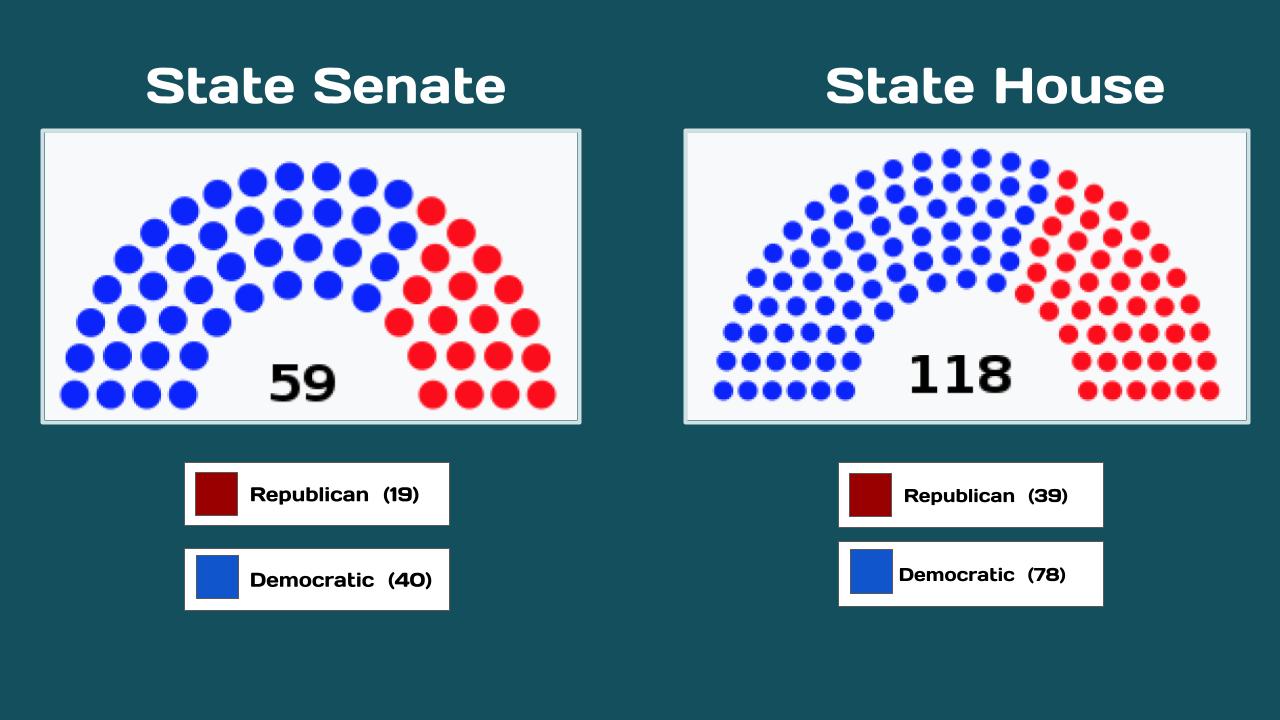
The Illinois General Assembly is the legislature of the U.S. state of Illinois. It has two chambers, the Illinois House of Representatives and the Illinois Senate. The General Assembly was created by the first state constitution adopted in 1818. As of 2022, the current General Assembly is the 102nd.

Under the Illinois Constitution, since 1983 the Senate has had 59 members and the House has had 118 members. In both chambers, all members are elected from single-member districts. Each Senate district is divided into two adjacent House districts.

The General Assembly meets in the Illinois State Capitol in Springfield, Illinois. Its session laws are generally adopted by majority vote in both houses, and upon gaining the assent of the Governor of Illinois. They are published in the official Laws of Illinois.

Two future presidents of the United States, Abraham Lincoln and Barack Obama, began their political careers in the Illinois General Assembly–– in the Illinois House of Representatives and Illinois Senate, respectively.

Source

OnAir Post: IL General Assembly

IN General Assembly

The Indiana General Assembly is the state legislature, or legislative branch, of the state of Indiana. It is a bicameral legislature that consists of a lower house, the Indiana House of Representatives, and an upper house, the Indiana Senate. The General Assembly meets annually at the Indiana Statehouse in Indianapolis.

Members of the General Assembly are elected from districts that are realigned every ten years. Representatives serve terms of two years and senators serve terms of four years. Both houses can create bills, but bills must pass both houses before it can be submitted to the governor and enacted into law.

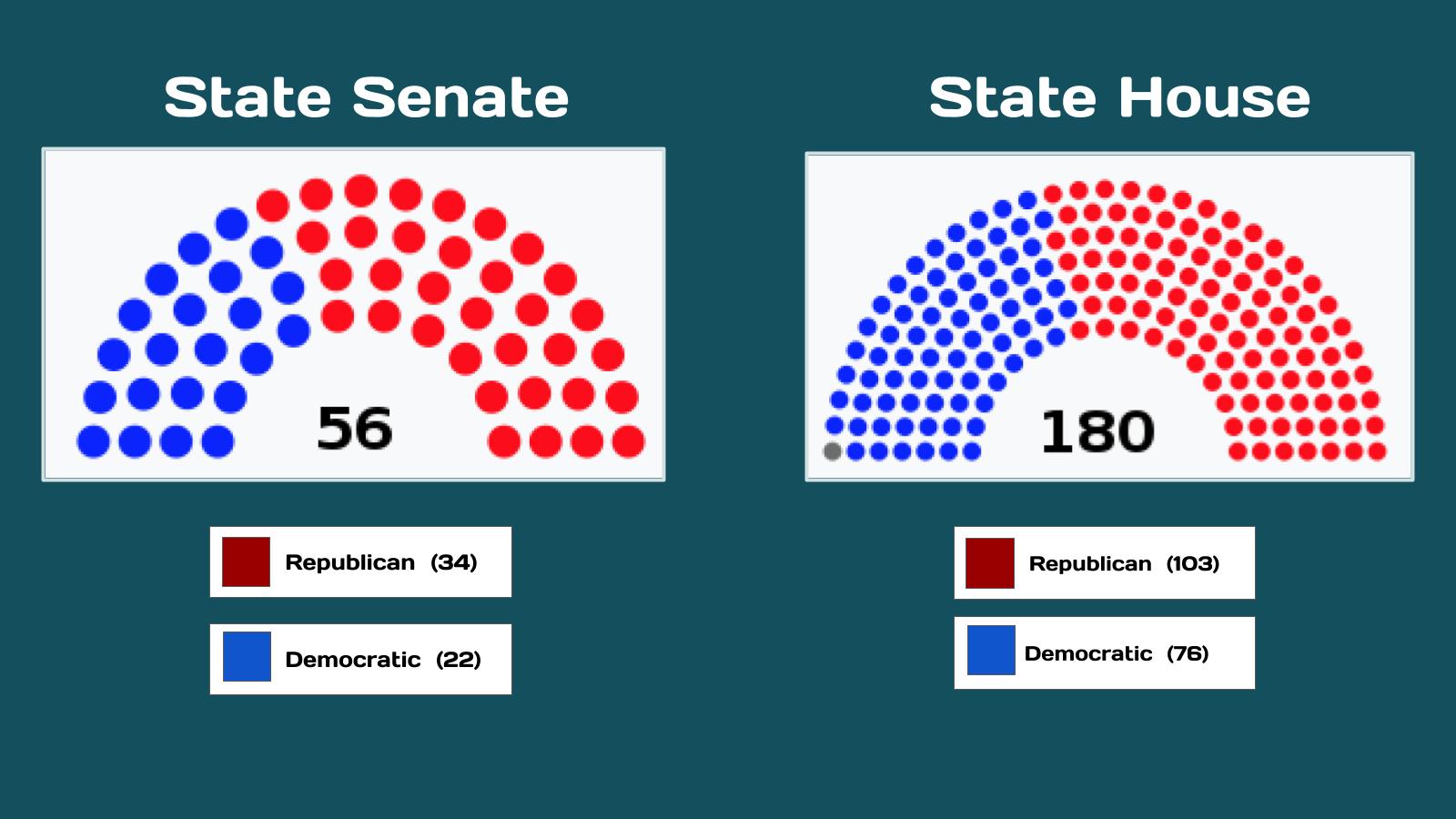
Currently, the Republican Party holds supermajorities in both chambers of the General Assembly. Republicans outnumber Democrats in the Senate by a 39-11 margin, and in the House of Representatives by a 71-29 margin.

Source: Wikipedia

OnAir Post: IN General Assembly

KS Legislature

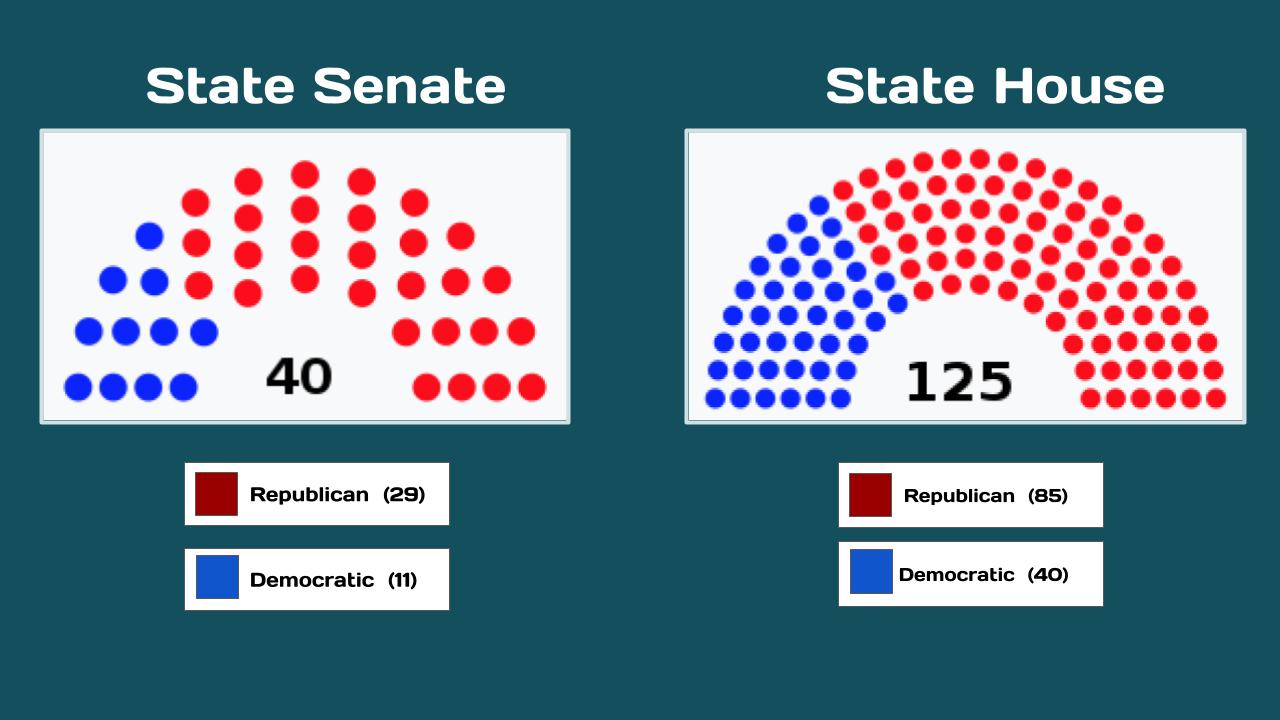
The Kansas Legislature is the state legislature of the U.S. state of Kansas. It is a bicameral assembly, composed of the lower Kansas House of Representatives, with 125 state representatives, and the upper Kansas Senate, with 40 state senators. Representatives are elected for two-year terms, senators for four-year terms.

Prior to statehood, separate pro-slavery and anti-slavery territorial legislatures emerged, drafting four separate constitutions, until one was finally ratified and Kansas became a state in 1861. Republicans hold a long-standing supermajority in both houses of the state legislature, despite a short-lived dominance by the Populist Party. The state legislature approved one of the first child labor laws in the nation.
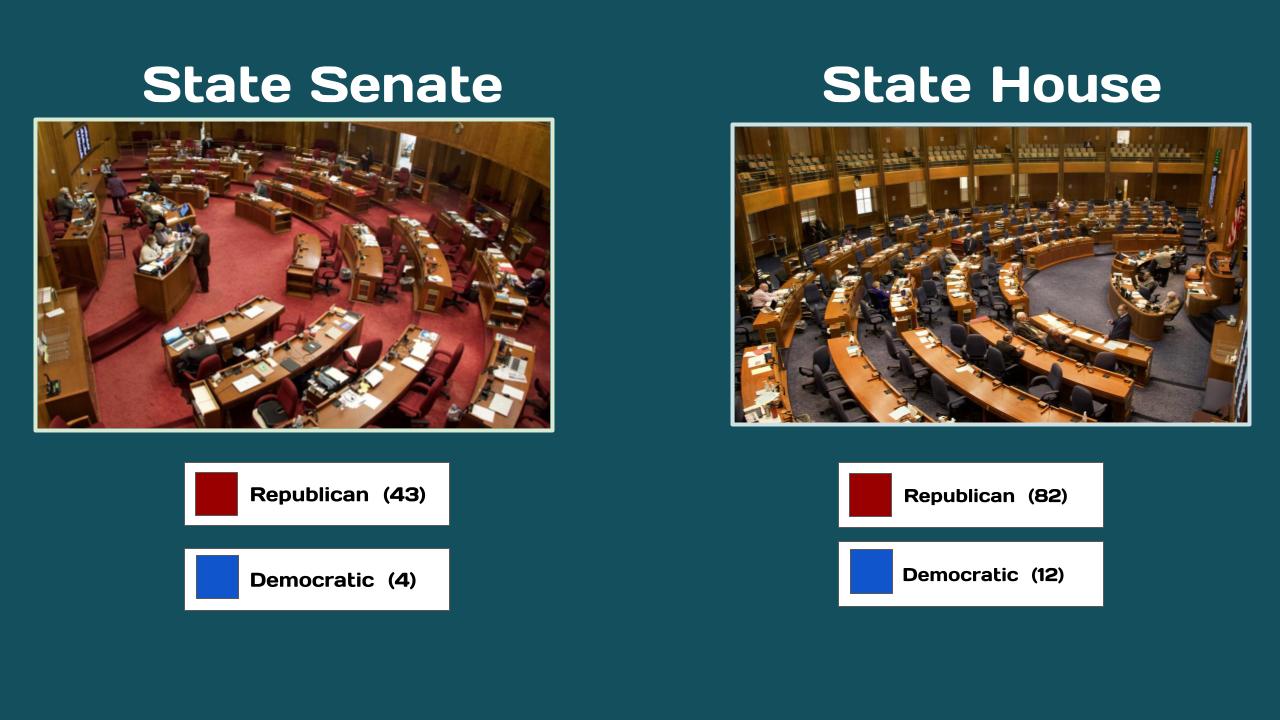
Composed of 165 state lawmakers, the state legislature meets at the Kansas State Capitol in Topeka once a year in regular session. Additional special sessions can be called by the Governor.

Source: Wikipedia

OnAir Post: KS Legislature

KY General Assembly

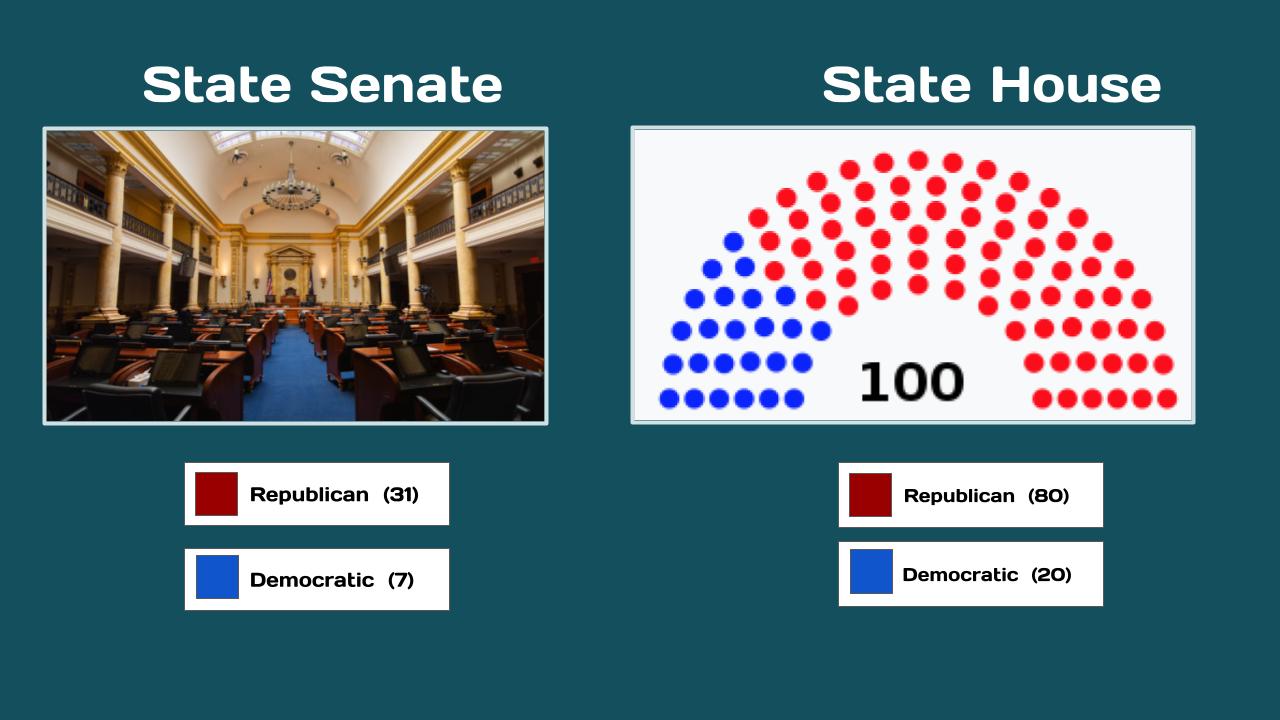
The Kentucky General Assembly, also called the Kentucky Legislature, is the state legislature of the U.S. state of Kentucky. It comprises the Kentucky Senate and the Kentucky House of Representatives.

The General Assembly meets annually in the state capitol building in Frankfort, Kentucky, convening on the first Tuesday after the first Monday in January. In even-numbered years, sessions may not last more than 60 legislative days, and cannot extend beyond April 15. In odd-numbered years, sessions may not last more than 30 legislative days, and cannot extend beyond March 30. Special sessions may be called by the Governor of Kentucky at any time for any duration.

Source: Wikipedia

OnAir Post: KY General Assembly

LA Legislature

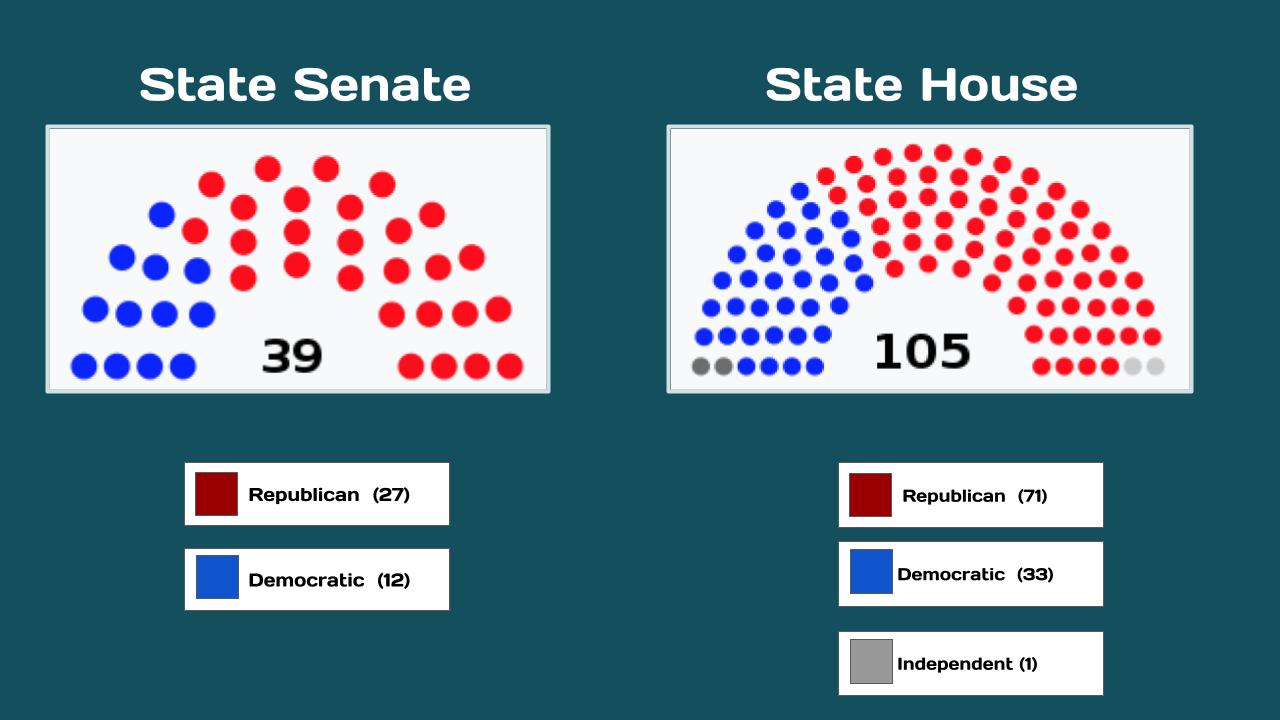
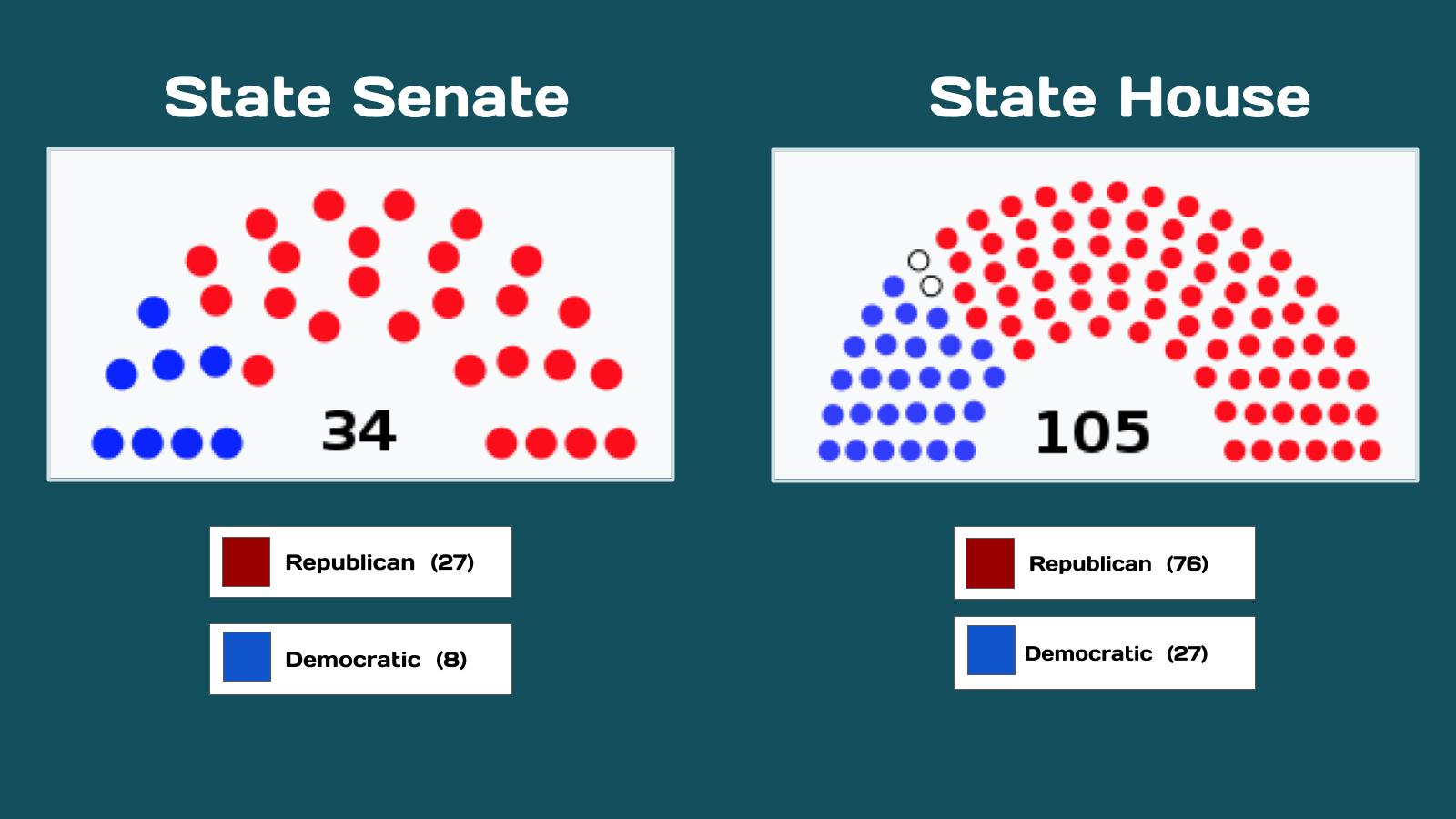
The Louisiana State Legislature (French: Législature d’État de Louisiane)[1] is the state legislature of the U.S. state of Louisiana. It is a bicameral body, comprising the lower house, the Louisiana House of Representatives with 105 representatives, and the upper house, the Louisiana State Senate with 39 senators. Members of each house are elected from single-member districts of roughly equal populations.

The State Legislature meets in the Louisiana State Capitol in Baton Rouge.

Source: Wikipedia

OnAir Post: LA Legislature

MA General Court

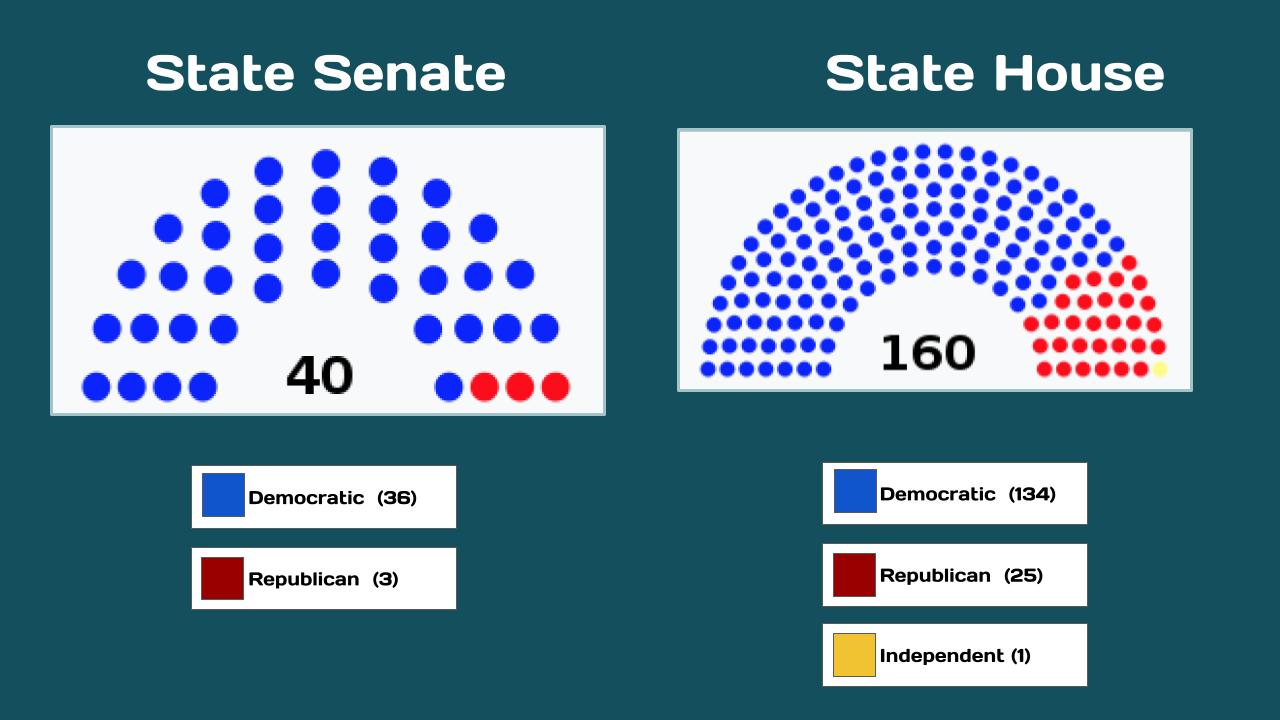
The Massachusetts General Court (formally styled the General Court of Massachusetts) is the state legislature of the Commonwealth of Massachusetts. The name “General Court” is a hold-over from the earliest days of the Massachusetts Bay Colony, when the colonial assembly, in addition to making laws, sat as a judicial court of appeals. Before the adoption of the state constitution in 1780, it was called the Great and General Court, but the official title was shortened by John Adams, author of the state constitution. It is a bicameral body. The upper house is the Massachusetts Senate which is composed of 40 members. The lower body, the Massachusetts House of Representatives, has 160 members. Until 1978, it had 240 members. It meets in the Massachusetts State House on Beacon Hill in Boston.

The current President of the Senate is Karen Spilka, and the Speaker of the House is Ronald Mariano. Since 1959, Democrats have controlled both houses of the Massachusetts General Court, often by large majorities. The Democrats enjoyed veto-proof supermajorities in both chambers for part of the 1990s (i.e., enough votes to override vetoes by a governor) and also currently hold supermajorities in both chambers.

State Senators and Representatives both serve two-year terms. There are no term limits; a term limit was enacted by initiative in Massachusetts in 1994, but in 1997 this was struck down by the Massachusetts Supreme Judicial Court, which ruled that it was an unconstitutional attempt to provide additional qualifications for office by statute, rather than constitutional amendment.

The legislature is a full-time legislature, although not to the extent of neighboring New York or some other states.

Source: Wikipedia

OnAir Post: MA General Court

MD General Assembly

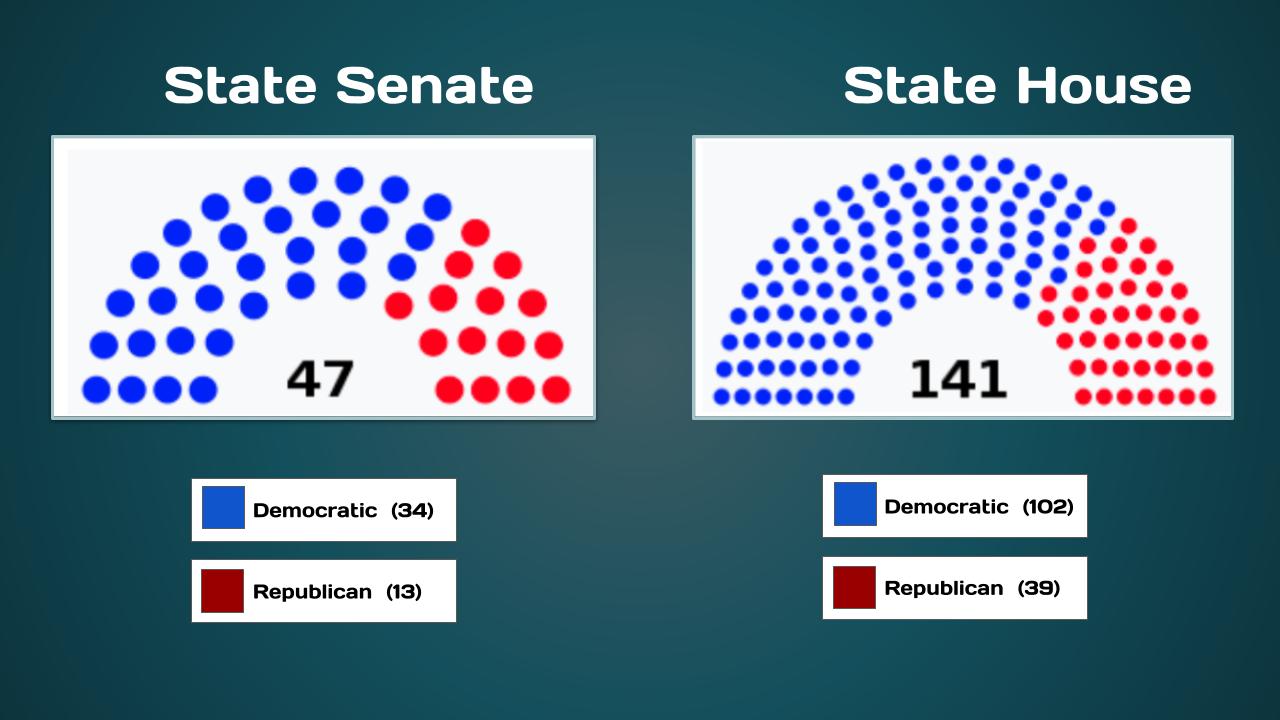
The Maryland General Assembly is the state legislature of the U.S. state of Maryland that convenes within the State House in Annapolis. It is a bicameral body: the upper chamber, the Maryland Senate, has 47 representatives and the lower chamber, the Maryland House of Delegates, has 141 representatives. Members of both houses serve four-year terms. Each house elects its own officers, judges the qualifications and election of its own members, establishes rules for the conduct of its business, and may punish or expel its own members.

The General Assembly meets each year for 90 days to act on more than 2,300 bills including the state’s annual budget, which it must pass before adjourning sine die. The General Assembly’s 441st session convened on January 9, 2020.

Source: Wikipedia

OnAir Post: MD General Assembly

ME Legislature

The Maine Legislature is the state legislature of the U.S. state of Maine. It is a bicameral body composed of the lower house Maine House of Representatives and the upper house Maine Senate. The Legislature convenes at the State House in Augusta, where it has met since 1832.

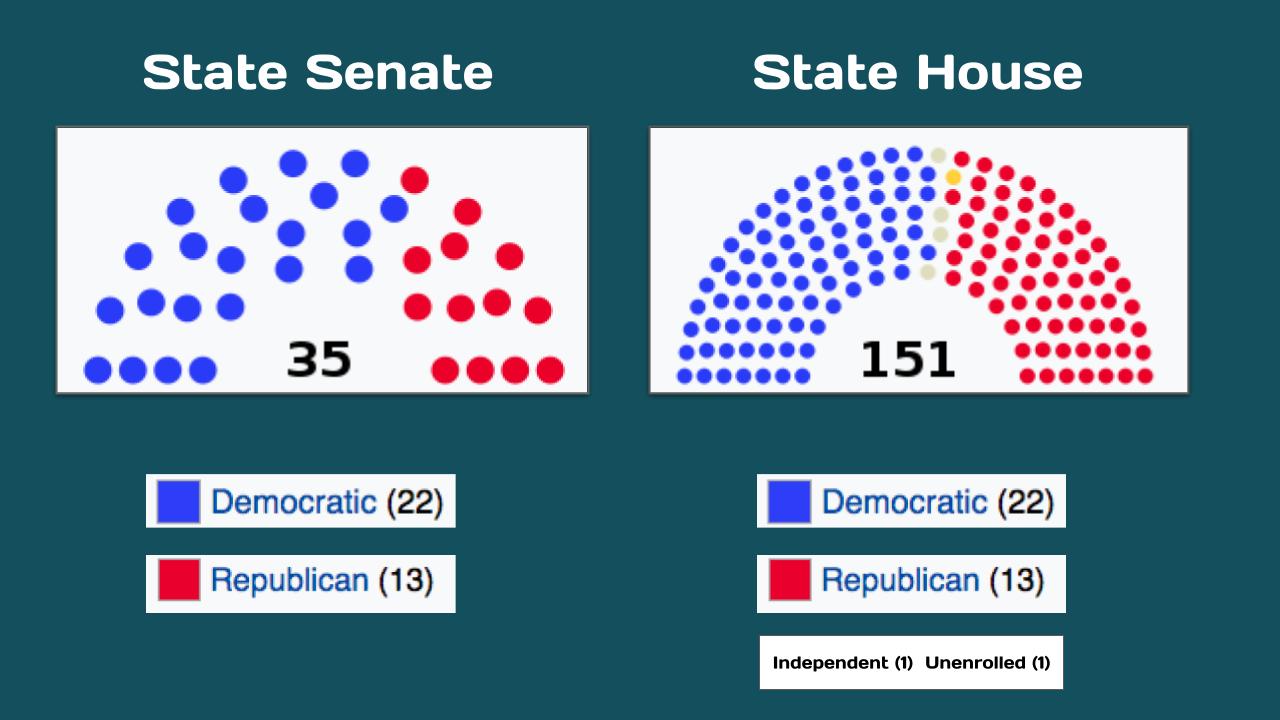
The House of Representatives consists of 151 members, each chosen from single-member constituencies. The House is uniquely the only state legislative body in the U.S. to set aside special seats for Native Americans, where there are three non-voting Representatives from the Penobscot Nation, the Passamaquoddy Tribe, and the Houlton Band of Maliseets. The Senate includes a varying number of members, which may under the Maine Constitution be 31, 33, or 35; the present number is 35.

OnAir Post: ME Legislature

MI Legislature

The Michigan Legislature is the legislature of the U.S. state of Michigan. It is organized as a bicameral body composed of an upper chamber, the Senate, and a lower chamber, the House of Representatives. Article IV of the Michigan Constitution, adopted in 1963, defines the role of the Legislature and how it is to be constituted.[2] The chief purposes of the Legislature are to enact new laws and amend or repeal existing laws. The Legislature meets in the Capitol building in Lansing.

Source: Wikipedia

OnAir Post: MI Legislature

MN Legislature

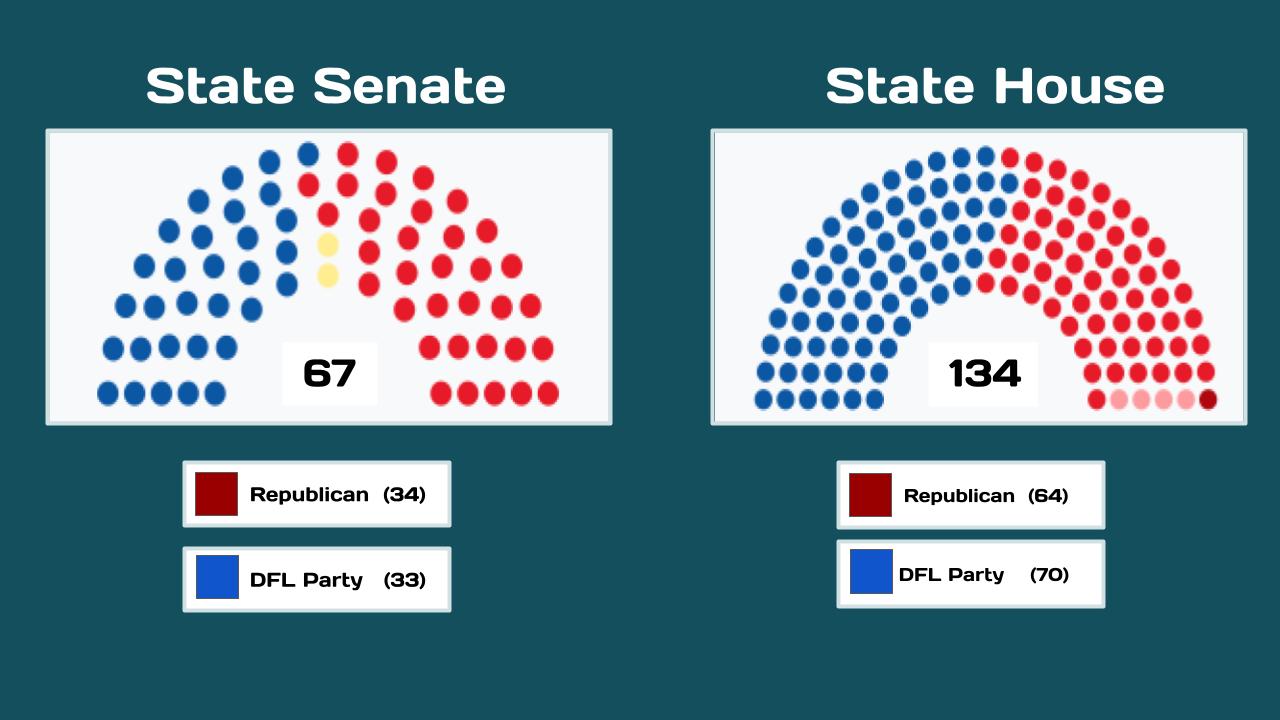
The Minnesota Legislature is the bicameral legislature of the U.S. state of Minnesota consisting of two houses: the Senate and the House of Representatives. Senators are elected from 67 single-member districts. In order to account for decennial redistricting, members run for one two-year term and two four-year terms each decade. They are elected for four-year terms in years ending in 2 and 6, and for two-year terms in years ending in 0. Representatives are elected for two-year terms from 134 single-member districts formed by dividing the 67 senate districts in half. It is the only state legislature in the country to be split with the Republicans controlling the state senate and the democrats controlling the state house.

Both houses of the Legislature meet between January and the first Monday following the third Saturday in May each year, not to exceed 120 legislative days per biennium. Floor sessions are held in the Minnesota State Capitol in Saint Paul.

OnAir Post: MN Legislature

MS Legislature

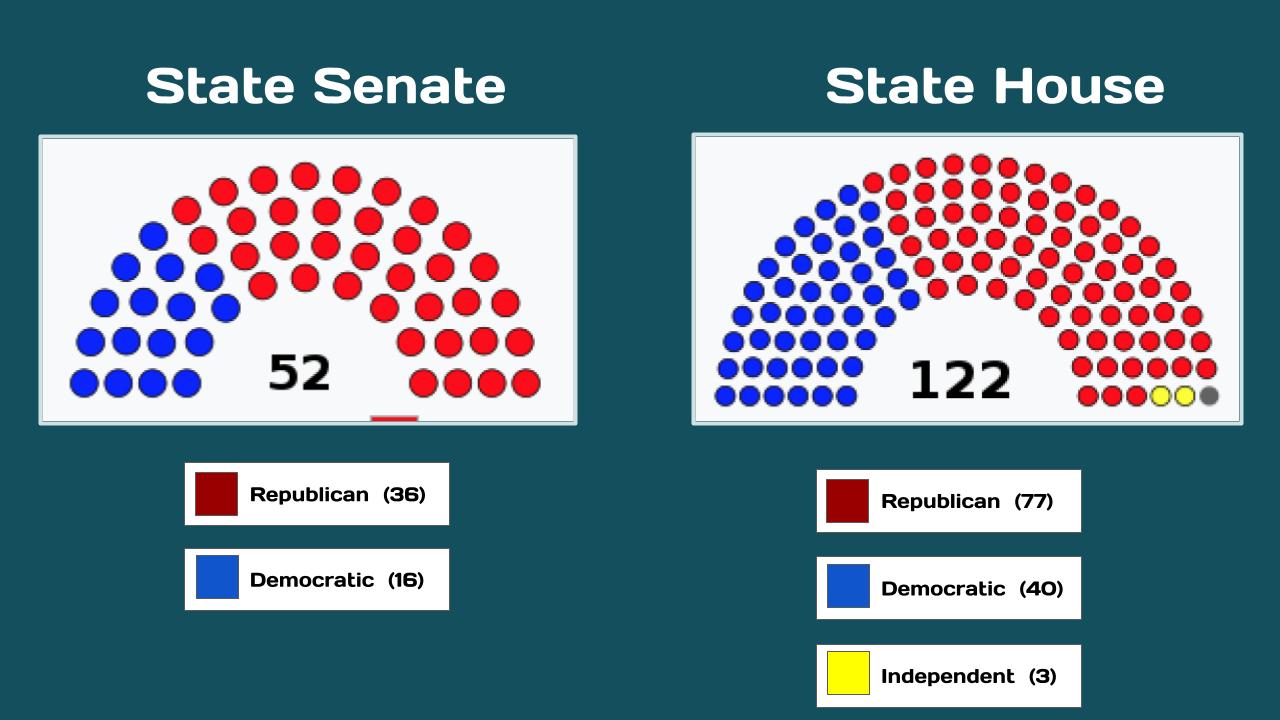
The Mississippi Legislature is the state legislature of the U.S. state of Mississippi. The bicameral Legislature is composed of the lower Mississippi House of Representatives, with 122 members, and the upper Mississippi State Senate, with 52 members. Both representatives and senators serve four-year terms without term limits. The Legislature convenes at the Mississippi State Capitol in Jackson.


OnAir Post: MS Legislature

MO General Assembly

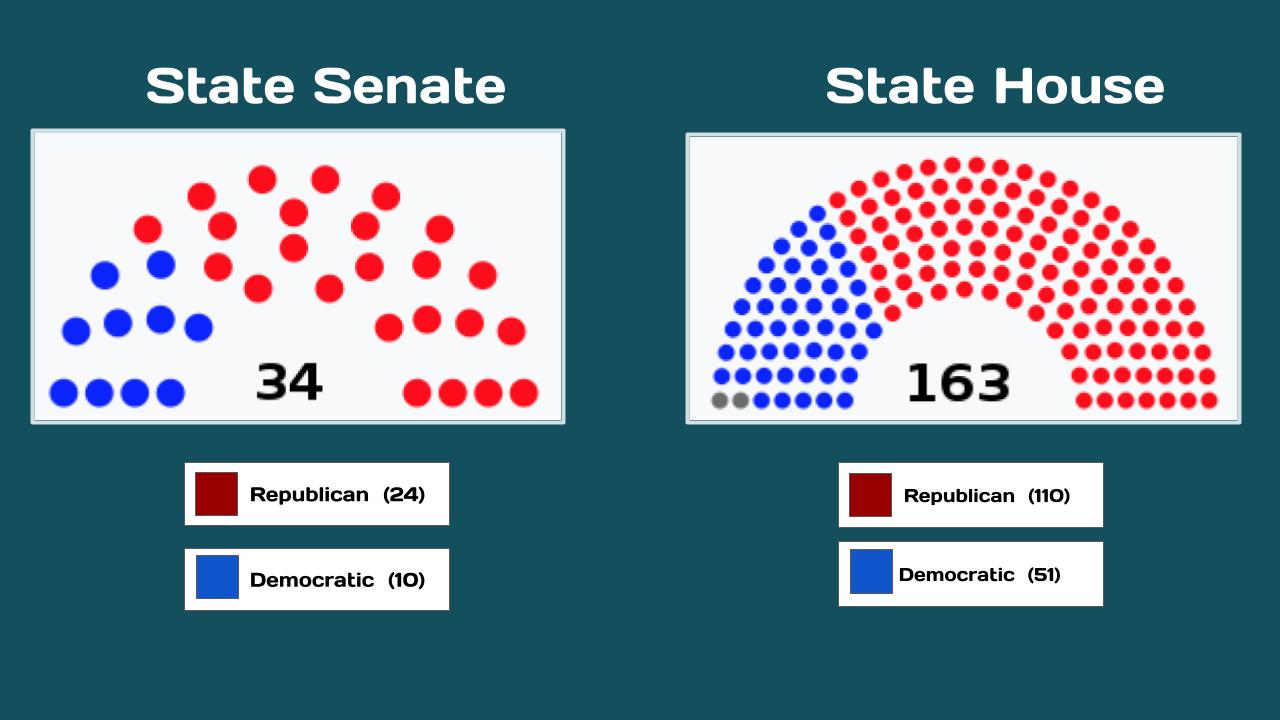
The Missouri General Assembly is the state legislature of the U.S. state of Missouri. The bicameral General Assembly is composed of a 34-member Senate and a 163-member House of Representatives. Members of both houses of the General Assembly are subject to term limits. Senators are limited to two four-year terms and representatives to four two-year terms, a total of 8 years for members of both houses.

The General Assembly meets at the Missouri State Capitol in Jefferson City.

Source: Wikipedia

OnAir Post: MO General Assembly

MT Legislature

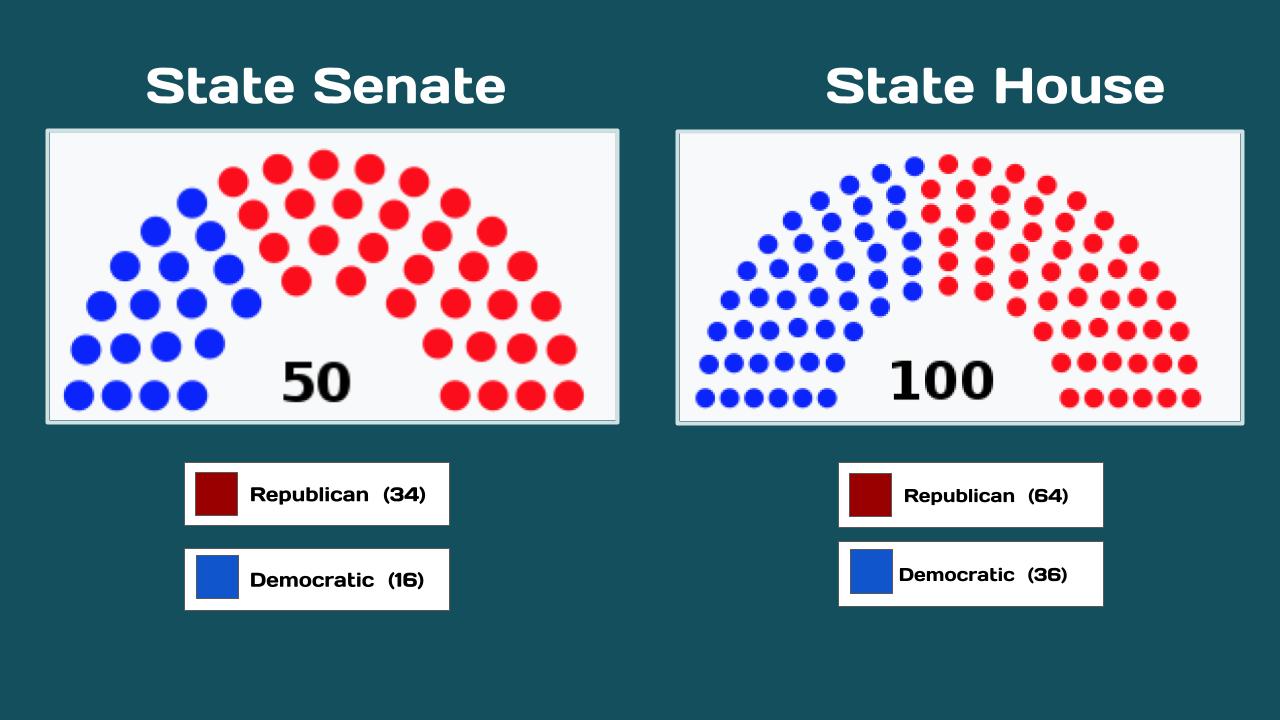
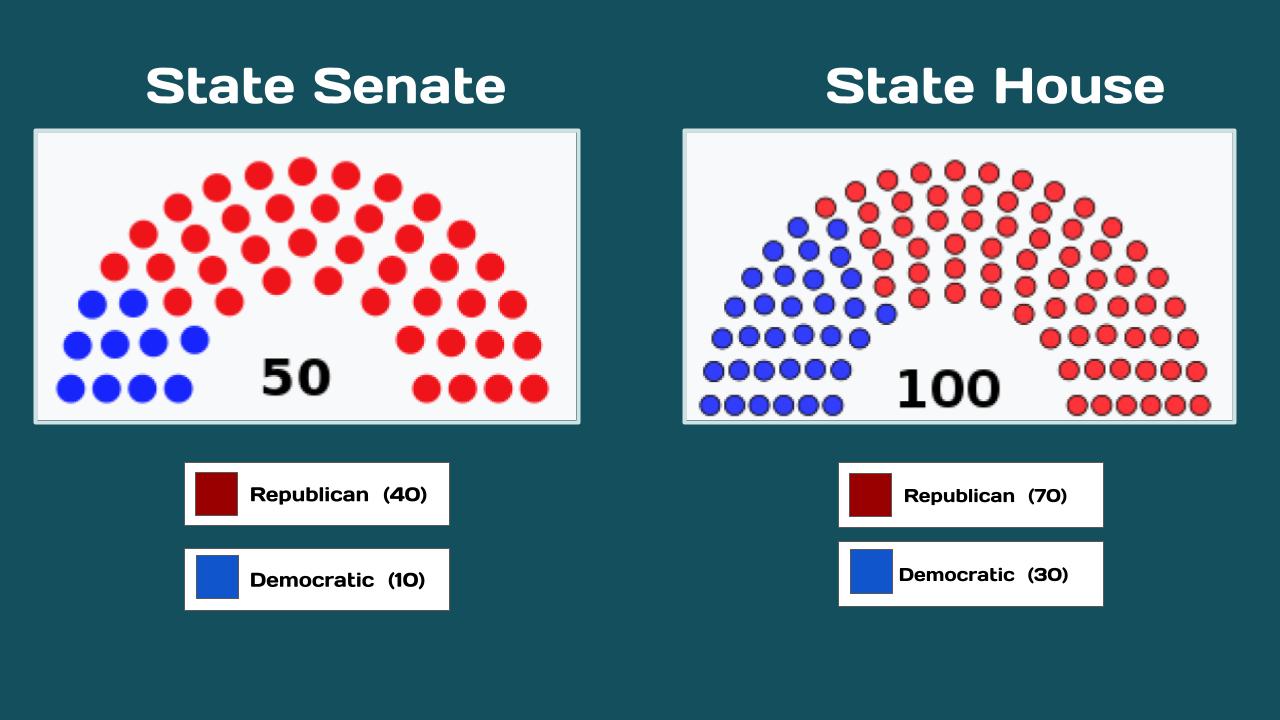
The Montana State Legislature is the state legislature of the U.S. state of Montana. It is composed of the 100-member Montana House of Representatives and the 50-member Montana Senate.

The Montana Constitution dictates that the legislature meet in regular session for no longer than 90 days in each odd-numbered year.[1] The primary work of the legislature is to pass a balanced biennial budget which must then be approved by the Governor. If the Governor vetoes a bill, the legislature may override the veto by a two-thirds vote.

The Montana State Legislature meets in the state capitol in Helena.

Source: Wikipedia

OnAir Post: MT Legislature

NE Unicameral

The Nebraska Legislature (also called the Unicameral) is the supreme legislative body of the state of Nebraska. Its members are called “senators”, as it was originally the upper house of a bicameral legislature before the Nebraska House of Representatives dissolved in 1937.

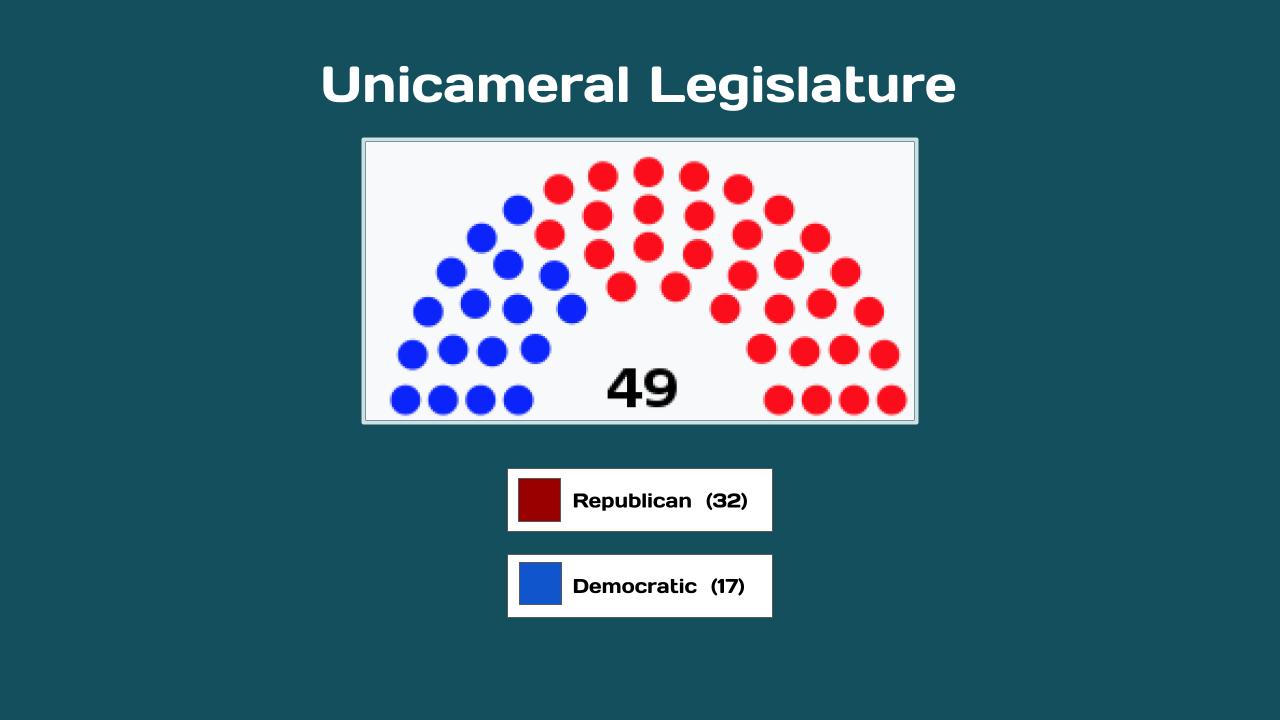
The legislature is unicameral and officially recognizes no party affiliation, making Nebraska unique among U.S. states. With 49 members, it is also the smallest legislature of any U.S. state. The Legislature meets at the Nebraska State Capitol in Lincoln.

Source: Wikipedia

OnAir Post: NE Unicameral

NH General Court

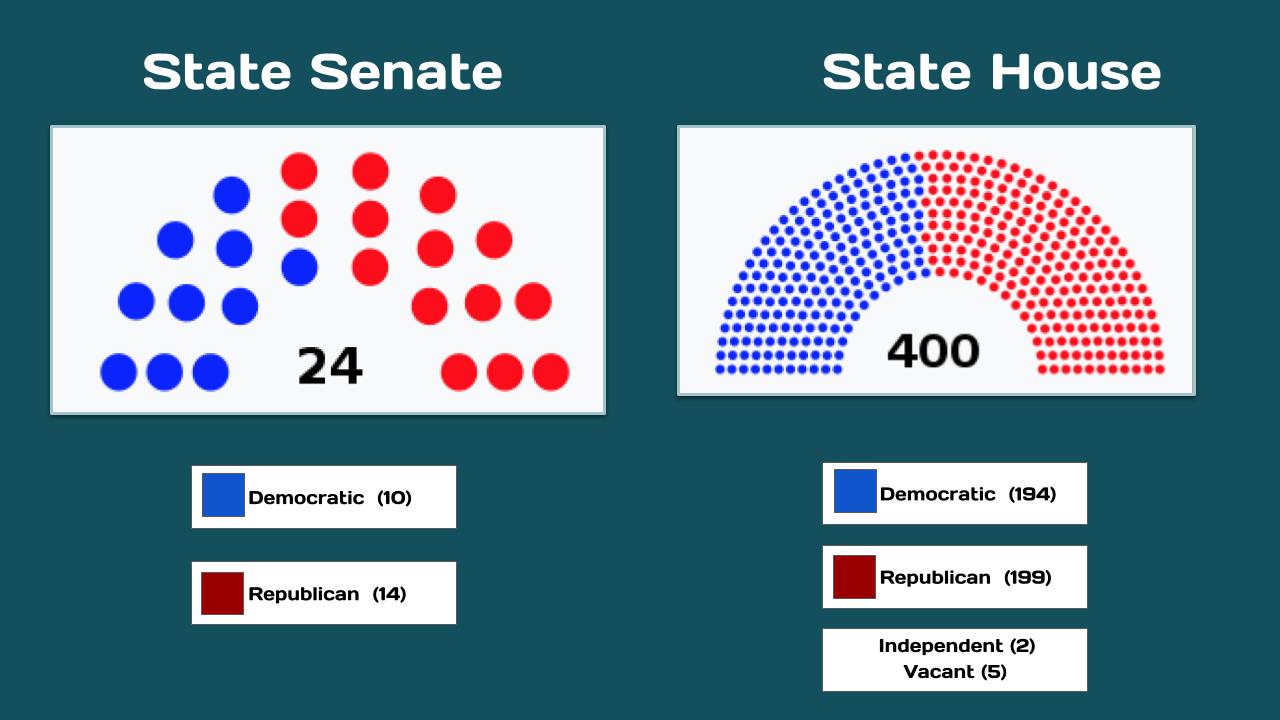
The General Court of New Hampshire is the bicameral state legislature of the U.S. state of New Hampshire. The lower house is the New Hampshire House of Representatives with 400 members. The upper house is the New Hampshire Senate with 24 members. This ratio of 1 Senate seat for every 16.67 House seats makes New Hampshire’s ratio of upper house to lower house seats the largest in the country.

During the 2018-2020 session, the New Hampshire General Court was controlled by Democrats, with a 14-10 majority in the Senate and a 230-156-1 majority in the House, with 13 vacant seats at the end of the session. On November 3, 2020, Republicans won control of the New Hampshire General Court by winning a 14-10 majority in the Senate and a 213-187 majority in the House.

The General Court convenes in the New Hampshire State House in downtown Concord. The State House opened in 1819. The House of Representatives continues to meet in its original chambers, making Representatives Hall the oldest chamber in the United States still in continuous legislative use.[citation needed] When numbered seats were installed in Representatives Hall, the number thirteen was purposely omitted in deference to triskaidekaphobia.

The annual pay for legislators is set by law at $100.00.

Source: Wikipedia

OnAir Post: NH General Court

NJ Legislature

The New Jersey Legislature is the legislative branch of the government of the U.S. state of New Jersey. In its current form, as defined by the New Jersey Constitution of 1947, the Legislature consists of two houses: the General Assembly and the Senate. The Legislature meets in the New Jersey State House, in the state capital of Trenton. Democrats currently hold veto-proof supermajorities in both chambers of the legislature.

Source: Wikipedia

OnAir Post: NJ Legislature

NM Legislature

The New Mexico Legislature (Spanish: Legislatura de Nuevo México) is the legislative branch of the state government of New Mexico. It is a bicameral body made up of the New Mexico House of Representatives and the New Mexico Senate.

Source: Wikipedia

OnAir Post: NM Legislature

NC General Assembly

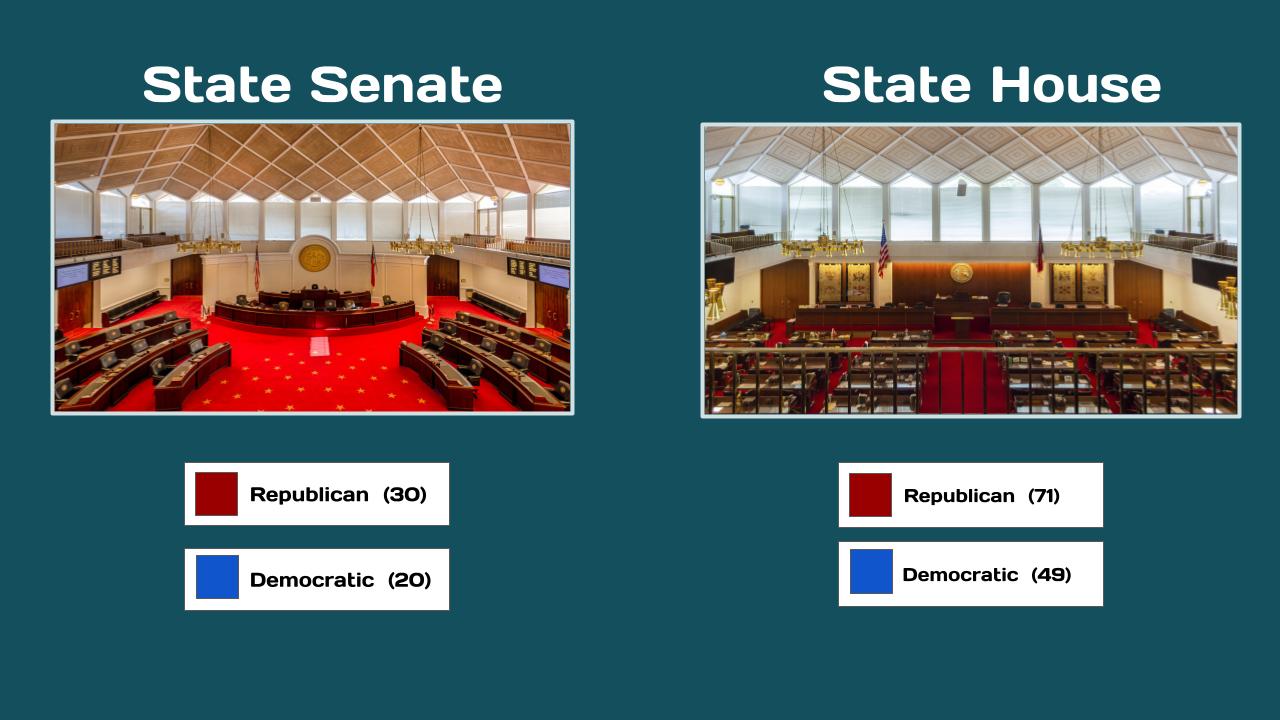
The North Carolina General Assembly is the bicameral legislature of the State government of North Carolina. The legislature consists of two chambers: the Senate and the House of Representatives. The General Assembly meets in the North Carolina Legislative Building in Raleigh, North Carolina, United States.

Source: Wikipedia

OnAir Post: NC General Assembly

ND Legislature

The North Dakota Legislative Assembly is the state legislature of the U.S. state of North Dakota. The Legislative Assembly consists of two chambers, the lower North Dakota House of Representatives, with 94 representatives, and the upper North Dakota Senate, with 47 senators. The state is divided into 47 constituent districts, with two representatives and one senator elected from each district. Members of both houses are elected without term limits. Due to the Legislative Assembly being a biennial legislature, with the House and Senate sitting for only 80 days in odd-numbered years, a Legislative Council oversees legislative affairs in the interim periods, doing longer-term studies of issues, and drafting legislation for consideration of both houses during the next session.

The Legislative Assembly convenes in the west chamber of the 19-story Art Deco state capitol building in Bismarck.

Source: Wikipedia

OnAir Post: ND Legislature

NV Legislature

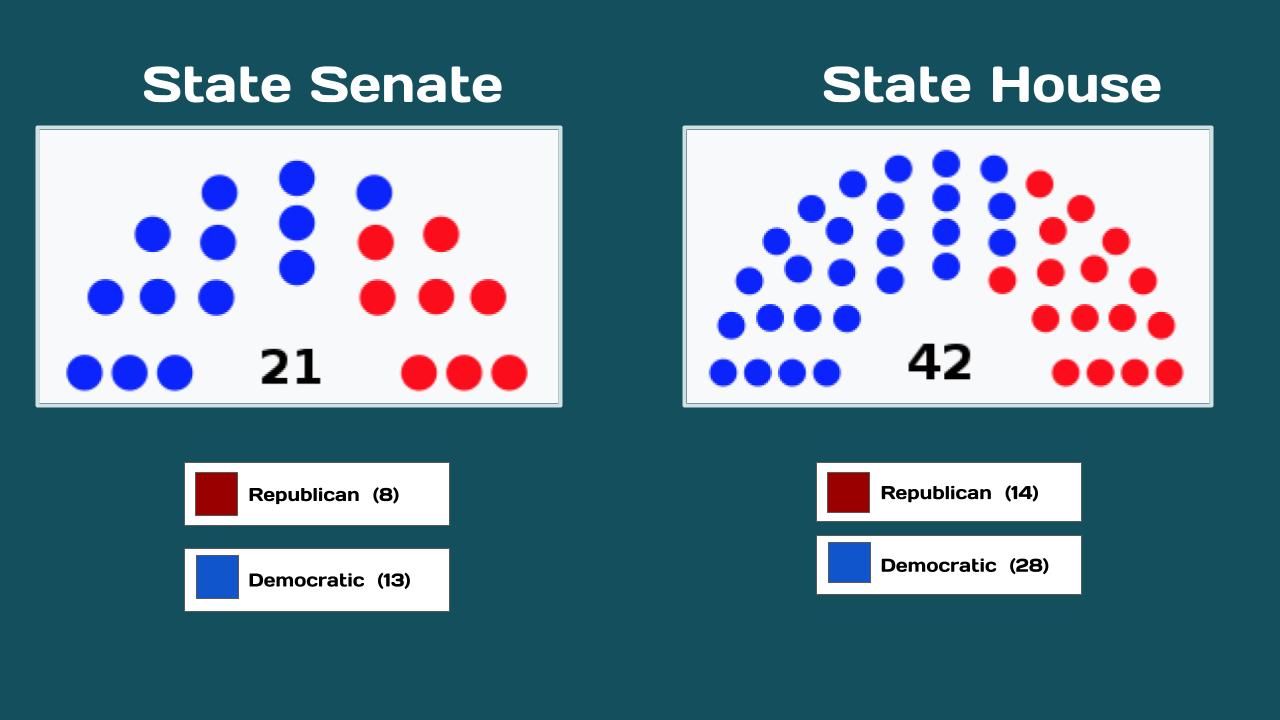
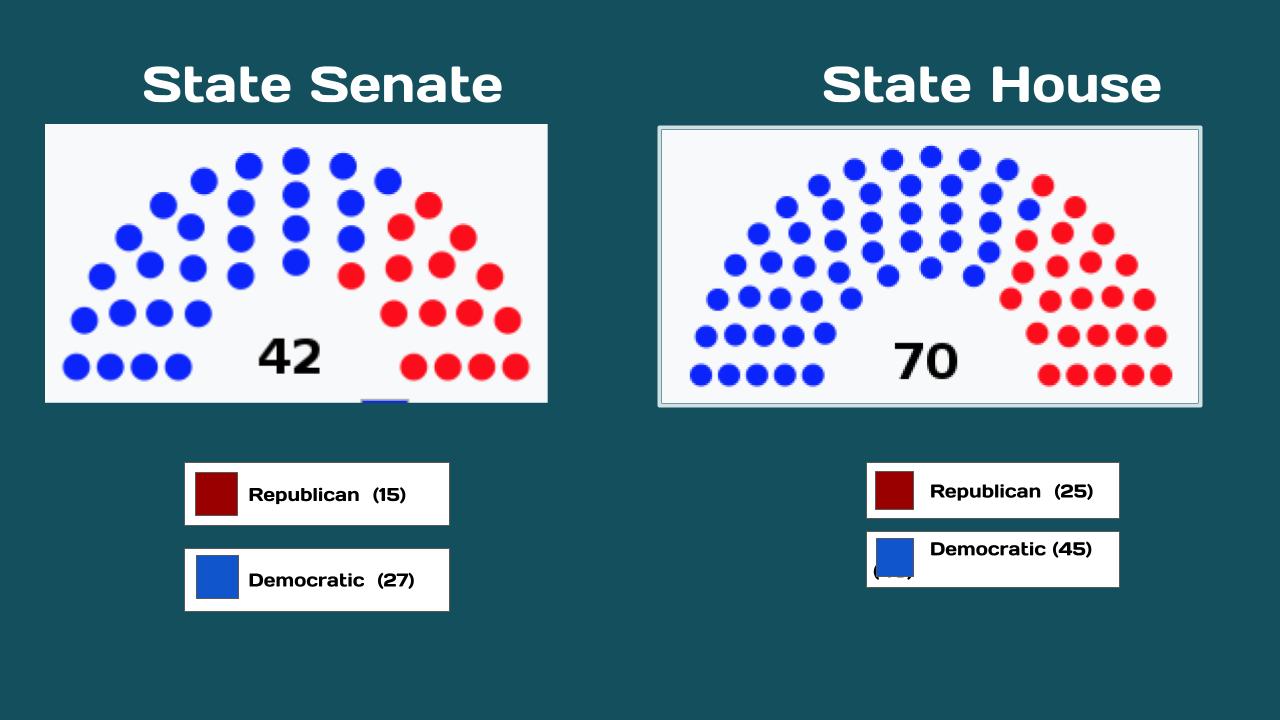
The Nevada Legislature is a bicameral body, consisting of the lower house, the Assembly, with 42 members, and the upper house, the Senate, with 21. With a total of 63 seats, the Legislature is the third-smallest bicameral state legislature in the United States, after Alaska’s (60 members) and Delaware’s (62). The Nevada State Legislature as of 2019 is the first majority female State Legislature in the history of the United States. The Democratic Party currently controls both houses of the Nevada State Legislature.

Source: Wikipedia

OnAir Post: NV Legislature

OH General Assembly

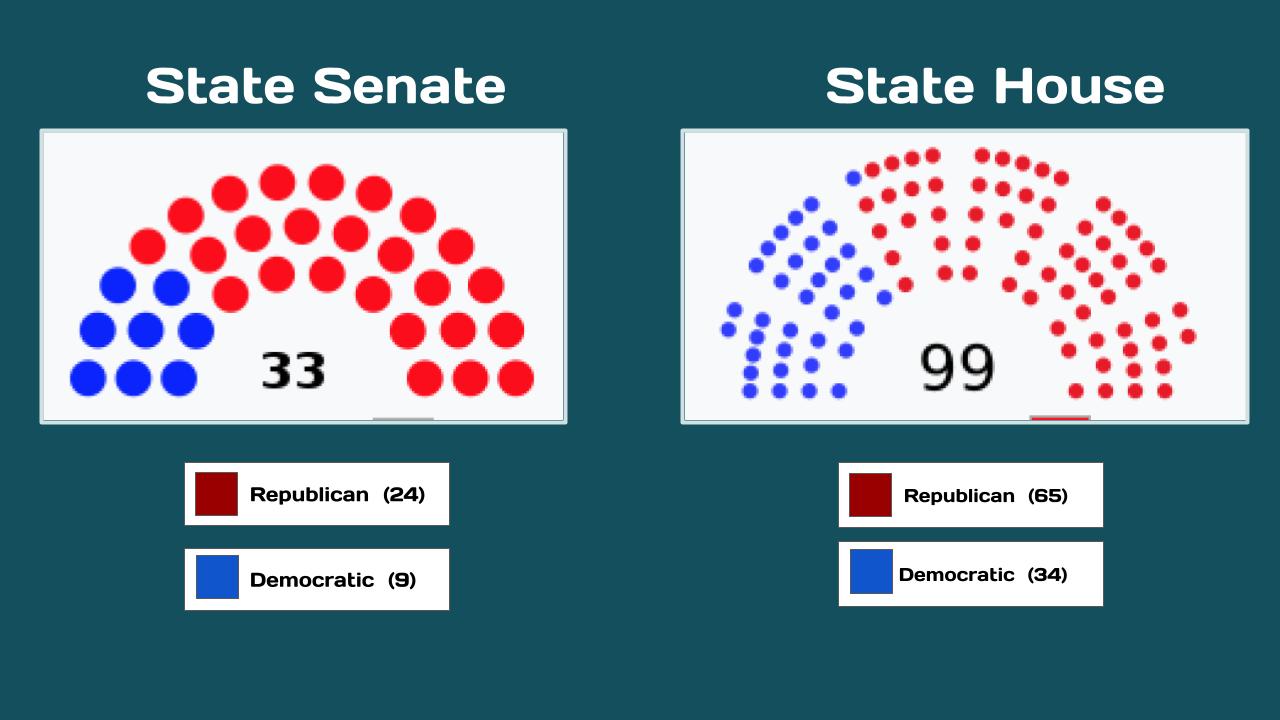
The Ohio General Assembly is the state legislature of the U.S. state of Ohio. It consists of the 99-member Ohio House of Representatives and the 33-member Ohio Senate. Both houses of the General Assembly meet at the Ohio Statehouse in Columbus.

Source: Wikipedia

OnAir Post: OH General Assembly

OK Legislature

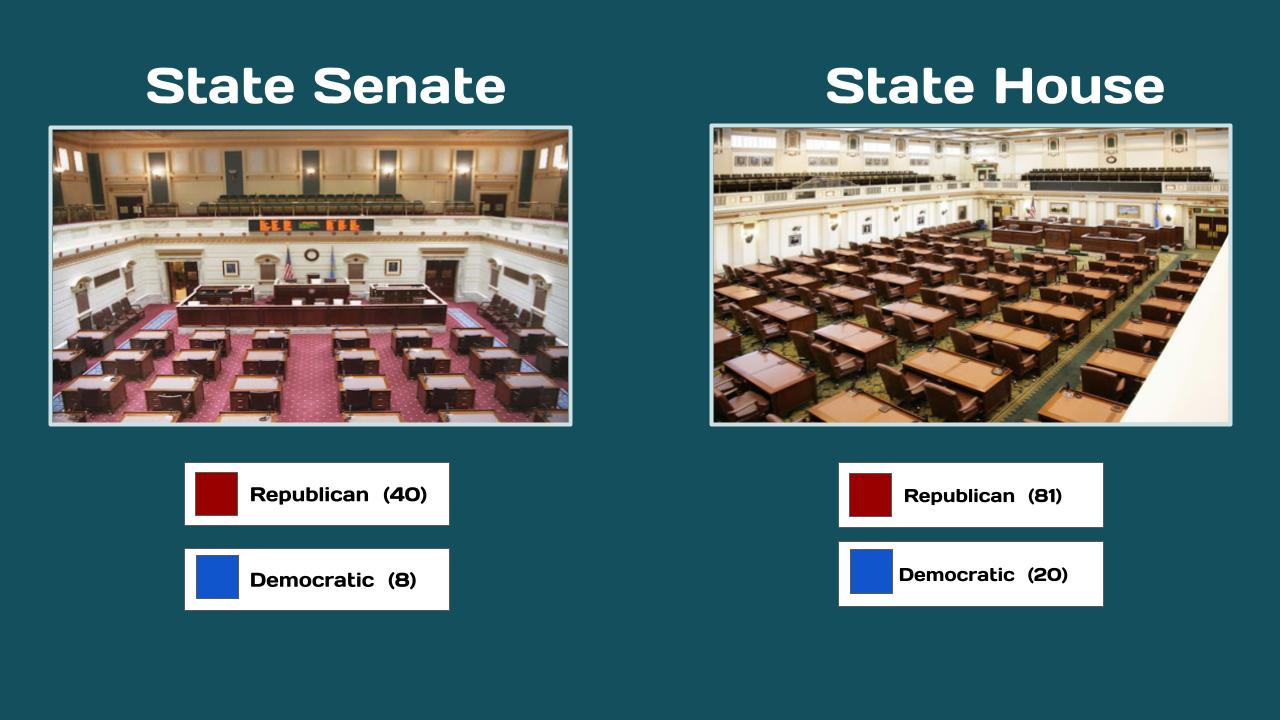
The Legislature of the State of Oklahoma is the state legislative branch of the U.S. state of Oklahoma. The Oklahoma House of Representatives and Oklahoma Senate are the two houses that make up the bicameral state legislature. There are 101 state representatives, each serving a two-year term, and 48 state senators, who serve four-year terms that are staggered so only half of the Oklahoma Senate districts are eligible in each election cycle. Legislators are elected directly by the people from single member districts of equal population. The Oklahoma Legislature meets annually in the Oklahoma State Capitol in Oklahoma City.

The Oklahoma Constitution vests all legislative powers of the state government in the state legislature, which exercises legislative power by enacting Oklahoma law. The legislature may legislate on any subject and has certain “necessary and proper” powers as may be required for carrying into effect the provisions of the Oklahoma Constitution. The powers of the legislature are only limited by the powers reserved to the people, namely initiative and referendum.

The Oklahoma Senate and the Oklahoma House of Representatives are co-equal houses, but each chamber has exclusive powers. The Oklahoma Senate’s advice and consent is required for gubernatorial appointments to high-level executive positions. Bills for raising revenue may only originate in the Oklahoma House of Representatives. Bills approved by the legislature must be sent to the Governor of Oklahoma for approval.

Source: Wikipedia

OnAir Post: OK Legislature

OR Legislature

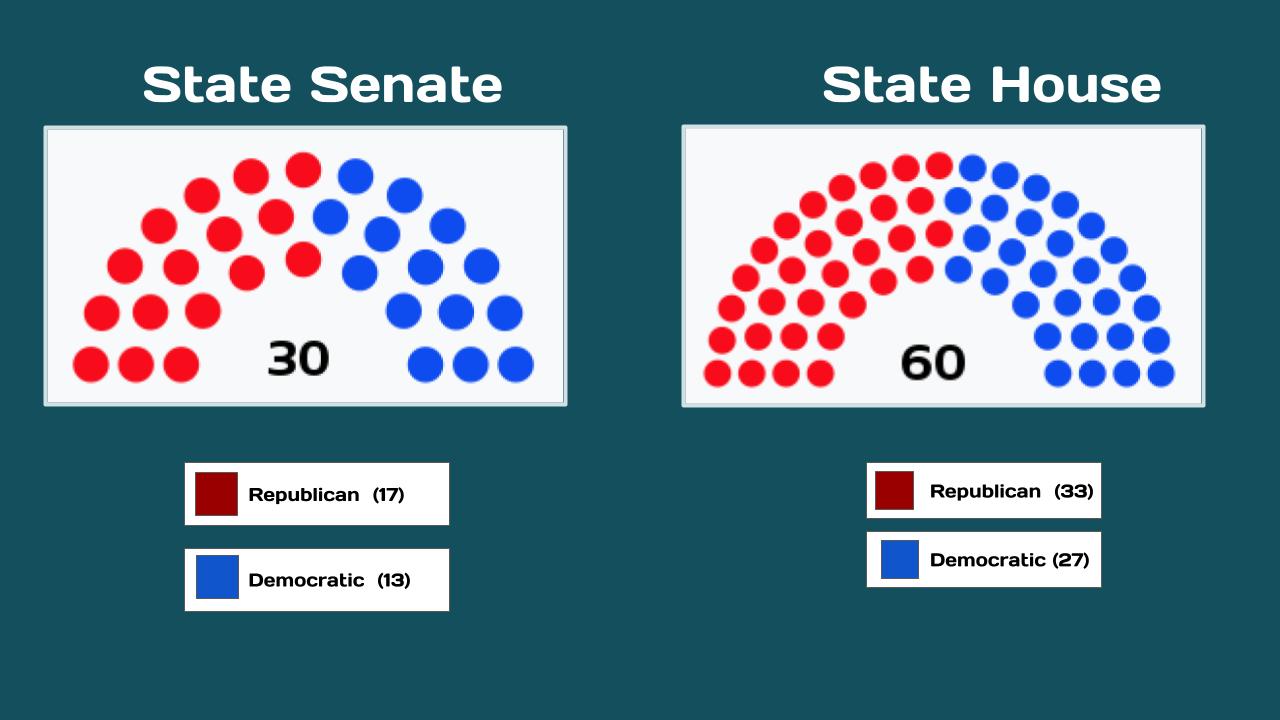
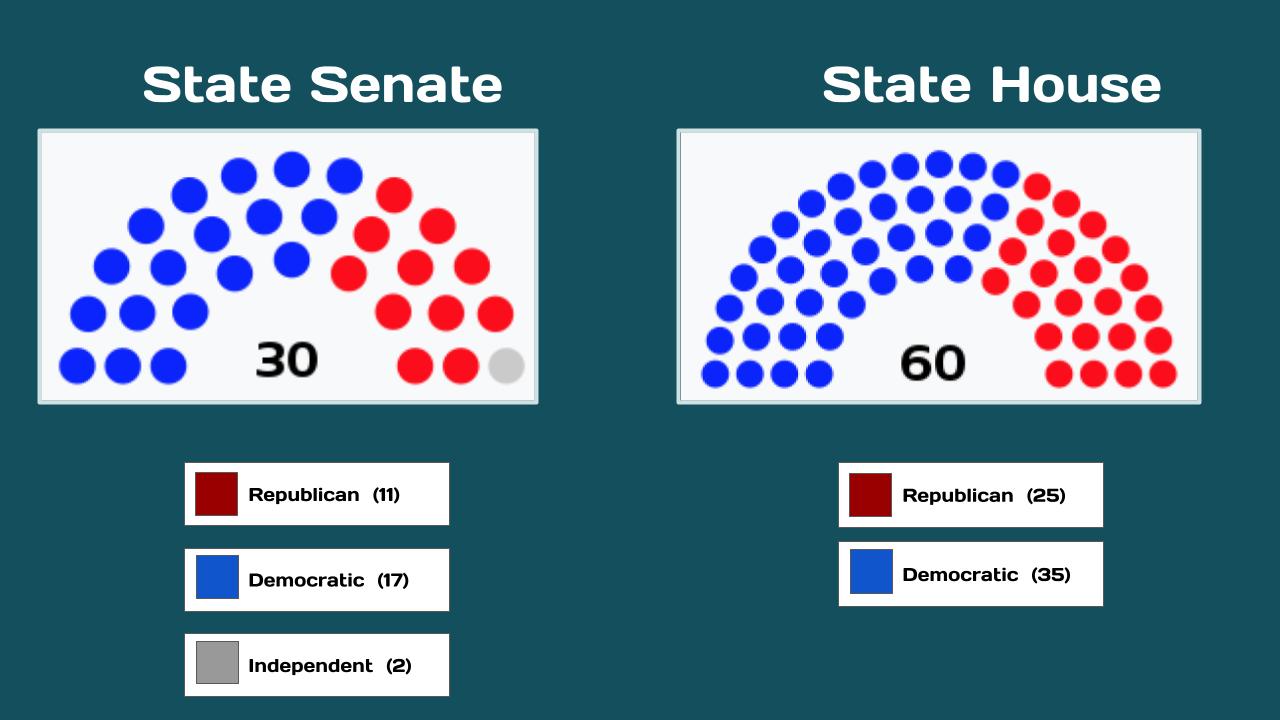
The Oregon Legislative Assembly is the state legislature for the U.S. state of Oregon. The Legislative Assembly is bicameral, consisting of an upper and lower house: the Senate, whose 30 members are elected to serve four-year terms; and the House of Representatives, with 60 members elected to two-year terms. There are no term limits for either house in the Legislative Assembly.

Each Senate district is composed of exactly two House districts: Senate District 1 contains House Districts 1 and 2, SD 2 contains HD 3 and HD 4, and so on. (Maps of Senate districts can be found in the Oregon State Senate article.) Senate districts contain about 127,700 people, and are redrawn every ten years.

The legislature is termed as a “citizens’ assembly” (meaning that most legislators have other jobs.  Since 1885, its regular sessions of up to 160 days occurred in odd-numbered years, beginning on the second Monday in January] Effective 2012, the legislature moved into an annual session, with the even-numbered years having a “short session” of 35 days or less, beginning in February.

Source: Wikipedia

OnAir Post: OR Legislature

PA General Assembly

The Pennsylvania General Assembly is the legislature of the U.S. commonwealth of Pennsylvania. The legislature convenes in the State Capitol building in Harrisburg. In colonial times (1682–1776), the legislature was known as the Pennsylvania Provincial Assembly and was unicameral. Since the Constitution of 1776, the legislature has been known as the General Assembly. The General Assembly became a bicameral legislature in 1791.

Source: Wikipedia

OnAir Post: PA General Assembly

RI General Assembly

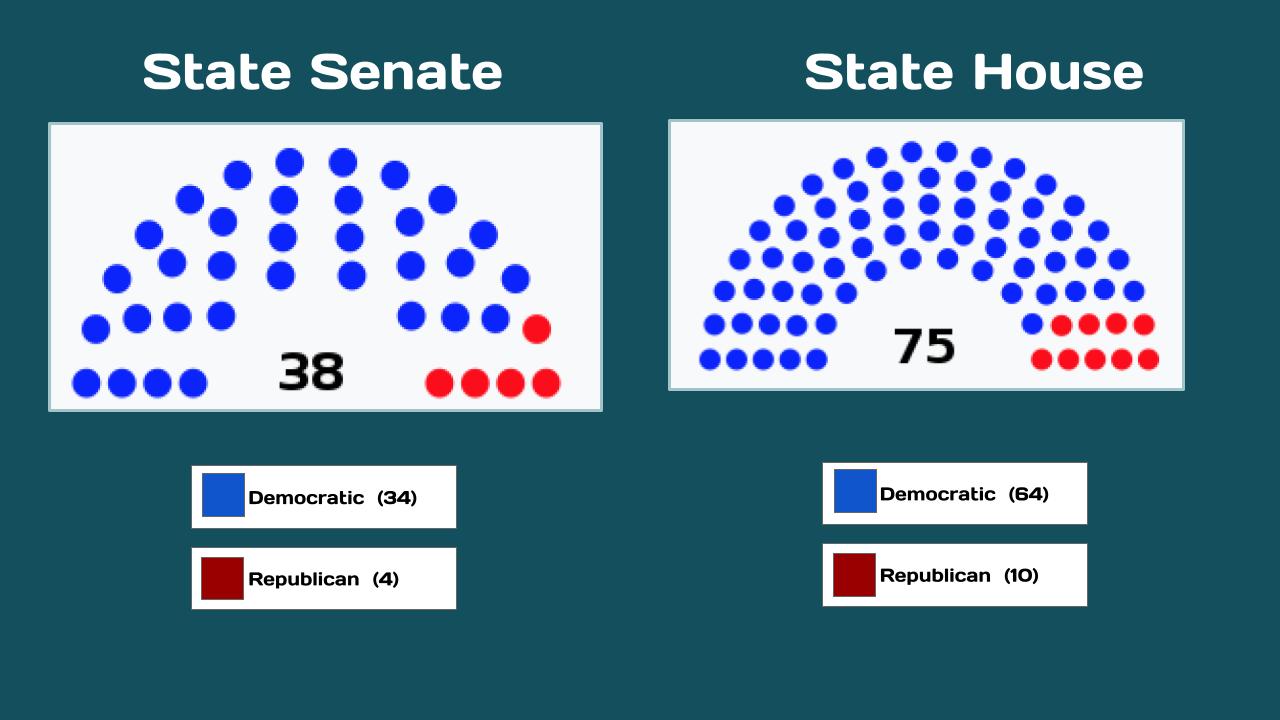
The State of Rhode Island General Assembly is the state legislature of the U.S. state of Rhode Island. A bicameral body, it is composed of the lower Rhode Island House of Representatives with 75 representatives, and the upper Rhode Island Senate with 38 senators. Members are elected in the general election immediately preceding the beginning of the term or in special elections called to fill vacancies. There are no term limits for either chamber. The last General Assembly election took place on November 3, 2020.

The General Assembly meets at the Rhode Island State House on the border of Downtown and Smith Hill in Providence. Smith Hill is sometimes used as a metonym for the Rhode Island General Assembly.

Source: Wikipedia

OnAir Post: RI General Assembly

SC General Assembly

The South Carolina General Assembly, also called the South Carolina Legislature, is the state legislature of the U.S. state of South Carolina. The legislature is bicameral and consists of the lower South Carolina House of Representatives and the upper South Carolina Senate. All together, the General Assembly consists of 170 members. The legislature convenes at the State House in Columbia.

Prior to the 1964 federal Reynolds v. Sims decision by the U.S. Supreme Court, the House of Representatives was apportioned so that each county had a number of representatives based on population, with each county guaranteed at least one representative, while each county had one Senator. Moreover, each county’s General Assembly delegation also doubled as its county council, as the state constitution made no provision for local government.

Reynolds v. Sims caused district lines to cross county lines, causing legislators to be on multiple county councils. This led to the passage of the Home Rule Act of 1975, which created county councils that were independent of the General Assembly. However, the General Assembly still retains considerable authority over local government. As a result, the legislature still devotes considerable time to local matters, and county legislative delegations still handle many matters that are handled by county governments in the rest of the country.

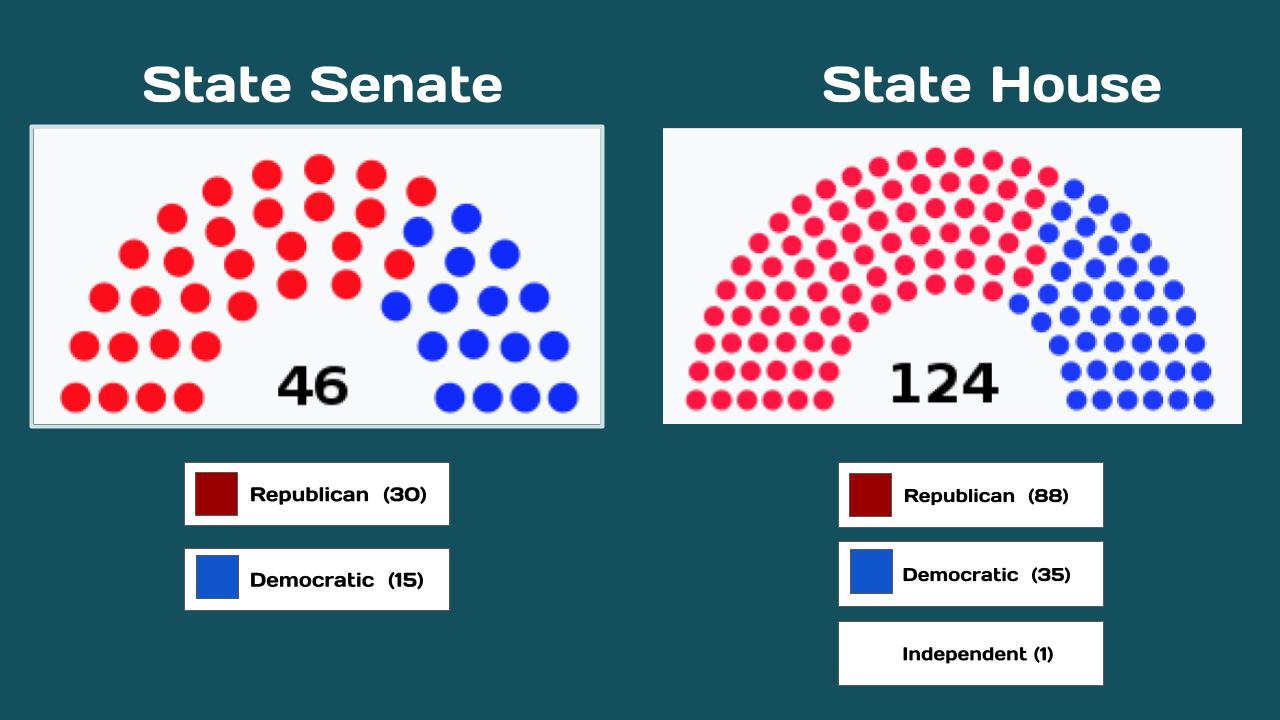
There are 124 members of the South Carolina House of Representatives, who are elected every two years, and the South Carolina Senate has 46 members, elected every four years concurrent to the presidential election. For both houses, there are no term limits. The General Assembly meets in joint session to elect judges, with all 170 members having an equal vote in such elections.

Source: Wikipedia

OnAir Post: SC General Assembly

SD Legislature

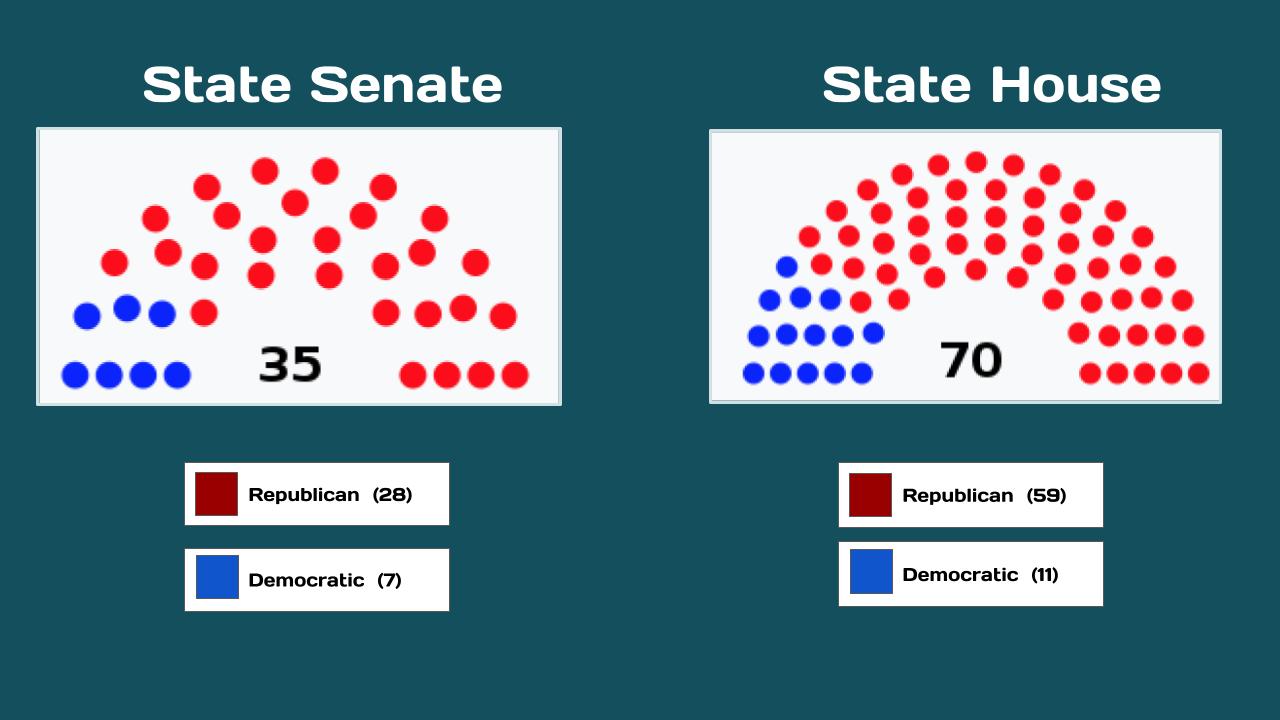
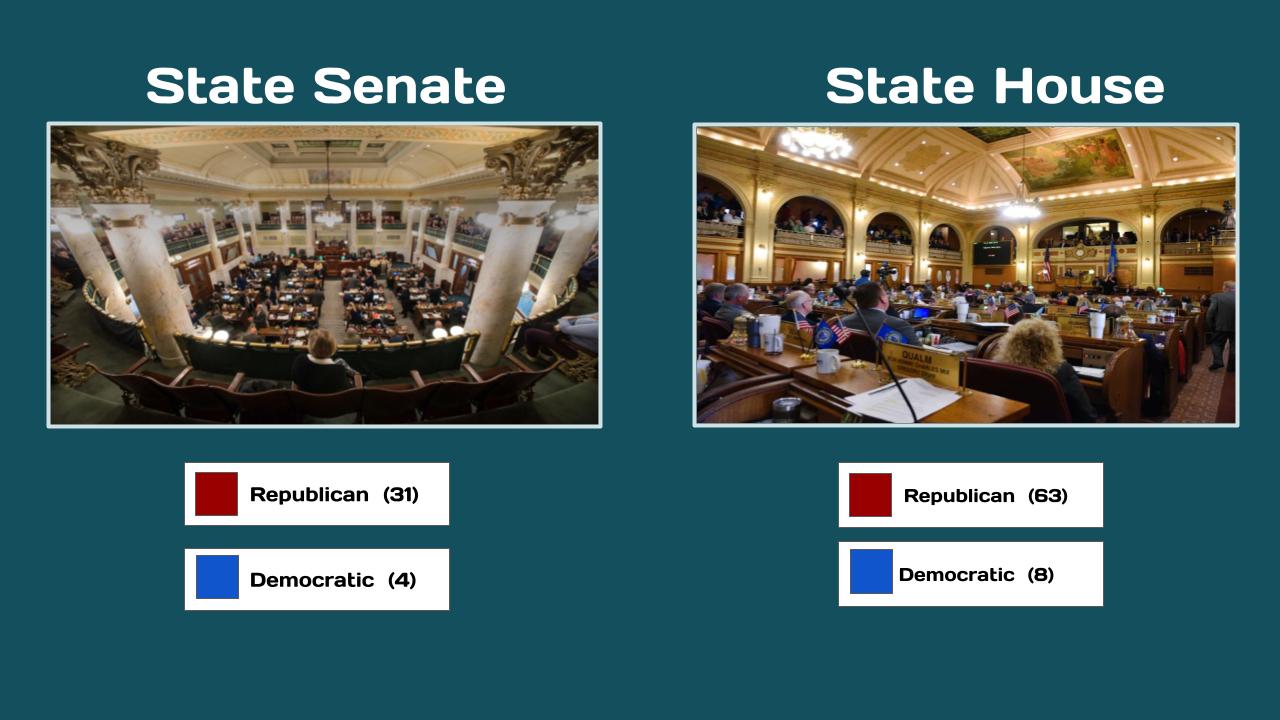
The South Dakota State Legislature is the legislative branch of the government of South Dakota. It is a bicameral legislative body, consisting of the South Dakota Senate, which has 35 members, and the South Dakota House of Representatives, which has 70 members. The two houses are similar in most respects; the Senate alone holds the right to confirm gubernatorial appointments to certain offices. In addition, the Senate votes by roll call vote, whereas the larger house uses an electronic voting system.

The legislature meets at the South Dakota State Capitol in Pierre. It begins its annual session of the second Tuesday of January each year. The legislative session lasts 40 working days in odd-numbered years, and 35 days working days in even numbered years. Though, in recent years, the legislature has completed its work in 38 working days in both even numbered years as well as odd numbered years. Generally, the legislature meets for four out of every five business days each week until the session ends, excepting on last day which is delayed to allow for consideration of gubernatorial vetoes. This schedule enables legislators to have one working day each week at home in their districts to meet with constituents as well as to tend to other personal matters. In addition, the legislature occasionally meets on Saturdays to make-up for recesses on holidays such as Presidents’ Day and Martin Luther King, Jr. Day.

The legislature selects, from its membership, an executive board to tend to administrative matters during the time when the legislature is not in session. The administrative support for the legislature is provided by the South Dakota Legislative Research Council.

The Republican Party of South Dakota has held a supermajority in the state senate since the 1996 election, and in the state house since the 1976 election.

Source: Wikipedia

OnAir Post: SD Legislature

TN General Assembly

The Tennessee General Assembly (TNGA) is the state legislature of the U.S. state of Tennessee. It is a part-time bicameral legislature consisting of a Senate and a House of Representatives. The Speaker of the Senate carries the additional title and office of Lieutenant Governor of Tennessee.

In addition to passing a budget for state government plus other legislation, the General Assembly appoints three state officers specified by the state constitution. It is also the initiating body in any process to amend the state’s constitution.

Source: Wikipedia

OnAir Post: TN General Assembly

TX Legislature

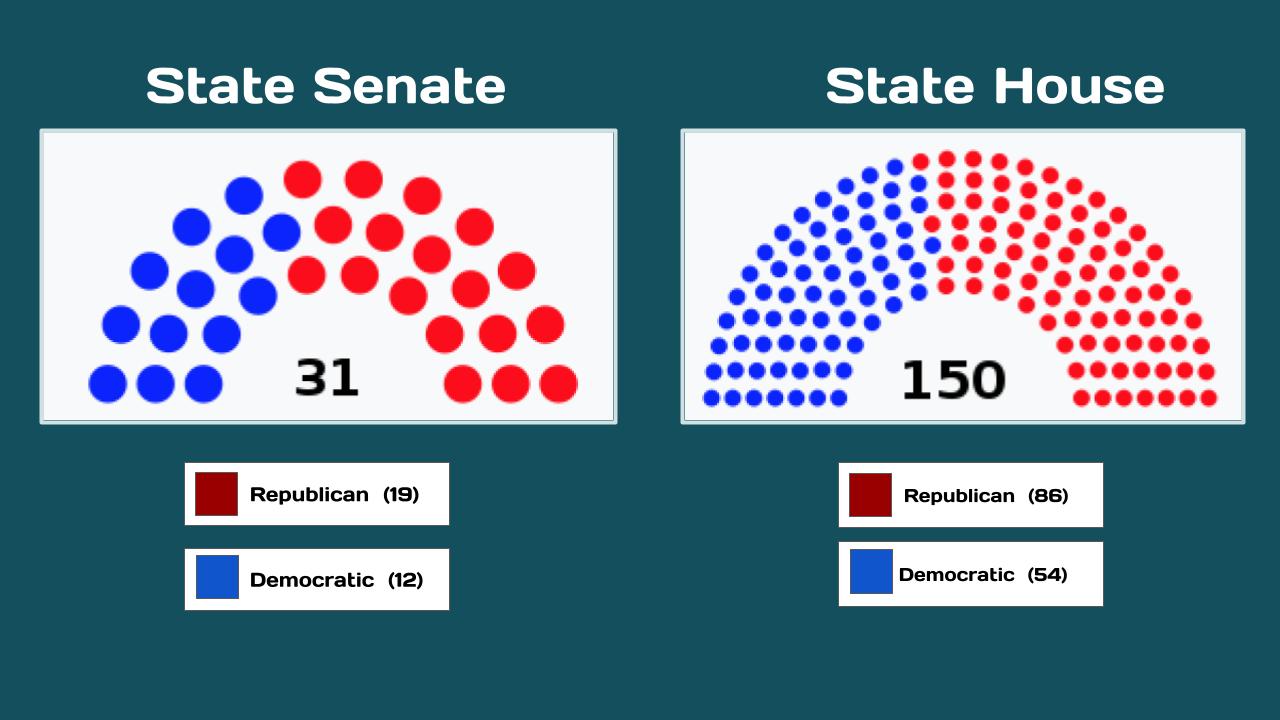
The Texas Legislature is the state legislature of the US state of Texas. It is a bicameral body composed of a 31-member Senate and a 150-member House of Representatives. The state legislature meets at the Capitol in Austin. It is a powerful arm of the Texas government not only because of its power of the purse to control and direct the activities of state government and the strong constitutional connections between it and the Lieutenant Governor of Texas, but also due to Texas’s plural executive.

The Legislature is the constitutional successor of the Congress of the Republic of Texas since Texas’s 1845 entrance into the Union. The Legislature held its first regular session from February 16 to May 13, 1846.

Source: Wikipedia

OnAir Post: TX Legislature

UT Legislature

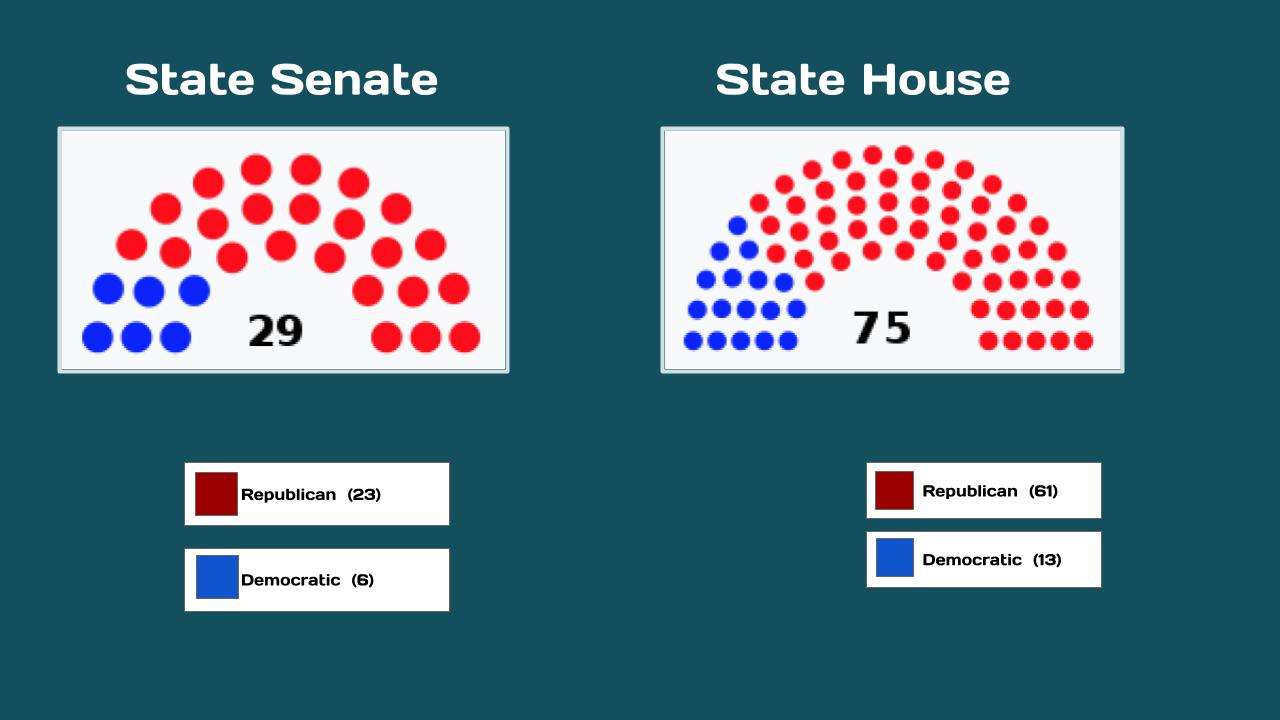
The Utah State Legislature is the state legislature of the U.S. state of Utah. It is a bicameral body, comprising the Utah House of Representatives, with 75 state representatives, and the Utah Senate, with 29 state senators. There are no term limits for either chamber.

The Legislature convenes at the Utah State Capitol in the state capital of Salt Lake City. In 2020, voters approved an amendment to the state constitution that changed the legislative start date from a constitutionally mandated fourth Monday of January to a date set by state law (thereby making it easier to change the start date if necessary). Current state law requires the start date of the Utah State Legislature to be the first Tuesday after the third Monday in January  for an annual 45-day session.
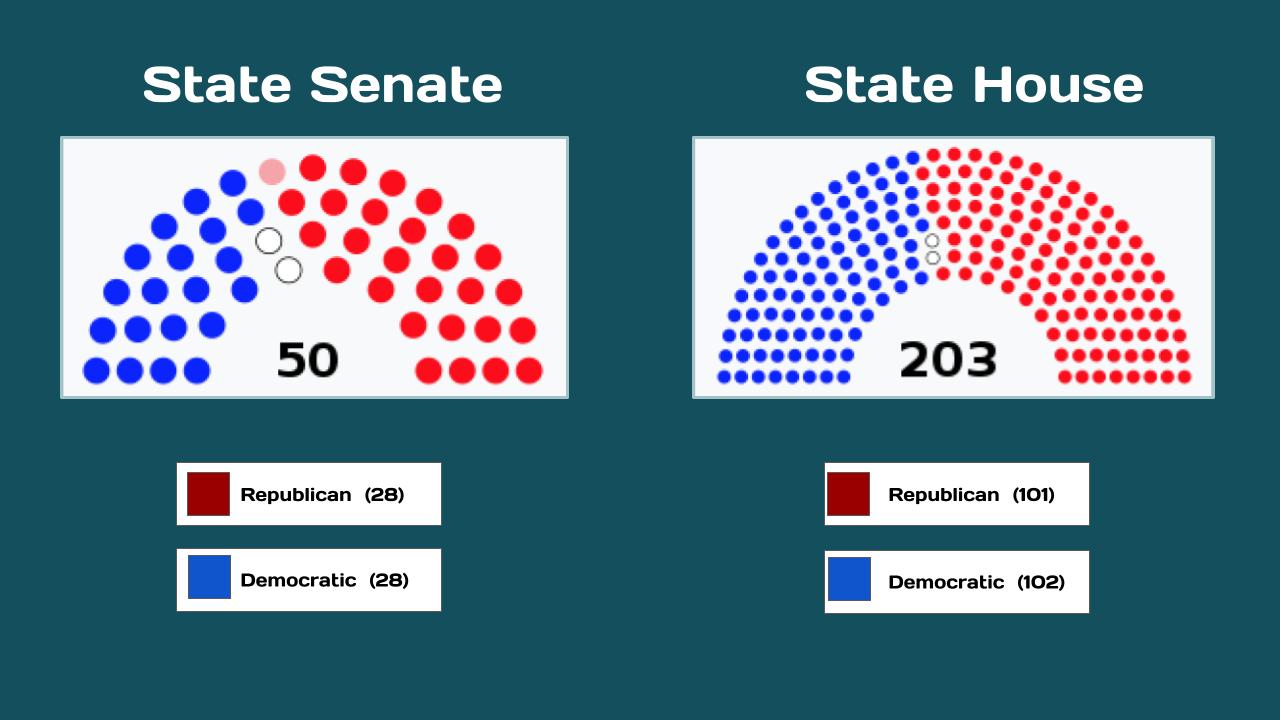
Source: Wikipedia

OnAir Post: UT Legislature

VT General Assembly

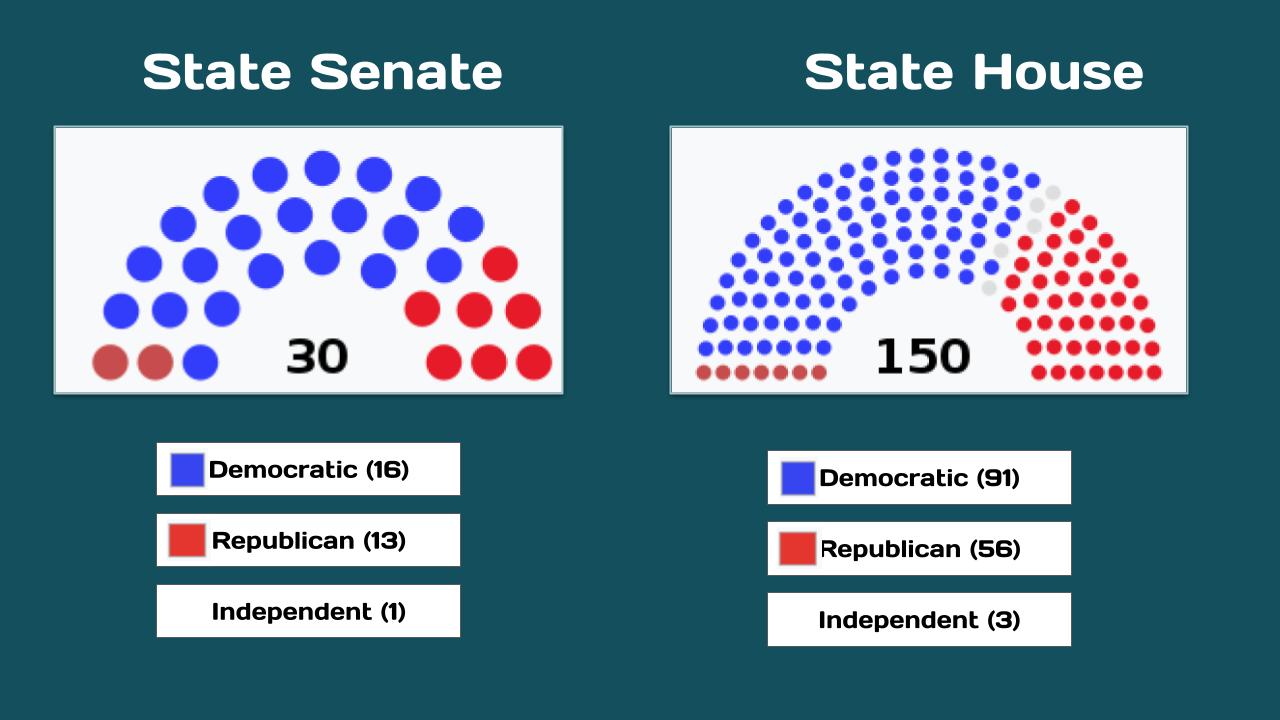
The Vermont General Assembly is the legislative body of the state of Vermont, in the United States. The Legislature is formally known as the “General Assembly,” but the style of “Legislature” is commonly used, including by the body itself.  The General Assembly is a bicameral legislature, consisting of the 150-member Vermont House of Representatives and the 30-member Vermont Senate. Members of the House are elected by single and two-member districts. 58 districts choose one member, and 46 choose two, with the term of service being two years. The Senate includes 30 Senators, elected by 3 single-member and 10 multi-member districts with two, three, or six members each. It is the only state legislative body in the United States in which a third-party has had continuous representation and been consecutively elected alongside Democrats and Republicans.
The Vermont General Assembly meets at the Vermont State House in the state capital of Montpelier. Biennial terms commence on the Wednesday following the first Monday in January (beginning in 1915; thus, terms commence in odd-numbered years).

Source: Wikipedia

OnAir Post: VT General Assembly

WA Legislature

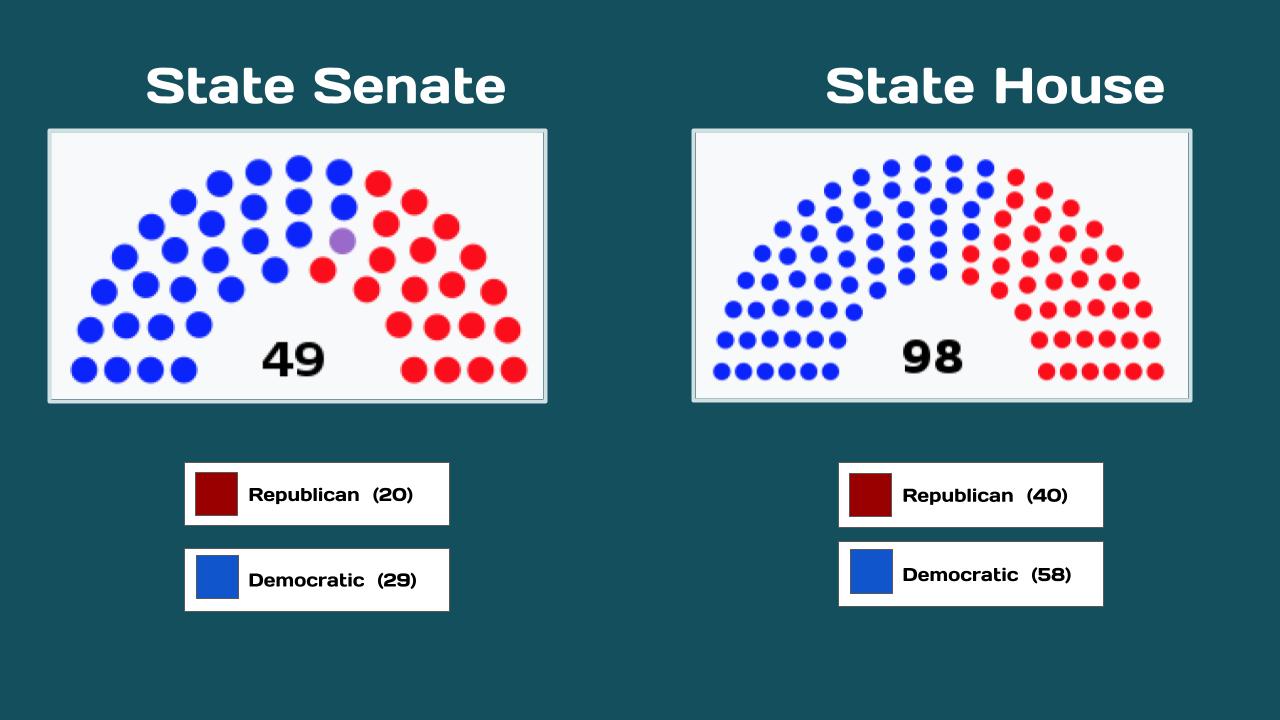
The Washington State Legislature is the state legislature of the U.S. state of Washington. It is a bicameral body, composed of the lower Washington House of Representatives, composed of 98 Representatives, and the upper Washington State Senate, with 49 Senators plus the Lieutenant Governor acting as president. The state is divided into 49 legislative districts, each of which elect one senator and two representatives.

The State Legislature meets in the Legislative Building at the Washington State Capitol in Olympia.

As of March 2021, Democrats control both houses of the Washington State Legislature. Democrats hold a 57-41 majority in the House of Representatives and a 28-21 majority in the Senate (with one Democratic senator caucusing with the 20 Republicans).

Source: Wikipedia

OnAir Post: WA Legislature

WI Legislature

The Wisconsin Legislature is the state legislature of the U.S. state of Wisconsin. The Legislature is a bicameral body composed of the upper house Wisconsin State Senate and the lower Wisconsin State Assembly, both of which have had Republican majorities since January 2011. With both houses combined, the legislature has 132 members representing an equal number of constituent districts. The Legislature convenes at the state capitol in Madison.

The current sitting is the 105th Wisconsin Legislature.

Source: Wikipedia

OnAir Post: WI Legislature

WV Legislature

The West Virginia Legislature is the state legislature of the U.S. state of West Virginia. A bicameral legislative body, the legislature is split between the upper Senate and the lower House of Delegates. It was established under Article VI of the West Virginia Constitution following the state’s split from Virginia during the American Civil War in 1863. As with its neighbor and former constituent Virginia General Assembly, the legislature’s lower house is also referred to as a “House of Delegates.”

The legislature convenes in the State Capitol building in Charleston.

Source: Wikipedia

OnAir Post: WV Legislature

WY Legislature

The Wyoming State Legislature is the legislative branch of the U.S. State of Wyoming. It is a bicameral state legislature, consisting of a 60-member Wyoming House of Representatives, and a 30-member Wyoming Senate. The legislature meets at the Wyoming State Capitol in Cheyenne. There are no term limits for either chamber.

The Republican Party holds a supermajority in the current legislature, which began meeting in 2019; 51 of the 60 seats in the House and 28 of the 30 seats in the Senate are held by Republicans.

Source: Wikipedia

OnAir Post: WY Legislature

NY Legislature

The New York State Legislature consists of the two houses that act as the state legislature of the U.S. state of New York: The New York State Senate and the New York State Assembly. The New York Constitution does not designate an official term for the two houses together; it says only that the state’s legislative power “shall be vested in the senate and assembly”. Session laws passed by the Legislature are published in the official Laws of New York. Permanent New York laws of a general nature are codified in the Consolidated Laws of New York.

As of January 2021, the Democratic Party holds supermajorities in both houses of the New York State Legislature, which is the highest paid state legislature in the country.

Legislative elections are held in November of every even-numbered year. Both Assembly members and Senators serve two-year terms.

In order to be a member of either house, one must be a citizen of the United States, a resident of the state of New York for at least five years, and a resident of the district for at least one year prior to election.

The Assembly consists of 150 members; they are each chosen from a single-member district. The New York Constitution allows the number of Senate seats to vary; as of 2014, the Senate had 63 seats. As of 2009, the New York State Legislature had 2,700 employees, more than any other state legislature except for the Pennsylvania General Assembly.

Source: Wikipedia

OnAir Post: NY Legislature

VA General Assembly

This post has all the bills passed by both the House of Delegates and the State Senate during the 2021 General Assembly session.

You can also find the abstract about these bills in each of the committee posts in this Virginia onAir Hub (or select the  bills link e.g. SB 1188 to go to the Virginia Legislative Information Systems comprehensive details on each bill).

If a bill is not signed by Governor Ralph Northam, it will be noted in the appropriate committee post. All the Senate committees can be found under Governance > VA Senate Committees > Top Posts.  All the House committees can be found under Governance > VA House Committees > Top Posts.

The curators for the 2021 committee posts are George Mason University students who are interning with Democracy onAir as part of their Schar School Global Political Fellows program. They are Nanayaa Obeng, Samuel Strathmann, and Jordan Toledo.

OnAir Post: VA General Assembly

Skip to toolbar