Seniors

The U.S. senior population is growing rapidly. This trend is primarily driven by the baby boomers, the large generation born between 1946 and 1964.There were 57.8 million adults age 65+ living in the U.S. in 2022. This included 31.9 million women and 25.9 million men. One-quarter (25%) of adults age 65+ were from racially and ethnic minority communities in 2022.

  • There are many issues related to Seniors that Congress is looking to address with legislation. In the ‘About’ section of this post is an overview of the issues and potential solutions, party positions, and web links. Other sections have information on relevant committees, chairs, & caucuses; departments & agencies; and the judiciary, nonpartisan & partisan organizations, and a wikipedia entry.
  • To participate in ongoing forums, ask the post’s curators questions, and make suggestions, scroll to the ‘Discuss’ section at the bottom of each post or select the “comment” icon.

The Seniors category has related posts and three posts on issues of particular focus: Social Security, Medicare, and Longevity.

OnAir Post: Seniors

Social Security

In the United States, Social Security is the commonly used term for the federal Old-Age, Survivors, and Disability Insurance (OASDI) program and is administered by the Social Security Administration (SSA).[1] The Social Security Act was passed in 1935,[2] and the existing version of the Act, as amended,[3] encompasses several social welfare and social insurance programs.

  • In the ‘About’ section of this post is an overview of the issues or challenges, potential solutions, and web links. Other sections have information on relevant legislation, committees, agencies, programs in addition to information on the judiciary, nonpartisan & partisan organizations, and a wikipedia entry.
  • To participate in ongoing forums, ask the post’s curators questions, and make suggestions, scroll to the ‘Discuss’ section at the bottom of each post or select the “comment” icon.

The Social Security category has related posts on government agencies and departments and  committees and their Chairs.

OnAir Post: Social Security

Medicare

Medicare is a government national health insurance program in the United States, begun in 1965 under the Social Security Administration (SSA) and now administered by the Centers for Medicare and Medicaid Services (CMS).

It primarily provides health insurance for Americans aged 65 and older, but also for some younger people with disability status as determined by the SSA, including people with end stage renal disease and amyotrophic lateral sclerosis (ALS or Lou Gehrig’s disease).

  • In the ‘About’ section of this post is an overview of the issues or challenges, potential solutions, and web links. Other sections have information on relevant legislation, committees, agencies, programs in addition to information on the judiciary, nonpartisan & partisan organizations, and a wikipedia entry.To participate in ongoing forums, ask the post’s curators questions, and make suggestions, scroll to the ‘Discuss’ section at the bottom of each post or select the “comment” icon.

The Medicare category has related posts on government agencies and departments and  committees and their Chairs.

OnAir Post: Medicare

Longevity

Longevity may refer to especially long-lived members of a population, whereas life expectancy is defined statistically as the average number of years remaining at a given age. For example, a population’s life expectancy at birth is the same as the average age at death for all people born in the same year (in the case of cohorts).

  • In the ‘About’ section of this post is an overview of the issues or challenges, potential solutions, and web links. Other sections have information on relevant legislation, committees, agencies, programs in addition to information on the judiciary, nonpartisan & partisan organizations, and a wikipedia entry.
  • To participate in ongoing forums, ask the post’s curators questions, and make suggestions, scroll to the ‘Discuss’ section at the bottom of each post or select the “comment” icon.

The Longevity  category has related posts on government agencies and departments and  committees and their Chairs.

OnAir Post: Longevity

Health and Human Services Department (HHS)

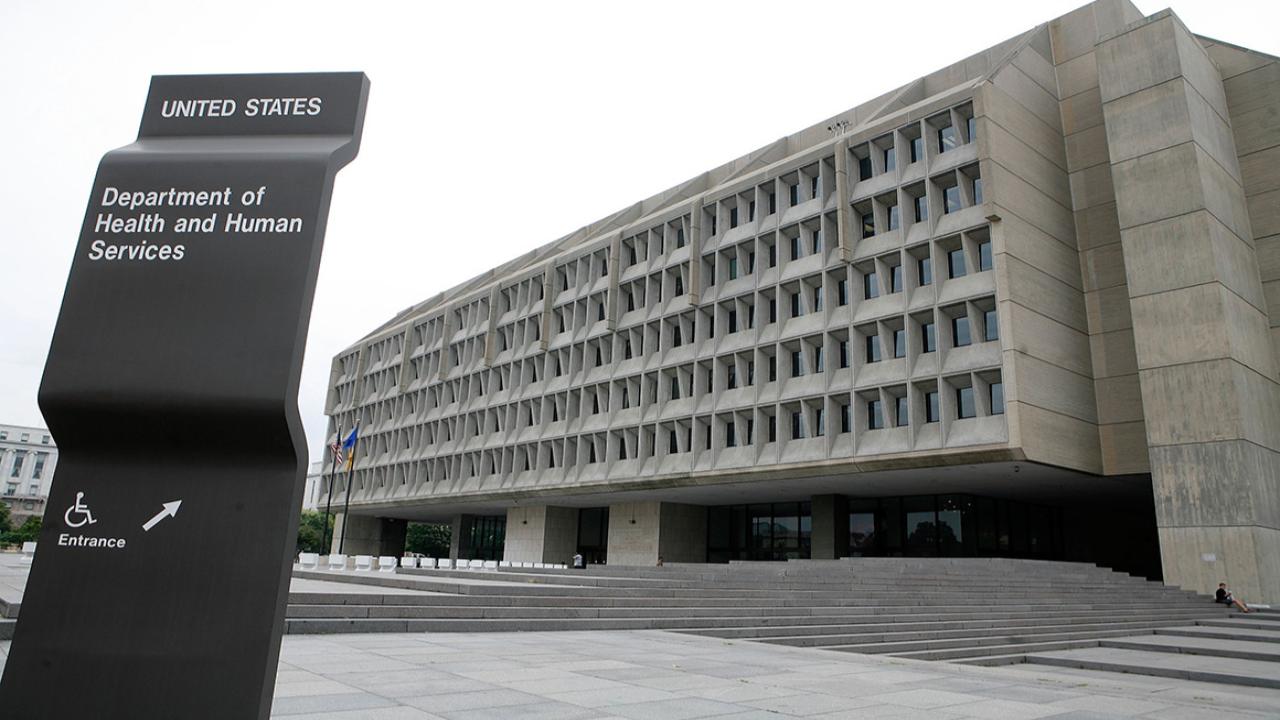
The United States Department of Health and Human Services (HHS), is a cabinet-level executive branch department of the U.S. federal government created to protect the health of all Americans and providing essential human services. Its motto is “Improving the health, safety, and well-being of America”.

Before the separate federal Department of Education was created in 1979, it was called the Department of Health, Education, and Welfare (HEW).

OnAir Post: Health and Human Services Department (HHS)

Finance Committee (Senate)

Mission:  The committee focuses on matters relating to taxation and other revenue measures generally, and those relating to the insular possessions; bonded debt of the United States; customs, collection districts, and ports of entry and delivery; deposit of public moneys; general revenue sharing; health programs under the Social Security Act (notably Medicare and Medicaid) and health programs financed by a specific tax or trust fund; national social security; reciprocal trade agreements; tariff and import quotas, and related matters thereto; and the transportation of dutiable goods.

House counterpart: Ways and Means Committee

Democratic Members (Minority):
Ron Wyden, Oregon, Ranking Member
Maria Cantwell, Washington
Michael Bennet, Colorado
Mark Warner, Virginia
Sheldon Whitehouse, Rhode Island
Maggie Hassan, New Hampshire
Catherine Cortez Masto, Nevada
Elizabeth Warren, Massachusetts
Bernie Sanders, Vermont
Ben Luján, New Mexico
Raphael Warnock, Georgia
Peter Welch, Vermont

Republican Members (Majority):
Mike Crapo, Idaho, Chair
Chuck Grassley, Iowa
John Cornyn, Texas
John Thune, South Dakota
Tim Scott, South Carolina
Bill Cassidy, Louisiana
James Lankford, Oklahoma
Steve Daines, Montana
Todd Young, Indiana
John Barrasso, Wyoming
Ron Johnson, Wisconsin
Thom Tillis, North Carolina
Marsha Blackburn, Tennessee
Roger Marshall, Kansas

Featured Video: 
Senate Finance Committee holds hearing on tax fraud

OnAir Post: Finance Committee (Senate)

Special Committee on Aging

Mission:  

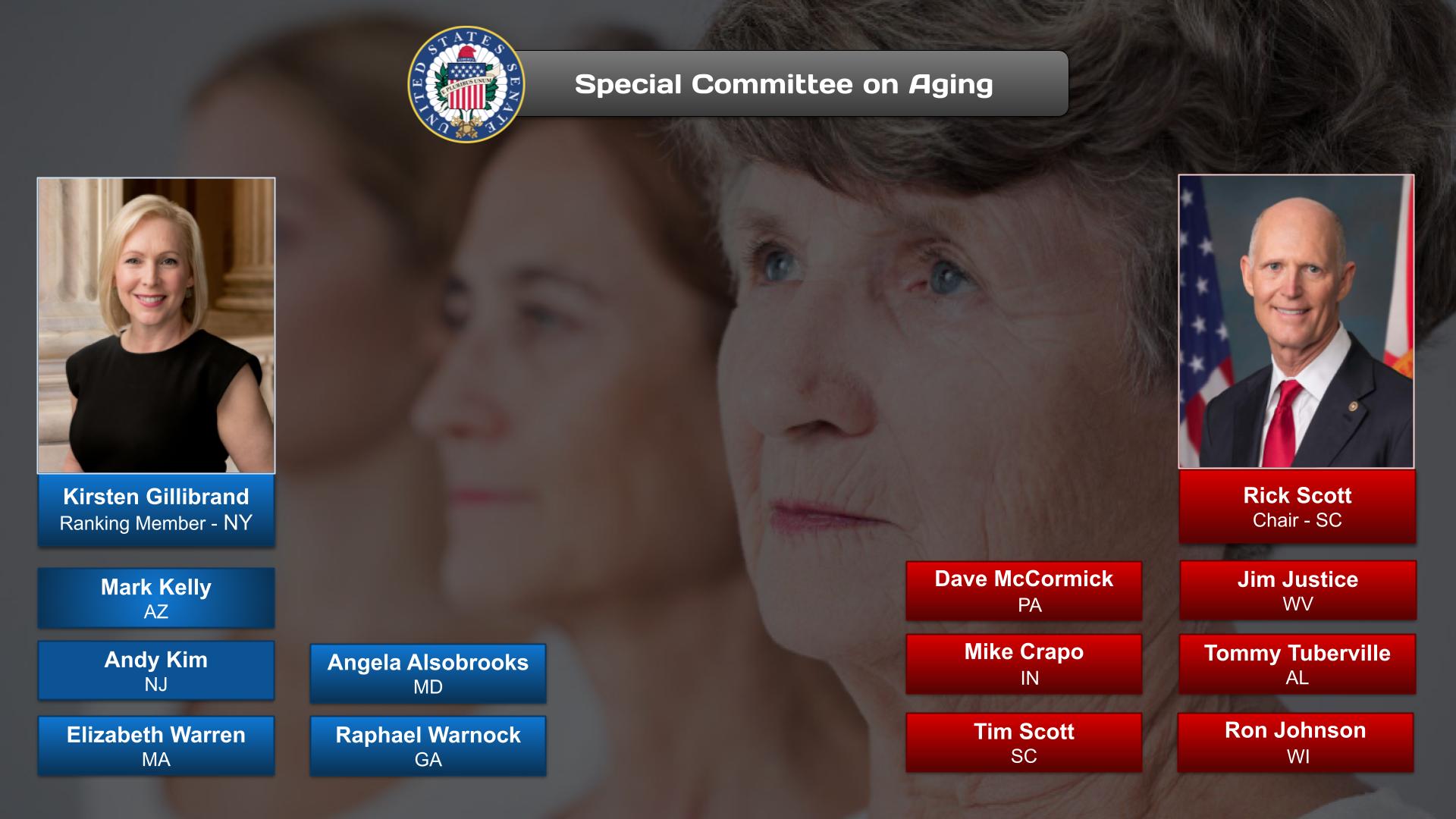
The Senate Special Committee on Aging was first established in 1961 as a temporary committee. It was granted permanent status on February 1, 1977. While special committees have no legislative authority, they can study issues, conduct oversight of programs, and investigate reports of fraud and waste.

Throughout its existence, the Special Committee on Aging has served as a focal point in the Senate for discussion and debate on matters relating to older Americans. Often, the Committee will submit its findings and recommendations for legislation to the Senate. In addition, the Committee publishes materials of assistance to those interested in public policies which relate to the elderly.

House counterparts:
N/A

Democratic Members (Minority):
Kirsten Gillibrand, New York- Ranking Member
Elizabeth Warren, Massachusetts
Mark Kelly, Arizona
Raphael Warnock, Georgia
Andy Kim, New Jersey
Angela Alsobrooks, Maryland

Republican Members (Minority):
Mike Braun, Indiana
Tim Scott, South Carolina
Marco Rubio, Florida
Rick Scott, Florida
J.D. Vance, Ohio
Pete Ricketts, Nebraska

Featured Video: 
LIVE hearing from the Special Committee on Aging: Taking Aim at Alzheimer’s

OnAir Post: Special Committee on Aging

Energy and Commerce Committee

The Committee on Energy and Commerce serves as the principal guide for the House in matters relating to the promotion of commerce and to the public’s health and marketplace interests, with the relatively recent addition of energy considerations among them.

Senate counterparts: Committee on Commerce, Science, and Transportation and Committee on Energy and Natural Resources

Subcommittees:

  •  Communications and Technology
  • Energy, Climate and Grid Security
  • Environment, Manufacturing and Critical Minerals
  • Health
  • Innovation, Data and Commerce
  • Oversight and Investigations

Chair: Cathy McMorris Rodgers, Washington (R)
Ranking Member: Frank Pallone, New Jersey (D)

Majority Staff Director: N/A
Minority Staff Director: N/A
Meeting Location:

Featured Video: 
Disinformation Nation: Social Media’s Role in Promoting Extremism and Misinformation – March 25, 2021

OnAir Post: Energy and Commerce Committee

Ways and Means Committee

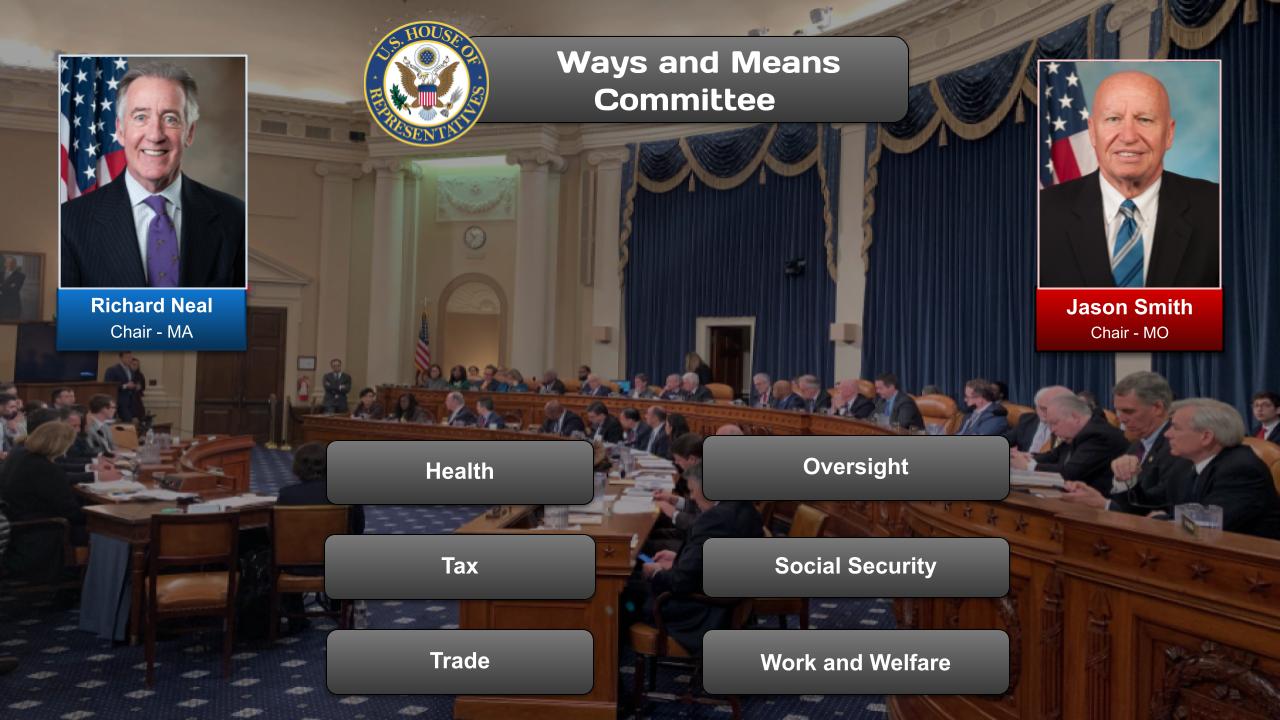
The Committee on Ways and Means is the chief tax-writing committee of the United States House of Representatives. The Committee has jurisdiction over all taxation, tariffs, and other revenue-raising measures, as well as a number of other programs including Social Security, unemployment benefits, Medicare, the enforcement of child support laws, Temporary Assistance for Needy Families and foster care and adoption programs.

Subcommittees:

  • Health
  • Oversight
  • Select Revenue Measures
  • Social Security
  • Trade
  • Worker and Family Support

Chair: Jason T. Smith, Missouri
Ranking Member: Richard Neal, Massachusetts

Majority Staff Director: Patrick Dumas
Minority Staff Director: Brandon Casey
Meeting Location: 1139 Longworth HOB, Washington D.C. 20515; (202) 225-3625

Featured Video: Oversight Subcommittee Hearing on Expanding Housing Access to All Americans – July 14, 2021
Web Links

OnAir Post: Ways and Means Committee

NIH: National Institutes of Health

The National Institutes of Health, commonly referred to as NIH, is the primary agency of the United States government responsible for biomedical and public health research. It was founded in the late 1880s and is now part of the United States Department of Health and Human Services. Many NIH facilities are located in Bethesda, Maryland, and other nearby suburbs of the Washington metropolitan area, with other primary facilities in the Research Triangle Park in North Carolina and smaller satellite facilities located around the United States. The NIH conducts its own scientific research through the NIH Intramural Research Program (IRP) and provides major biomedical research funding to non-NIH research facilities through its Extramural Research Program.

As of 2013, the IRP had 1,200 principal investigators and more than 4,000 postdoctoral fellows in basic, translational, and clinical research, being the largest biomedical research institution in the world, while, as of 2003, the extramural arm provided 28% of biomedical research funding spent annually in the U.S., or about US$26.4 billion.

The NIH comprises 27 separate institutes and centers of different biomedical disciplines and is responsible for many scientific accomplishments, including the discovery of fluoride to prevent tooth decay, the use of lithium to manage bipolar disorder, and the creation of vaccines against hepatitis, Haemophilus influenzae (HIB), and human papillomavirus (HPV).

Source: Wikipedia

OnAir Post: NIH: National Institutes of Health

Skip to toolbar