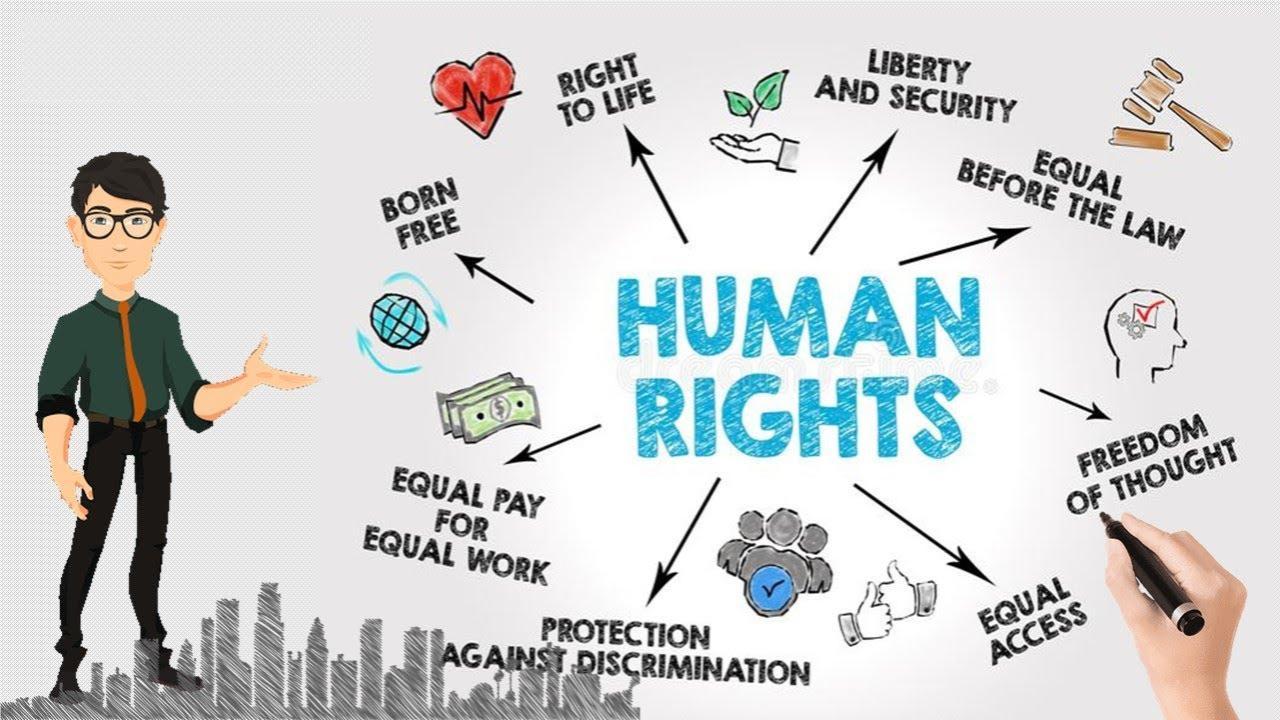
Human Rights

Human rights are rights inherent to all human beings, regardless of race, sex, nationality, ethnicity, language, religion, or any other status. Human rights include the right to life and liberty, freedom from slavery and torture, freedom of opinion and expression, the right to work and education, and many more.

  • There are many issues related to Human Rights that Congress is looking to address with legislation. In the ‘About’ section of this post is an overview of the issues and potential solutions, party positions, and web links. Other sections have information on relevant committees, chairs, & caucuses; departments & agencies; and the judiciary, nonpartisan & partisan organizations, and a wikipedia entry.
  • To participate in ongoing forums, ask the post’s curators questions, and make suggestions, scroll to the ‘Discuss’ section at the bottom of each post or select the “comment” icon.

The Human Rights category has related posts and three posts on issues of particular focus: Abortion,  Gun Rights, and Discrimination.

OnAir Post: Human Rights

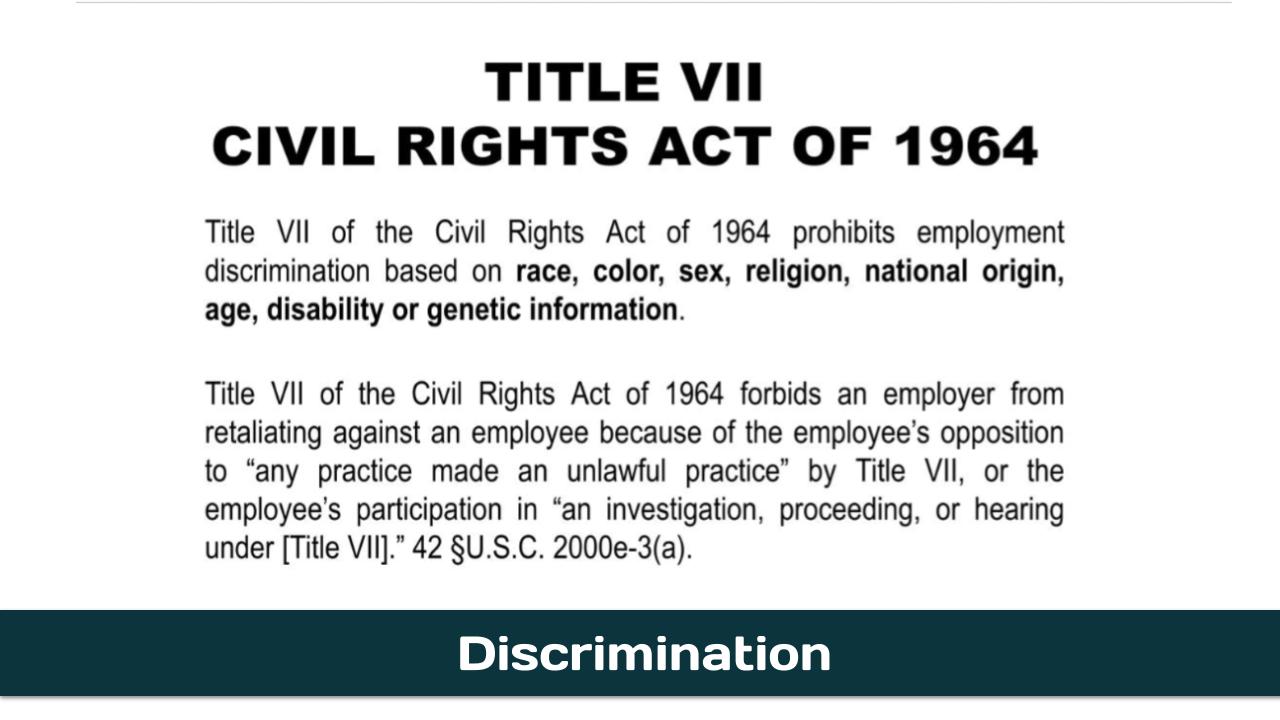
Discrimination

Discrimination is the process of making unfair or prejudicial distinctions between people based on the groups, classes, or other categories to which they belong or are perceived to belong, such as race, gender, age, religion, physical attractiveness or sexual orientation. Discrimination typically leads to groups being unfairly treated on the basis of perceived statues based on ethnic, racial, gender or religious categories. It involves depriving members of one group of opportunities or privileges that are available to members of another group.

  • In the ‘About’ section of this post is an overview of the issues or challenges, potential solutions, and web links. Other sections have information on relevant legislation, committees, agencies, programs in addition to information on the judiciary, nonpartisan & partisan organizations, and a wikipedia entry.
  • To participate in ongoing forums, ask the post’s curators questions, and make suggestions, go to the ‘Discuss’ section at the bottom of the post.

The Discrimination category has related posts on government agencies and departments and  committees and their Chairs.

OnAir Post: Discrimination

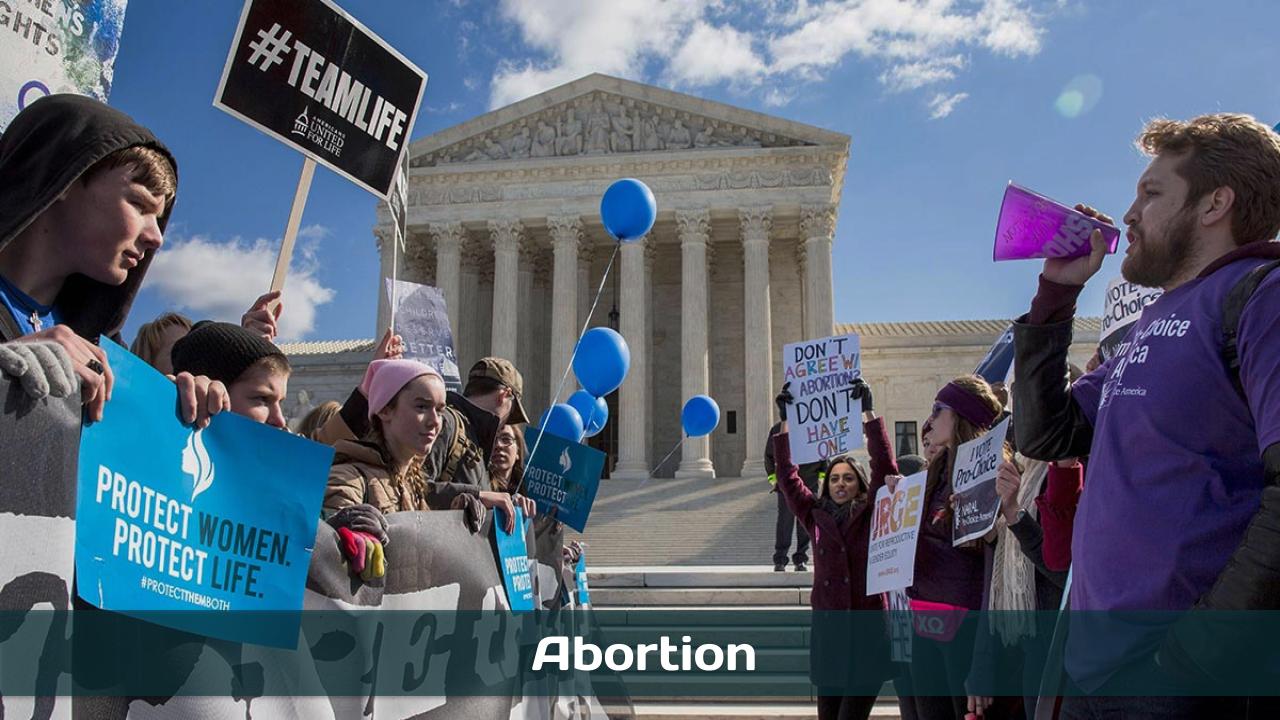
Abortion

Abortion is the termination of a pregnancy. It can be induced (intentional) or spontaneous (miscarriage). Induced abortions are often performed for various reasons, including medical necessity, personal choice, or social circumstances.

Types of Abortion

  • Medication Abortion: This involves taking a combination of medications to induce a miscarriage. It’s often used in early pregnancies.
  • Surgical Abortion: This procedure is performed by a healthcare professional in a clinical setting. There are several types, including aspiration abortion and dilation and curettage (D&C).

In the ‘About’ section of this post is an overview of the issues or challenges, potential solutions, and web links. Other sections have information on relevant legislation, committees, agencies, programs in addition to information on the judiciary, nonpartisan & partisan organizations, and a wikipedia entry.

To participate in ongoing forums, ask the post’s curators questions, and make suggestions, scroll to the ‘Discuss’ section at the bottom of each post or select the “comment” icon.

The Abortion category has related posts on government agencies and departments and  committees and their Chairs.

OnAir Post: Abortion

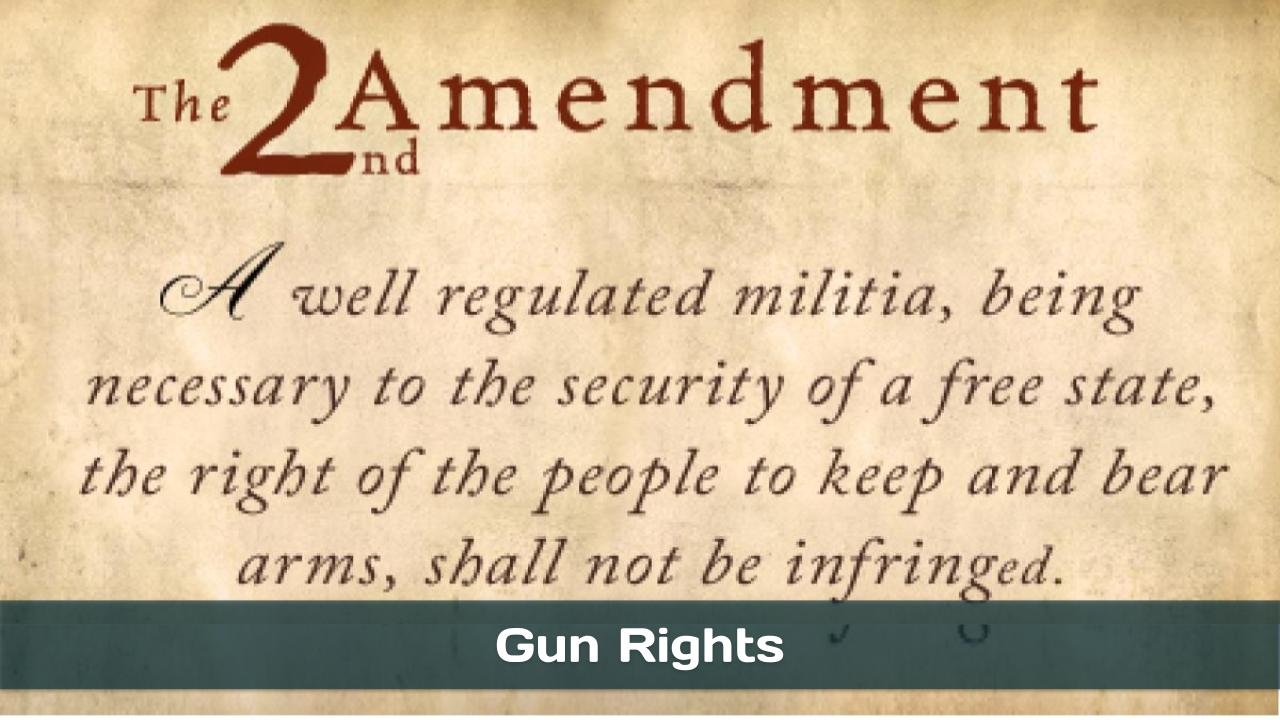
Gun Rights

Gun politics is defined in the United States by two primary opposing ideologies concerning the private ownership of firearms. Those who advocate for gun control support increasingly restrictive regulation of gun ownership; those who advocate for gun rights oppose increased restriction, or support the liberalization of gun ownership.

  • In the ‘About’ section of this post is an overview of the issues or challenges, potential solutions, and web links. Other sections have information on relevant legislation, committees, agencies, programs in addition to information on the judiciary, nonpartisan & partisan organizations, and a wikipedia entry.
  • To participate in ongoing forums, ask the post’s curators questions, and make suggestions, scroll to the ‘Discuss’ section at the bottom of each post or select the “comment” icon.

The Gun Rights category has related posts on government agencies and departments and  committees and their Chairs.


OnAir Post: Gun Rights

Justice Department (DOJ)

The United States Department of Justice (DOJ), also known as the Justice Department, is a federal executive department of the United States government tasked with the enforcement of federal law and administration of justice in the United States. It is equivalent to the justice or interior ministries of other countries.

The department is headed by the U.S. Attorney General, who is nominated by the president and confirmed by the US Senate and is a member of the Cabinet. The current attorney general is Merrick Garland, who was sworn in March 11, 2021.

OnAir Post: Justice Department (DOJ)

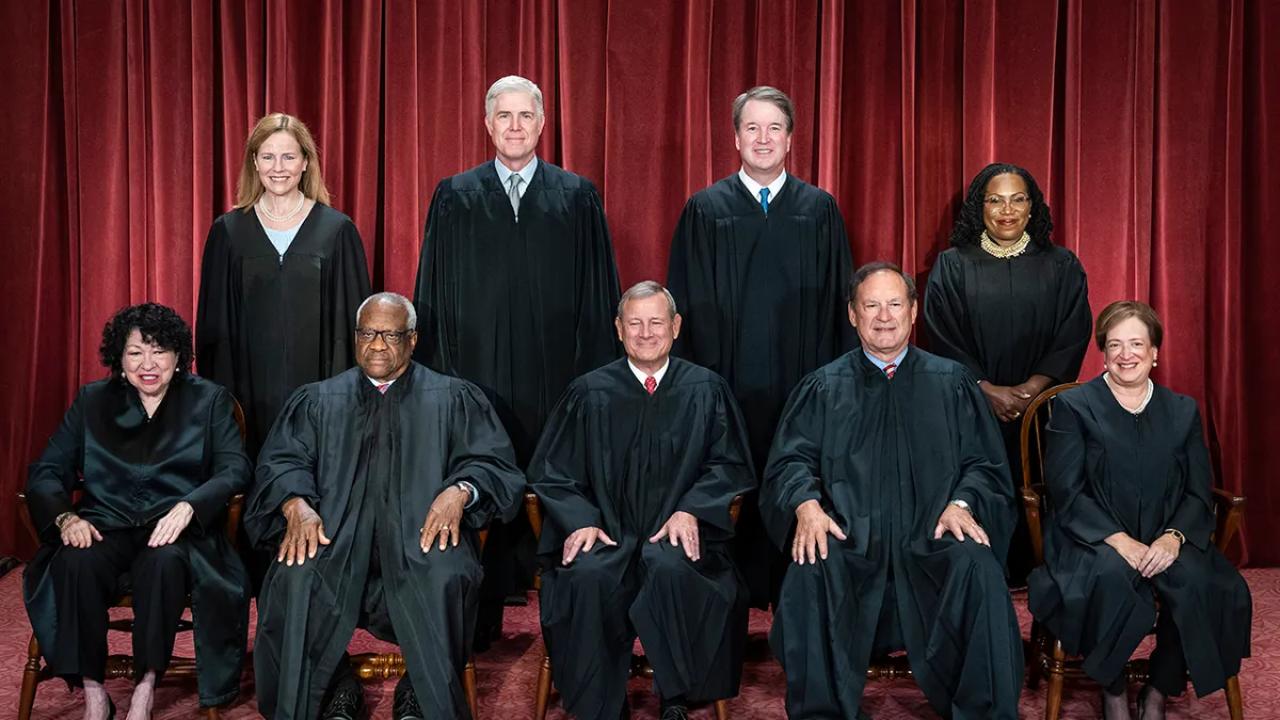
US Supreme Court

The Supreme Court of the United States (SCOTUS) is the highest court in the federal judiciary of the United States. It has ultimate (and largely discretionary) appellate jurisdiction over all federal and state court cases that involve a point of federal law, and original jurisdiction over a narrow range of cases, specifically “all Cases affecting Ambassadors, other public Ministers and Consuls, and those in which a State shall be Party”.

The Court holds the power of judicial review, the ability to invalidate a statute for violating a provision of the U.S. Constitution. It is also able to strike down presidential directives for violating either the Constitution or statutory law. However, it may act only within the context of a case in an area of law over which it has jurisdiction. The Court may decide cases having political overtones, but it has ruled that it does not have power to decide non-justiciable political questions.

OnAir Post: US Supreme Court

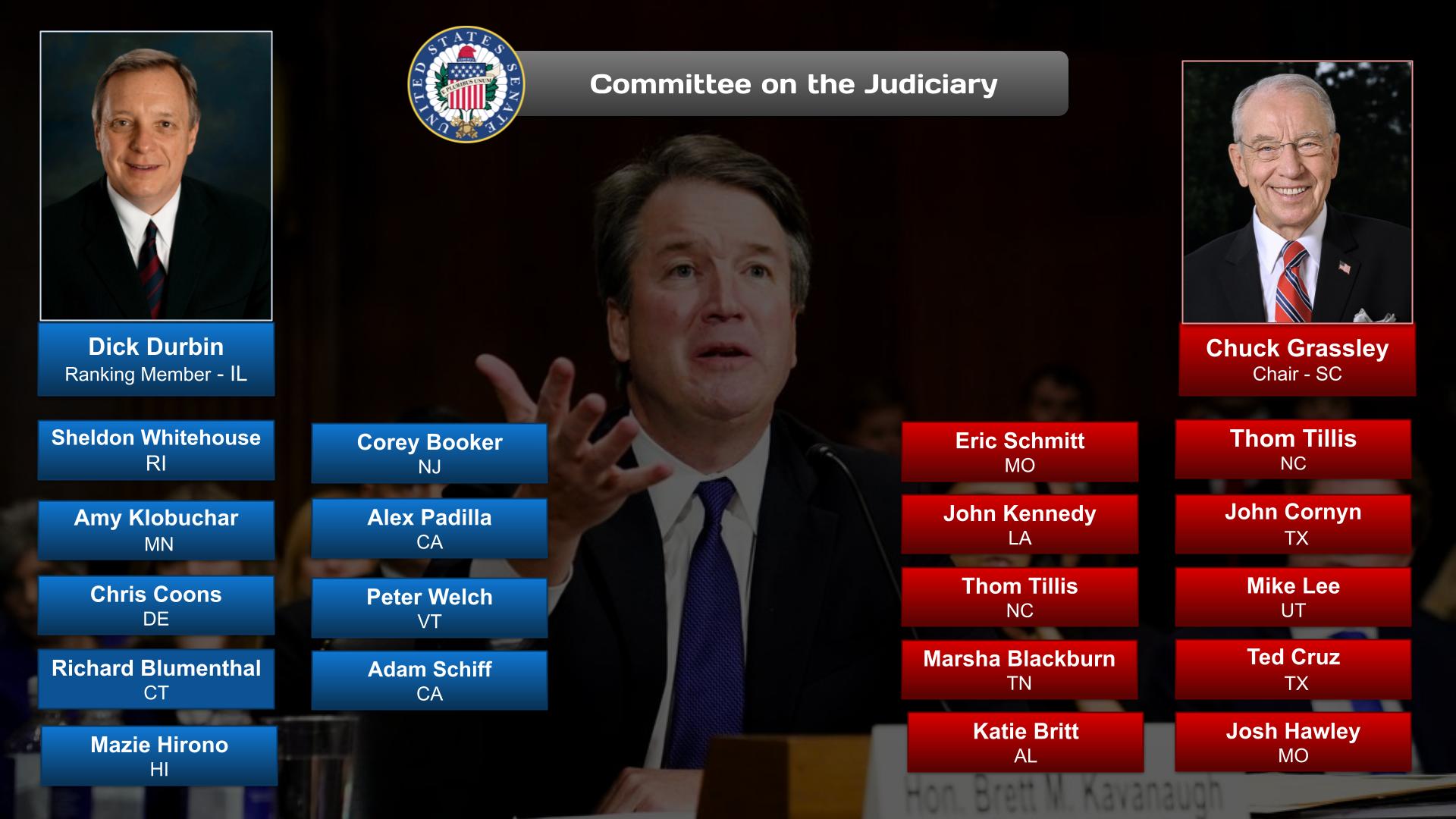
Judiciary Committee (Senate)

Mission:  to oversee the Department of Justice (DOJ), consider executive and judicial nominations, as well as review pending legislation.

House counterpart: Committee on the Judiciary

Democratic Members (Minority):
Dick Durbin, Illinois – Ranking Member
Sheldon Whitehouse, Rhode Island
Amy Klobuchar, Minnesota
Chris Coons, Delaware
Richard Blumenthal, Connecticut
Mazie Hirono, Hawaii
Cory Booker, New Jersey
Alex Padilla, California
Peter Welch, Vermont
Adam Schiff, California

Republican Members (Majority):
Lindsey Graham, South Carolina,
John Cornyn, Texas
Mike Lee, Utah
Ted Cruz, Texas
Josh Hawley, Missouri
Thom Tillis, North Carolina
John Kennedy, Louisiana
Marsha Blackburn, Tennessee
Eric Schmitt, Missouri
Katie Britt, Alabama
Mike Crapo, Idaho

Featured Video: 
Senate Judiciary Committee holds a hearing on responding to ransomware attacks — 7/27/2021

OnAir Post: Judiciary Committee (Senate)

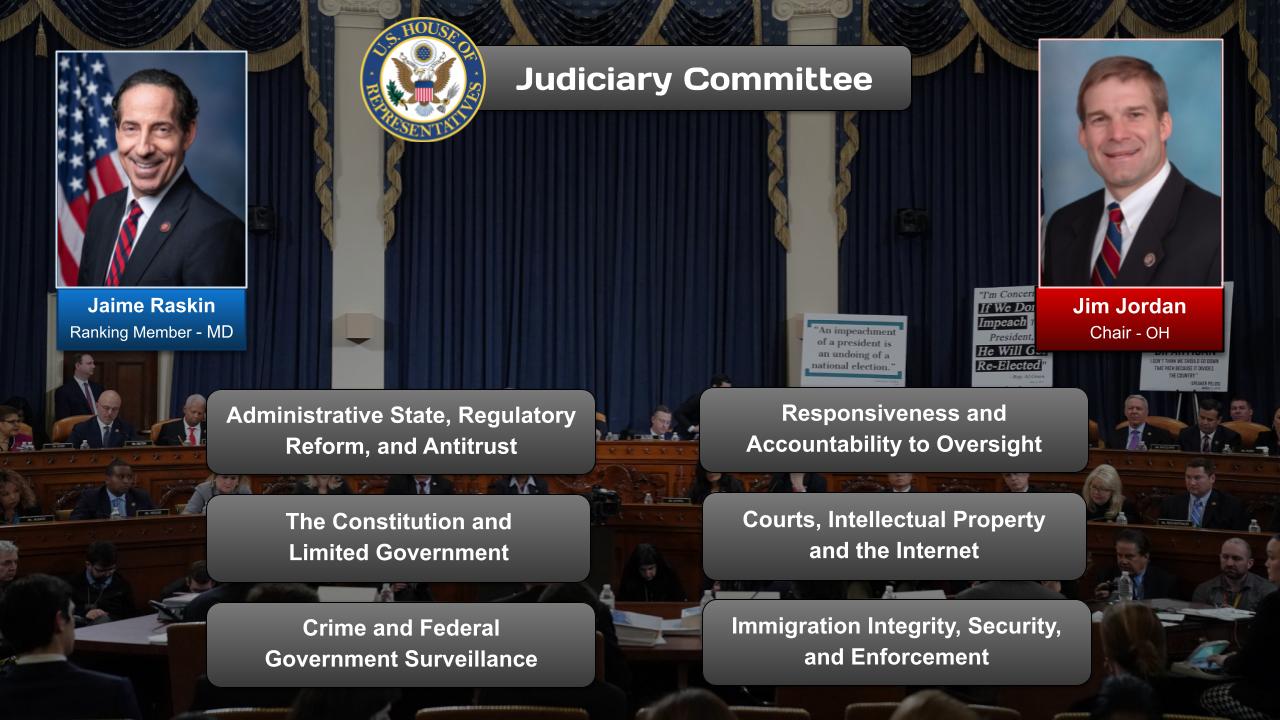
Judiciary Committee (House)

Oversee the administration of justice within the federal courts, administrative agencies and Federal law enforcement entities. The Judiciary Committee is also the committee responsible for impeachments of federal officials.

Senate counterpart:  Committee on the Judiciary

Subcommittees:

  • Administrative State, Regulatory Reform and Antitrust
  • The Constitution and Limited Government
  • Courts, Intellectual Property and the Internet
  • Crime and Federal Government Surveillance
  • Immigration Integrity, Security, and Enforcement
  • Responsiveness and Accountability to Oversight

Chair: Jim Jordan, Ohio
Ranking Member: Jerry Nadler, New York

Majority Staff Director: Christopher Hixon
Minority Chief of Staff: Amy Rutkin
Meeting Location: 2138 Rayburn House Building, Washington, DC  20515; Phone: (202) 225-6906

Featured Video: 
Oversight of the Voting Rights Act: Potential Legislative Reforms – August 16, 2021
Web Links

OnAir Post: Judiciary Committee (House)

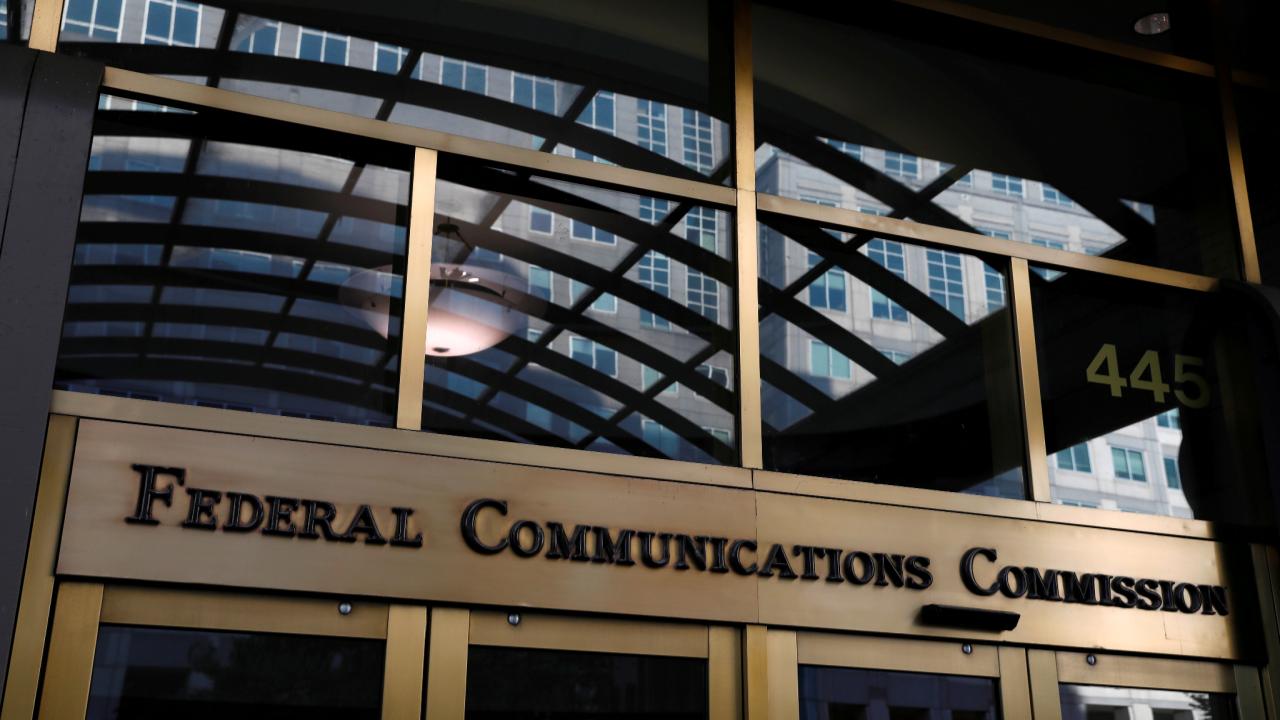
FCC: Federal Communications Commission

The Federal Communications Commission (FCC) is an independent agency of the United States government that regulates communications by radio, television, wire, satellite, and cable across the United States. The FCC maintains jurisdiction over the areas of broadband access, fair competition, radio frequency use, media responsibility, public safety, and homeland security.

The FCC was formed by the Communications Act of 1934 to replace the radio regulation functions of the previous Federal Radio Commission. The FCC took over wire communication regulation from the Interstate Commerce Commission. The FCC’s mandated jurisdiction covers the 50 states, the District of Columbia, and the territories of the United States. The FCC also provides varied degrees of cooperation, oversight, and leadership for similar communications bodies in other countries in North America. The FCC is funded entirely by regulatory fees. It has an estimated fiscal-2022 budget of US $388 million.

Source: Wikipedia

OnAir Post: FCC: Federal Communications Commission

Skip to toolbar