US Supreme Court

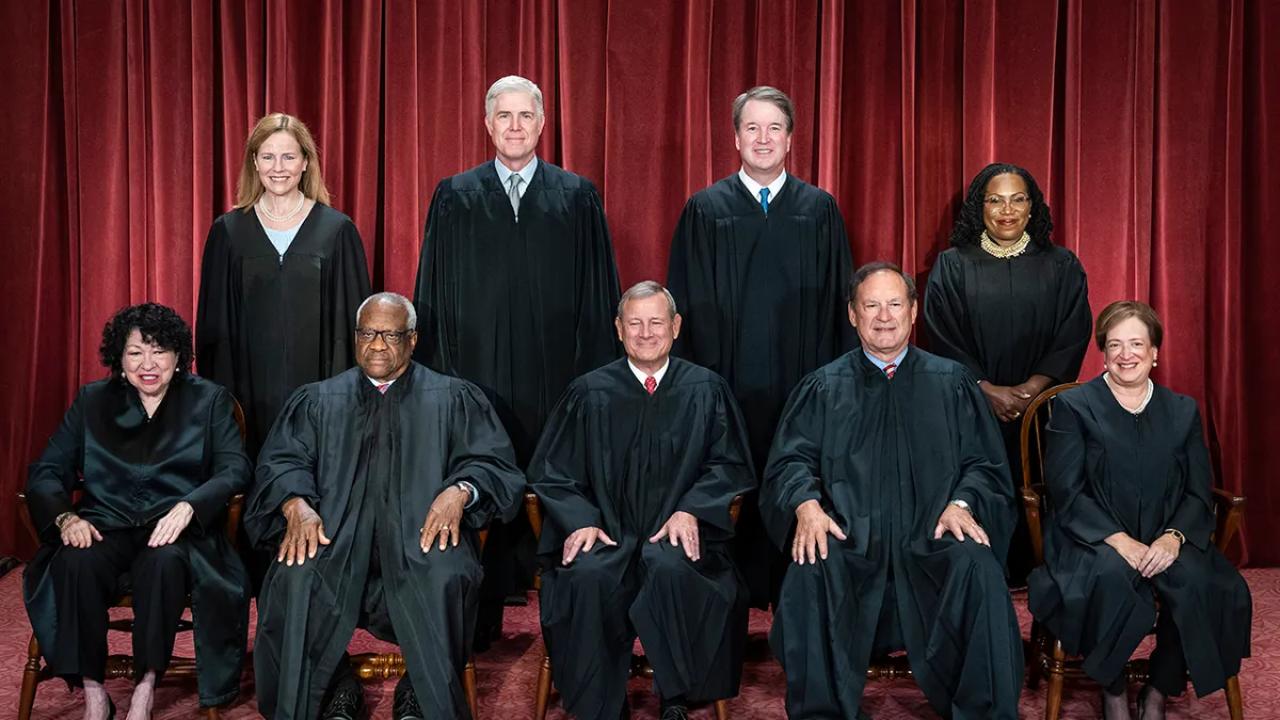
The Supreme Court of the United States (SCOTUS) is the highest court in the federal judiciary of the United States. It has ultimate (and largely discretionary) appellate jurisdiction over all federal and state court cases that involve a point of federal law, and original jurisdiction over a narrow range of cases, specifically “all Cases affecting Ambassadors, other public Ministers and Consuls, and those in which a State shall be Party”.

The Court holds the power of judicial review, the ability to invalidate a statute for violating a provision of the U.S. Constitution. It is also able to strike down presidential directives for violating either the Constitution or statutory law. However, it may act only within the context of a case in an area of law over which it has jurisdiction. The Court may decide cases having political overtones, but it has ruled that it does not have power to decide non-justiciable political questions.

OnAir Post: US Supreme Court
US Judicial System

The federal judiciary of the United States is one of the three branches of the federal government of the United States organized under the United States Constitution and laws of the federal government.

Article III of the Constitution requires the establishment of a Supreme Court and permits the Congress to create other federal courts and place limitations on their jurisdiction. Article III states that federal judges are appointed by the president with the consent of the Senate to serve until they resign, are impeached and convicted, or die.

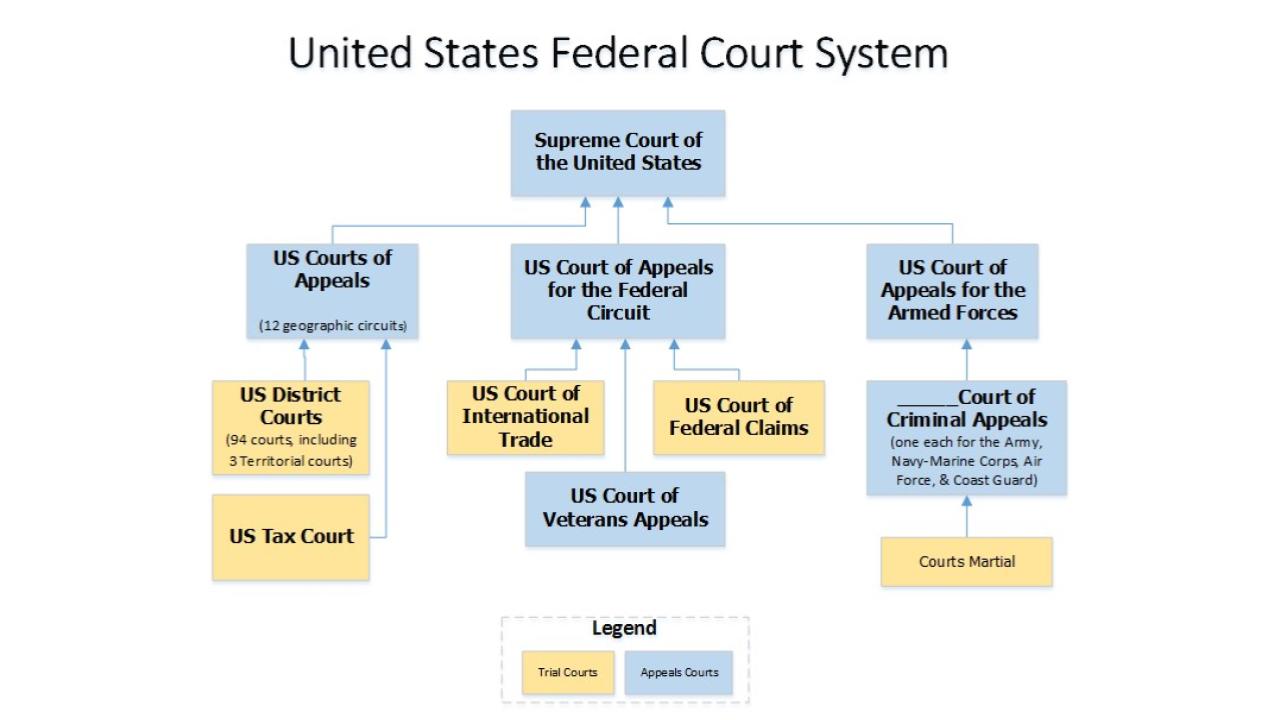
The federal courts are generally divided between trial courts which hear cases in the first instance e.g. District Courts, and appellate courts which review specific contested decisions made by lower courts e.g. Courts of Appeal.

OnAir Post: US Judicial System

US District Courts

The United States district courts are the trial courts of the U.S. federal judiciary. There is a United States bankruptcy court associated with each U.S. district court. Each federal judicial district has at least one courthouse, and many districts have more than one. Most decisions of district courts may be appealed to the respective court of appeals of their circuit, with a small number instead being appealable to the Federal Circuit, or directly to the Supreme Court.

District courts are courts of law, equity, and admiralty, and can hear both civil and criminal cases. But unlike U.S. state courts, federal district courts are courts of limited jurisdiction, and can only hear cases that involve disputes between residents of different states, questions of federal law, or federal crimes.

OnAir Post: US District Courts

US Courts of Appeals

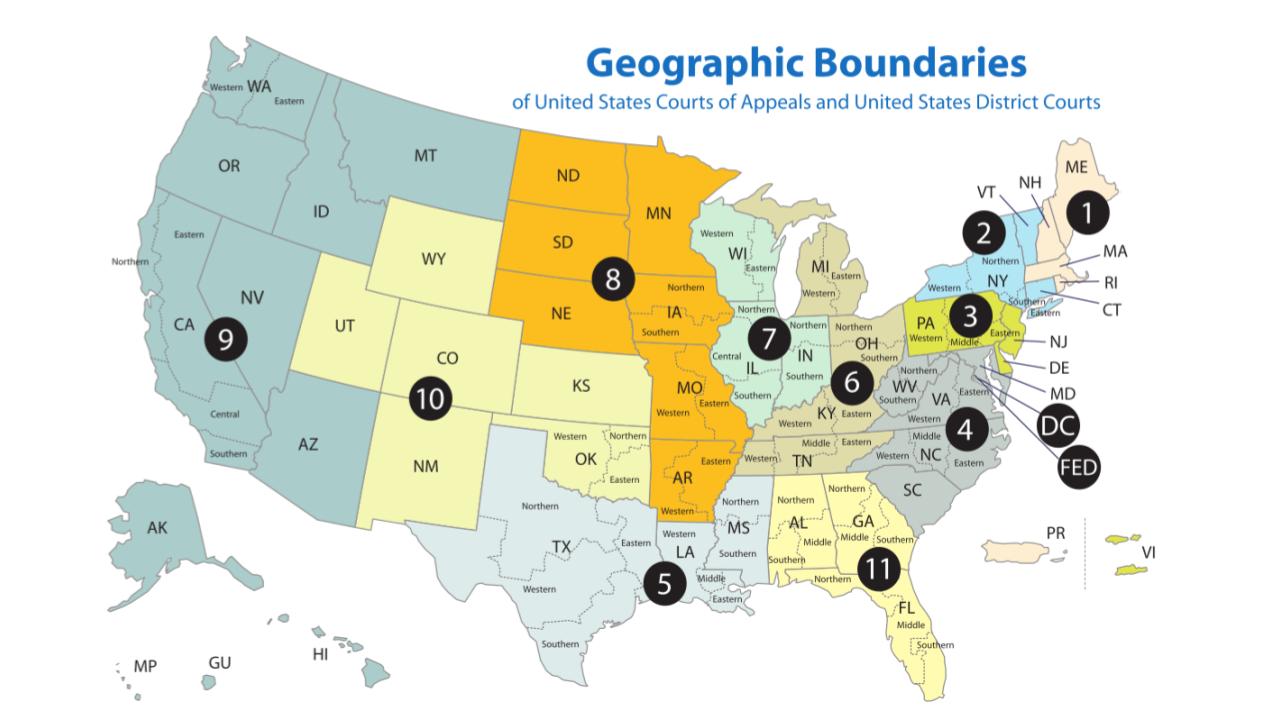
The United States courts of appeals or circuit courts are the intermediate appellate courts of the United States federal judiciary. The courts are divided into 13 circuits, and each hears appeals from the district courts within its borders, or in some instances from other designated federal courts and administrative agencies. Appeals from the circuit courts are taken to the Supreme Court of the United States. The district, appellate, and Supreme courts are all authorized under Article Three of the United States Constitution.

The United States courts of appeals are considered the most powerful and influential courts in the United States after the Supreme Court. Because of their ability to set legal precedent in regions that cover millions of Americans, the United States courts of appeals have strong policy influence on U.S. law. Moreover, because the Supreme Court chooses to review fewer than 3% of the 7,000 to 8,000 cases filed with it annually, the U.S. courts of appeals serve as the final arbiter on most federal cases.

OnAir Post: US Courts of Appeals

Skip to toolbar